


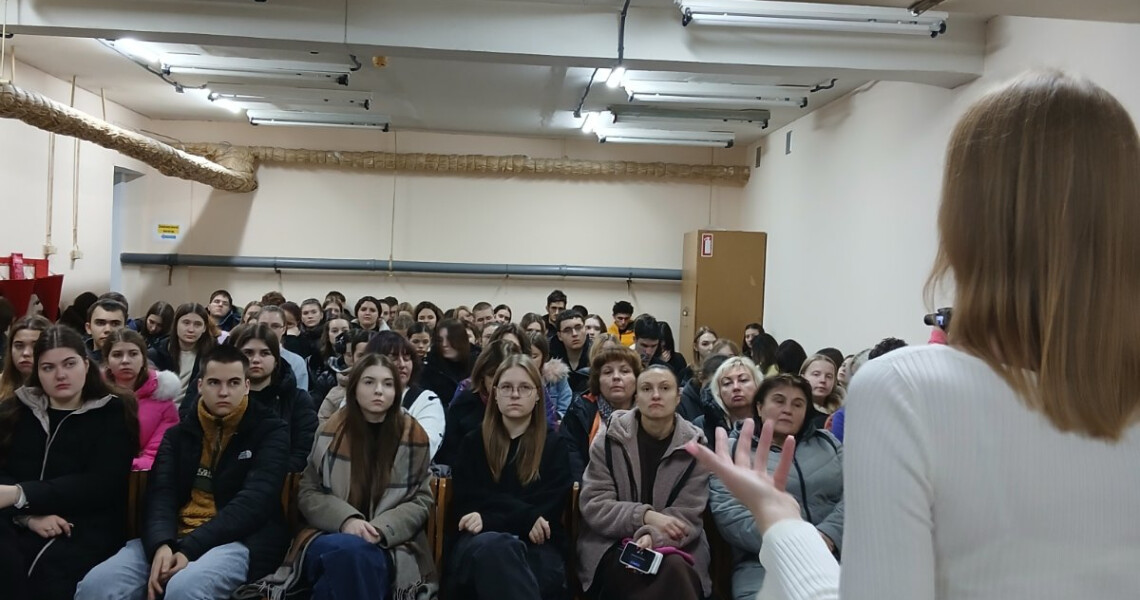
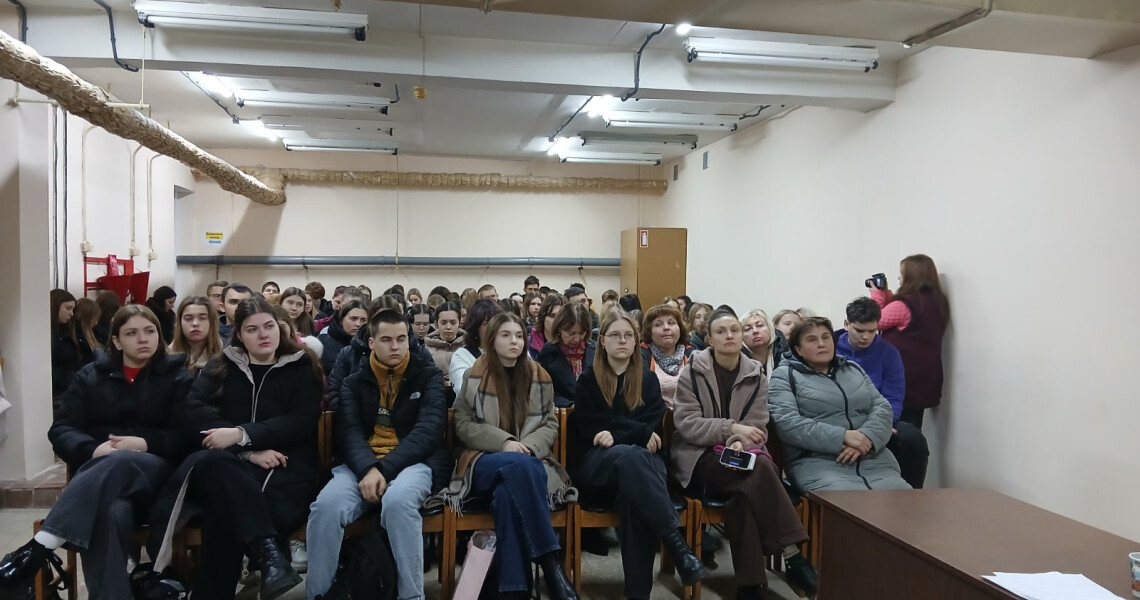
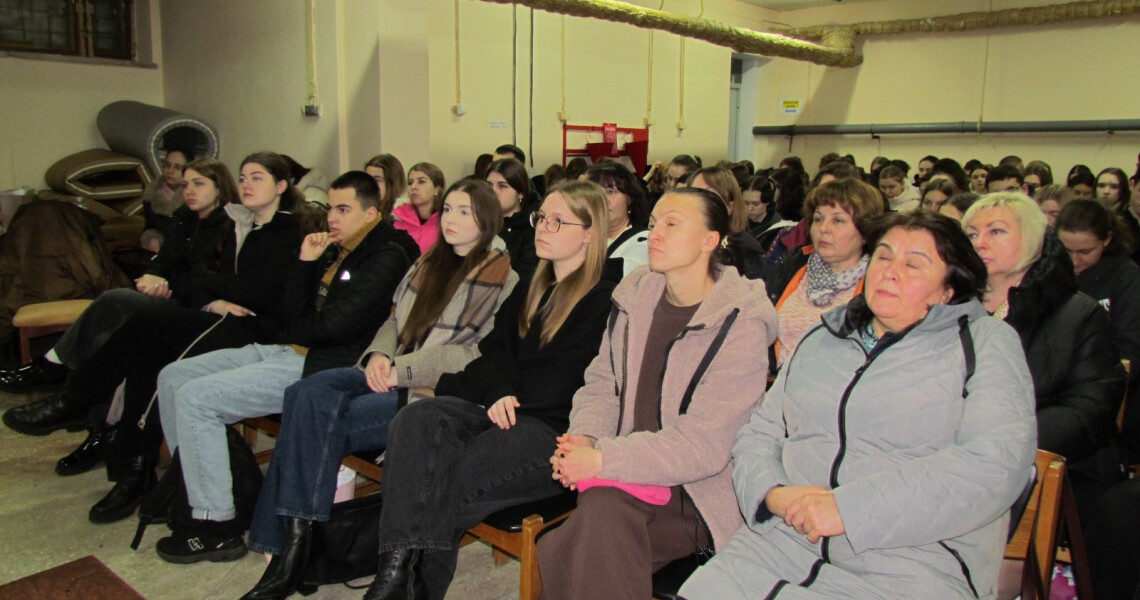
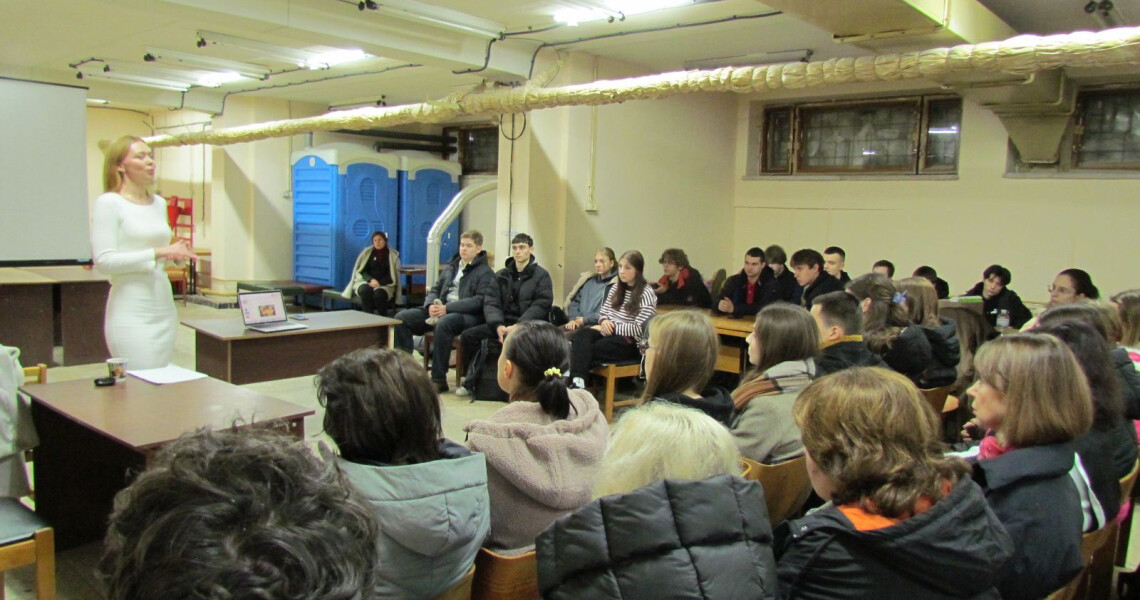
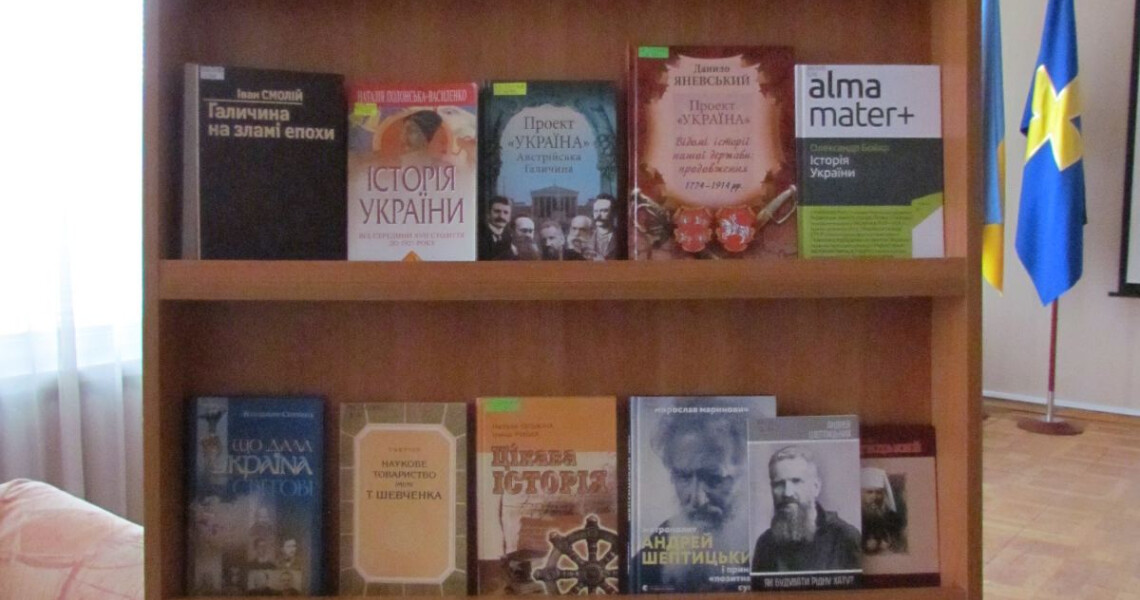
За ініціативи завідувачки кафедри іноземних мов з латинською мовою та медичною термінологією, доцента Олени Бєляєвої у співпраці з головною бібліотекаркою відділу обслуговування користувачів Полтавської обласної універсальної бібліотеки імені І. П. Котляревського Мариною Купріяновою науково-педагогічні працівники кафедри та здобувачі вищої освіти 2 групи І курсу стоматологічного факультету; 1, 5, 10 ІІ курсу, 101 І курсу факультету медичного №1, та 11, 14 групи ННМІ (Фізична терапія та ерготерапія), 11 (Парамедик) нещодавно відвідали просвітницько-виховний захід «Галичина у ХІХ столітті. Ковчег національної ідеї. Український П’ємонт», спікером якого була викладачка історії Анна Гончаренко.
Під час заходу присутні мали змогу ознайомитися з історією Галичини ХІХ століття, яке стало для цього історико-географічного регіону України епохою глибоких змін, що визначили її місце в історії українського народу. Опинившись у складі Австрійської, а згодом Австро-Угорської імперії, Галичина отримала умови, що, попри політичні обмеження, сприяли розвитку української культури, освіти й національного руху. Саме тому цей регіон справедливо називають «ковчегом національної ідеї» та «українським П’ємонтом» — центром, де визрівали передумови модерної української нації.
Саме в Галичині почали формуватися перші українські політичні партії — Національно-демократична та інші. Вони брали участь у виборах до Галицького сейму й австрійського парламенту, виборювали права української мови, освіти та самоврядування. Відтак Галичина стала єдиним місцем у тодішніх українських землях, де національно-політичний рух мав легальні форми.
Через це історики називають Галичину «українським П’ємонтом» — за аналогією з італійською областю П’ємонт, де зародився рух за об’єднання Італії. У Львові та інших містах краю формувалися політичні ідеї, які згодом поширилися на Наддніпрянщину і стали основою загальноукраїнського визвольного руху. Галичина зберегла й розвинула українську мову, традиції та культуру в часи, коли на інших територіях імперська влада запроваджувала сувору русифікацію.
Отже, Галичина ХІХ століття стала тим простором, де українська національна ідея не лише збереглася, а й здобула нову силу. Вона стала духовним і політичним центром, що підготував ґрунт для майбутніх змагань за державність. Саме тому її роль в історії України є унікальною та незамінною.
Прес-служба Полтавського державного медичного університету
Galicia in the 19th century. The ark of the national idea.
Ukrainian Piedmont
On the initiative of the head of the Department of Foreign Languages with Latin and Medical Terminology, Associate Professor Olena Bieliaieva, in cooperation with Marina Kupriyanova, Chief Librarian of the User Services Department of the Poltava Regional Universal Library named after I. P. Kotlyarevsky, scientific and pedagogical staff of the department and students of the 2nd group of the 1st year of the Faculty of Dentistry; 1, 5, 10 of the second year, 101 of the first year of the Faculty of Medicine No. 1, and 11, 14 of the ESMI (Therapy and Rehabilitation), 11 (Paramedic) recently attended an educational event entitled "Galicia in the 19th Century. The Ark of the National Idea. Ukrainian Piedmont," which was presented by history teacher Anna Goncharenko.
During the event, attendees had the opportunity to learn about the history of 19th-century Galicia, which was a period of profound change for this historical and geographical region of Ukraine, defining its place in the history of the Ukrainian people. As part of the Austrian and later the Austro-Hungarian Empire, Galicia enjoyed conditions that, despite political restrictions, contributed to the development of Ukrainian culture, education and the national movement. That is why this region is rightly called the “ark of the national idea” and “Ukrainian Piedmont” — the centre where the preconditions for the modern Ukrainian nation matured.
It was in Galicia that the first Ukrainian political parties began to form — the National Democratic Party and others. They participated in elections to the Galician Sejm and the Austrian Parliament, fought for the rights of the Ukrainian language, education and self-government. Thus, Galicia became the only place in the Ukrainian lands at that time where the national political movement had legal forms.
For this reason, historians refer to Galicia as the “Ukrainian Piedmont” — by analogy with the Italian region of Piedmont, where the movement for the unification of Italy originated. Political ideas were formed in Lviv and other cities of the region, which later spread to the Dnieper region and became the basis of the all-Ukrainian liberation movement. Galicia preserved and developed the Ukrainian language, traditions and culture at a time when the imperial authorities were imposing strict russification in other territories.
Thus, 19th-century Galicia became a place where the Ukrainian national idea not only survived but also gained new strength. It became a spiritual and political centre that prepared the ground for future struggles for statehood. That is why its role in the history of Ukraine is unique and irreplaceable.