


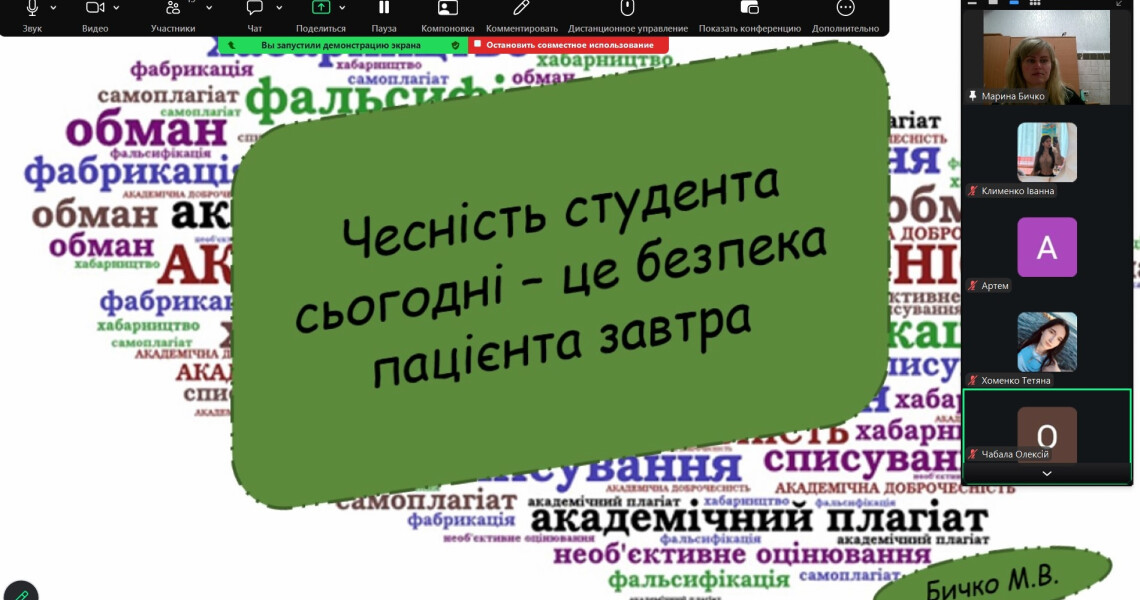
На кафедрі фізики Полтавського державного медичного університету відбувся виховний захід для здобувачів вищої освіти І курсу 13 групи медичного факультету на тему «Чесність студента сьогодні – це безпека пацієнта завтра». Його провела відповідальна за виховну роботу кафедри Марина Бичко.
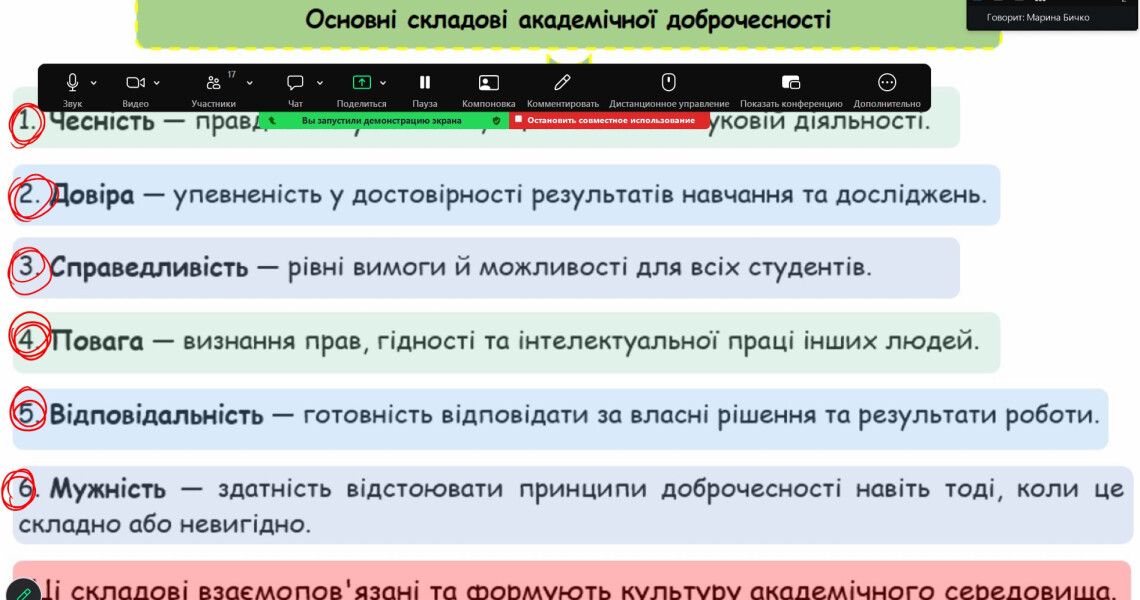
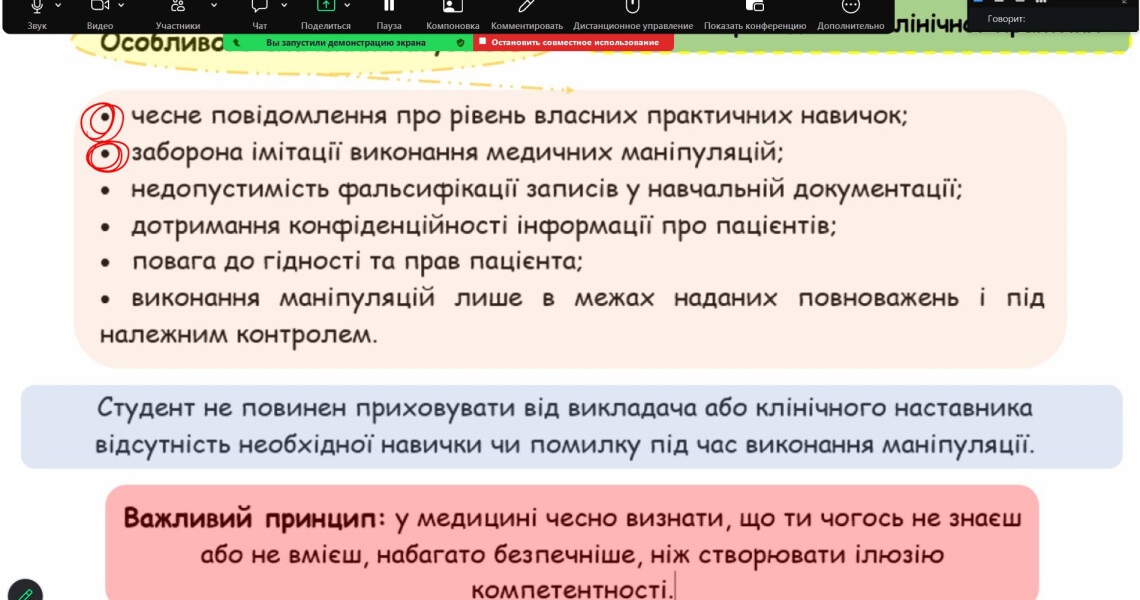
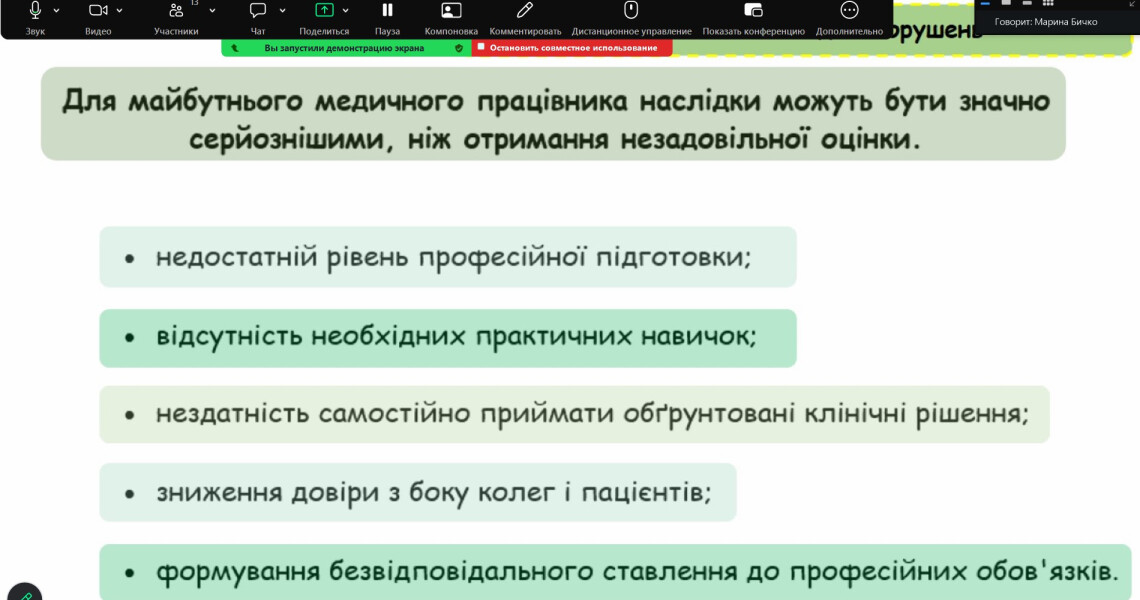
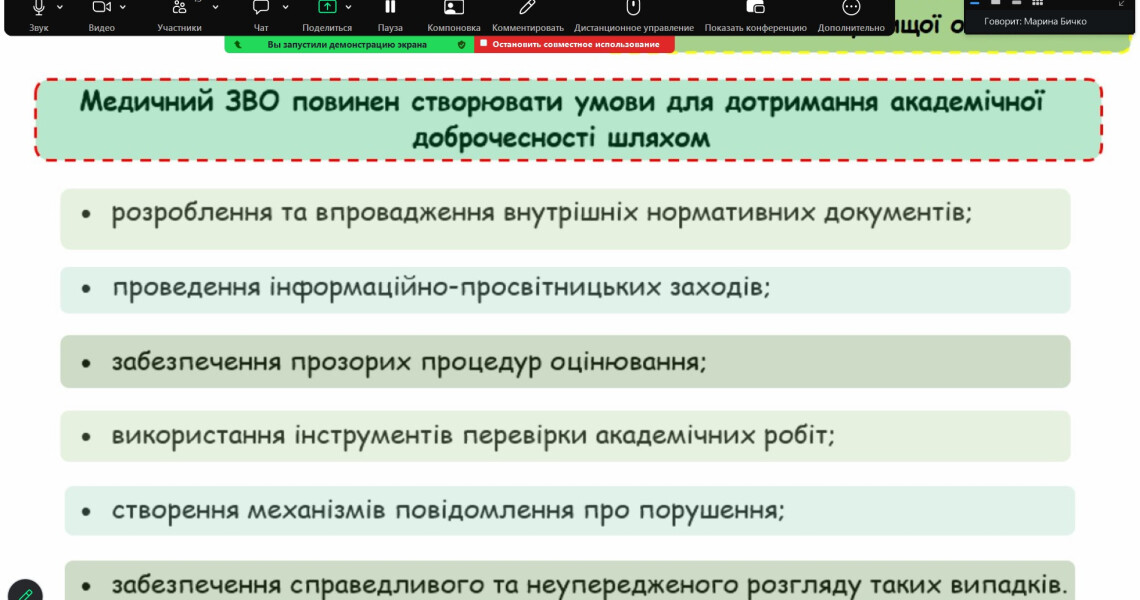
Під час зустрічі першокурсники пригадали сутність поняття академічної доброчесності та ознайомилися з нормативно-правовими засадами її забезпечення в Україні. Окрему увагу приділили значенню академічної доброчесності у професійній підготовці майбутніх медиків, її основним принципам і видам порушень.
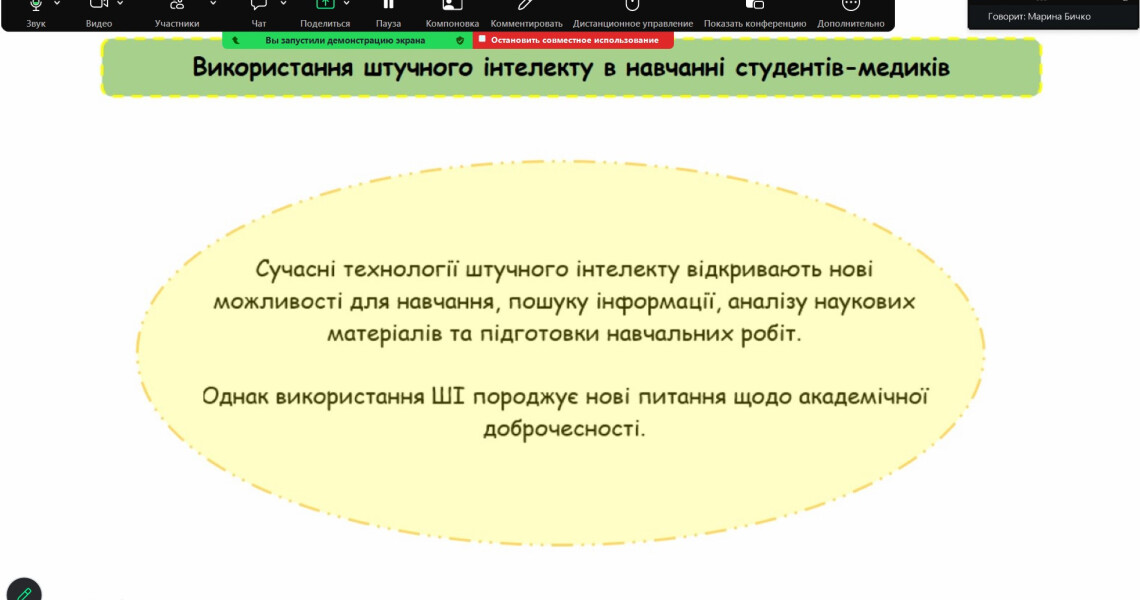
Учасники також обговорили використання штучного інтелекту в навчанні студентів-медиків, правила його відповідального застосування та межі допустимого використання таких інструментів. Не оминули й питання відповідальності за порушення академічної доброчесності та можливих наслідків таких дій для подальшої професійної діяльності.
Захід дав змогу привернути увагу майбутніх лікарів до того, що чесність, самостійність і відповідальне ставлення до навчання є важливими складовими професійного становлення медика, від яких у майбутньому залежатимуть якість медичної допомоги та безпека пацієнтів.
Пресслужба Полтавского державного медицинского университета
Academic Integrity, Artificial Intelligence and Responsibility: A Meeting with First-Year Students at PSMU
The Department of Physics of Poltava State Medical University held an educational event for first-year students of Group 13 of the Faculty of Medicine entitled “A Student’s Honesty Today Is a Patient’s Safety Tomorrow.” The event was conducted by Maryna Bychko, the Department’s Coordinator for Educational Activities.
During the meeting, first-year students revisited the concept of academic integrity and familiarized themselves with the legal and regulatory framework governing its implementation in Ukraine. Particular attention was paid to the importance of academic integrity in the professional training of future healthcare professionals, its fundamental principles, and the various forms of academic misconduct.
The participants also discussed the use of artificial intelligence in the education of medical students, the principles of its responsible application, and the boundaries of its acceptable use as a learning tool. The discussion also addressed accountability for violations of academic integrity and the potential consequences of such misconduct for students’ future professional careers.
The event provided an opportunity to highlight to future physicians that honesty, independent work, and a responsible attitude towards learning are essential components of their professional development, as the quality of medical care and patient safety in the future will depend on these values.