


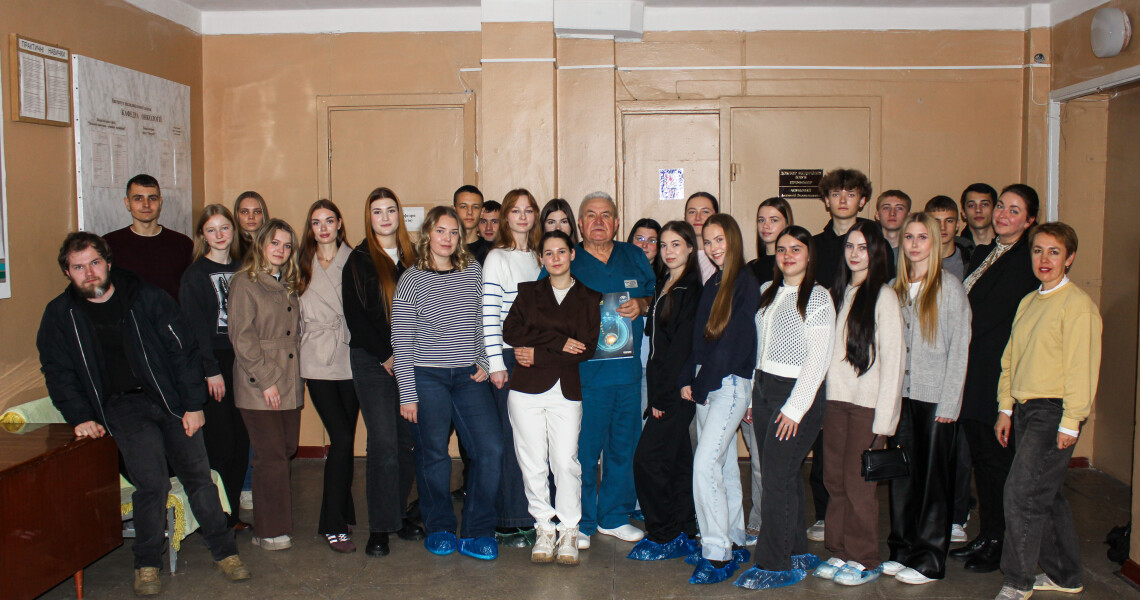
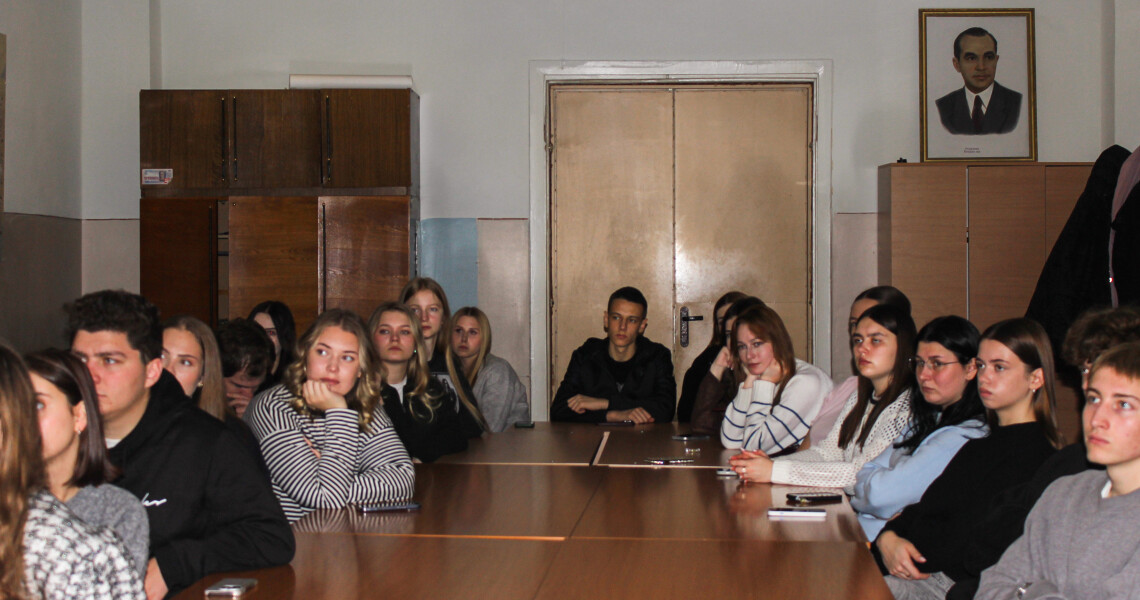
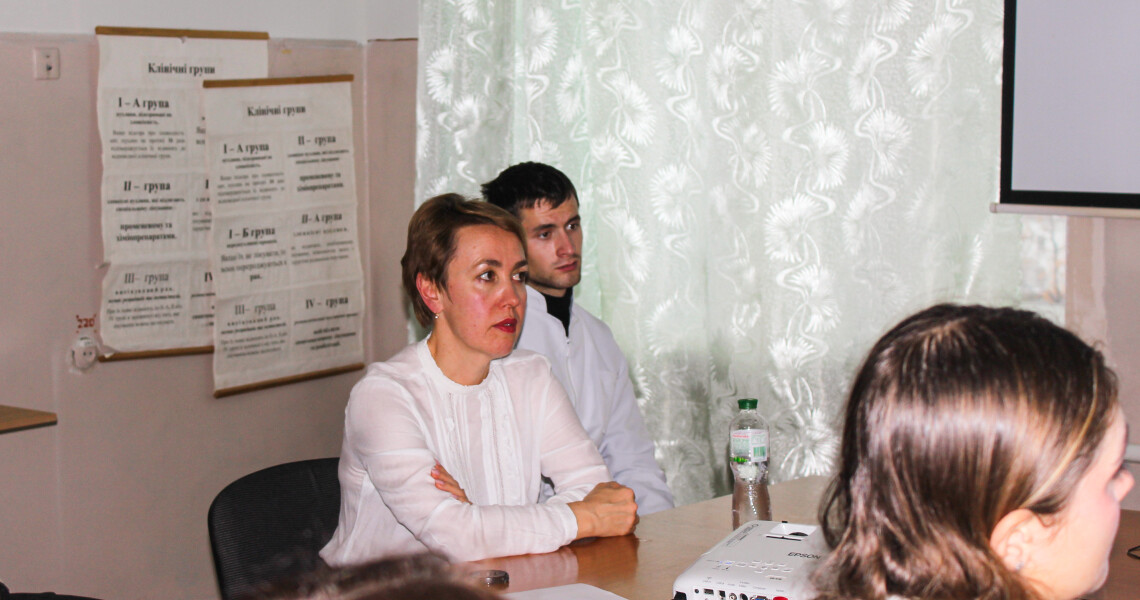
12 листопада 2026 року в Полтавському державному медичному університеті відбулася відкрита лекція «Передракові стани та рак ротової порожнини, голови та шиї: рання діагностика, онконастороженість та розбір клінічних випадків у практиці лікаря». Захід об’єднав здобувачів освіти медичного та стоматологічного профілів навколо важливої теми раннього виявлення онкологічних захворювань.
Організатори лекції – кафедра онкології, радіології та радіаційної медицини спільно з кафедрою терапевтичної стоматології ПДМУ за сприяння студентського наукового товариства. До організаційної підготовки заходу також долучилася староста СНТ кафедри онкології, радіології та радіаційної медицини, здобувачка освіти п’ятого курсу медичного факультету № 1 Маргарита Степанова.
Спікери – професор кафедри онкології, радіології та радіаційної медицини ПДМУ Володимир Баштан і доцент кафедри терапевтичної стоматології Тетяна Бублій.
На початку зустрічі Володимир Баштан наголосив на важливості онкологічної настороженості в роботі лікарів різних спеціальностей. Він звернув увагу на те, що огляд пацієнта має охоплювати не лише безпосередню причину звернення, а й стан ротової порожнини та видимих ділянок голови й шиї. Особливе значення має виявлення змін, які можуть залишатися поза увагою пацієнта, але потребують додаткового обстеження.
У своїй доповіді Тетяна Бублій розглянула передракові стани слизової оболонки ротової порожнини та червоної облямівки губ, їхні основні клінічні прояви й чинники ризику. Серед них – тютюнопаління, вживання алкоголю, ультрафіолетове випромінювання та тривала місцева травматизація. Лекторка пояснила, на які зміни варто звертати увагу під час огляду: тривале запальне ураження, ущільнення, збільшення його розмірів, кровоточивість або поява болю. Такі ознаки потребують належної оцінки та своєчасної діагностики.
Практичну спрямованість лекції забезпечив розбір клінічних прикладів. Здобувачі освіти обговорювали характерні прояви уражень, можливі варіанти їх диференційної діагностики та подальшу тактику лікаря. Окремо йшлося про важливість ретельного огляду ротової порожнини, фіксації виявлених змін у медичній документації та направлення пацієнта на необхідні дослідження за наявності підозри на патологічний процес.
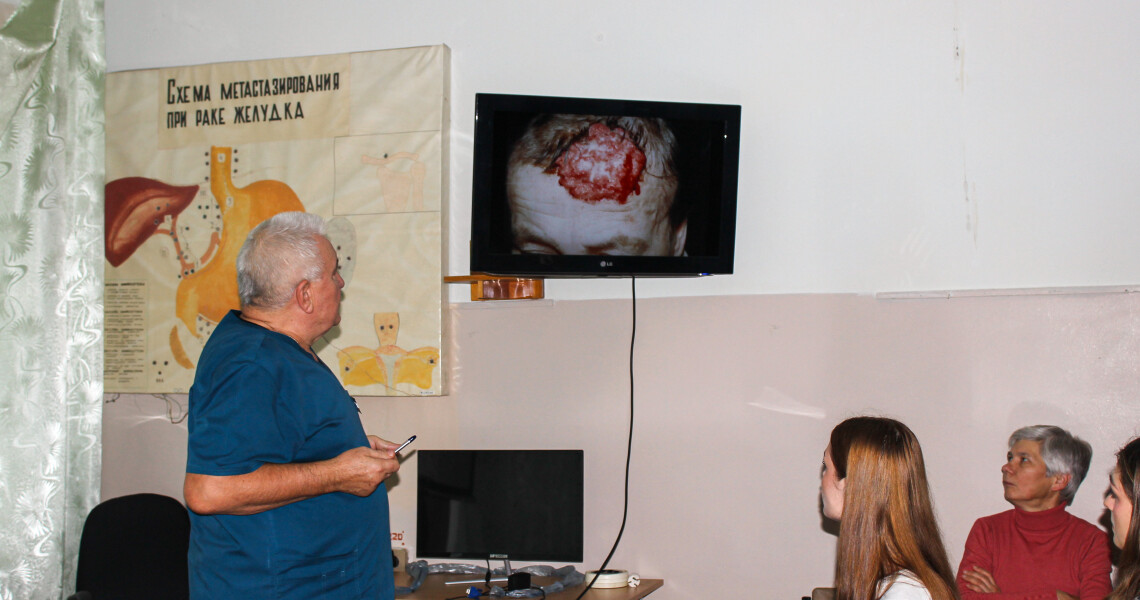
У другій частині зустрічі Володимир Баштан продемонстрував клінічні випадки онкологічних захворювань ротової порожнини та пухлин голови й шиї, звернувши увагу на можливі наслідки несвоєчасного виявлення патології. Це дало змогу майбутнім лікарям побачити, чому важливо не обмежуватися усуненням локальної скарги пацієнта, а оцінювати його стан комплексно.
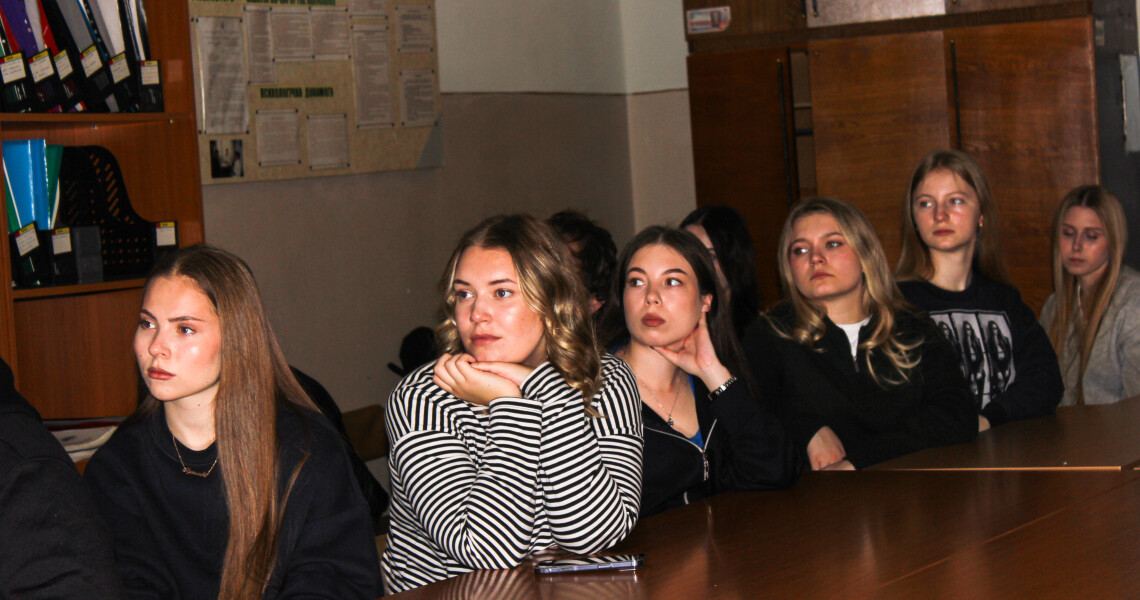
Зустріч проходила в інтерактивному форматі: здобувачі освіти відповідали на запитання, висловлювали припущення щодо клінічних ситуацій, обговорювали діагностичні ознаки та отримували коментарі від фахівців. Такий формат сприяв поєднанню теоретичних знань із практичним розумінням професійних завдань лікаря.
Проведення подібних заходів у ПДМУ сприяє формуванню онкологічної настороженості майбутніх медичних працівників, розвитку клінічного мислення та розуміння важливості раннього виявлення захворювань, від якого значною мірою залежать своєчасність допомоги й подальший прогноз для пацієнта.
Пресслужба Полтавского державного медицинского университета
Oncological Vigilance in Everyday Medical Practice: PSMU Discusses Early Signs of Oral, Head and Neck Cancer
On 12 November 2026, Poltava State Medical University hosted an open lecture entitled “Precancerous Conditions and Cancer of the Oral Cavity, Head and Neck: Early Diagnosis, Oncological Vigilance and Clinical Case Discussions in Medical Practice.” The event brought together medical and dental students to focus on the important issue of early cancer detection.
The lecture was organized by the Department of Oncology, Radiology and Radiation Medicine in cooperation with the Department of Therapeutic Dentistry at PSMU, with the support of the Student Scientific Society. Marharyta Stepanova, a fifth-year student of the Faculty of Medicine No. 1 and Head of the Student Scientific Society at the Department of Oncology, Radiology and Radiation Medicine, also contributed to the organizational preparations.
The speakers were Professor Volodymyr Bashtan of the Department of Oncology, Radiology and Radiation Medicine at PSMU and Associate Professor Tetiana Bublii of the Department of Therapeutic Dentistry.
At the beginning of the meeting, Volodymyr Bashtan emphasized the importance of oncological vigilance in the daily practice of physicians across different specialties. He pointed out that a patient examination should address not only the immediate reason for the consultation but also the condition of the oral cavity and visible areas of the head and neck. Particular attention should be paid to identifying changes that may go unnoticed by patients but require further investigation.
In her presentation, Tetiana Bublii discussed precancerous conditions affecting the oral mucosa and the vermilion border of the lips, outlining their main clinical manifestations and risk factors. These include smoking, alcohol consumption, ultraviolet radiation and prolonged local trauma. The lecturer explained which changes should raise concern during an examination, including persistent inflammatory lesions, induration, an increase in lesion size, bleeding and the onset of pain. Such signs require appropriate assessment and timely diagnosis.
The practical focus of the lecture was reinforced through clinical case discussions. Students examined characteristic manifestations of lesions, possible approaches to differential diagnosis and subsequent clinical management. Particular attention was given to the importance of thorough oral examinations, documenting identified changes in medical records and referring patients for the necessary investigations whenever a pathological process is suspected.
In the second part of the meeting, Volodymyr Bashtan presented clinical cases involving oral cancers and head and neck tumors, highlighting the possible consequences of delayed diagnosis. This enabled future physicians to understand why it is important not to limit their approach to addressing a patient's local complaint but to assess the patient's overall condition comprehensively
The meeting was conducted in an interactive format: students answered questions, shared their hypotheses about clinical scenarios, discussed diagnostic features and received expert feedback. This approach helped bridge theoretical knowledge with a practical understanding of the professional responsibilities of a physician.
Events of this kind at PSMU contribute to developing oncological vigilance among future healthcare professionals, strengthening clinical reasoning skills and fostering an understanding of the importance of early disease detection, which largely determines the timeliness of medical intervention and the patient's subsequent prognosis.