


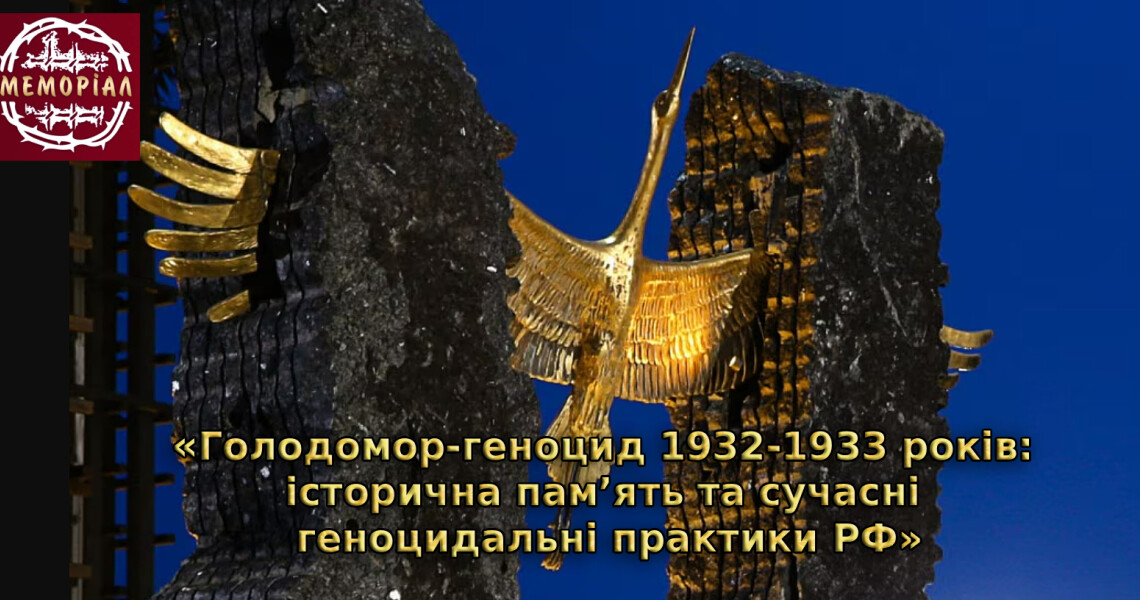
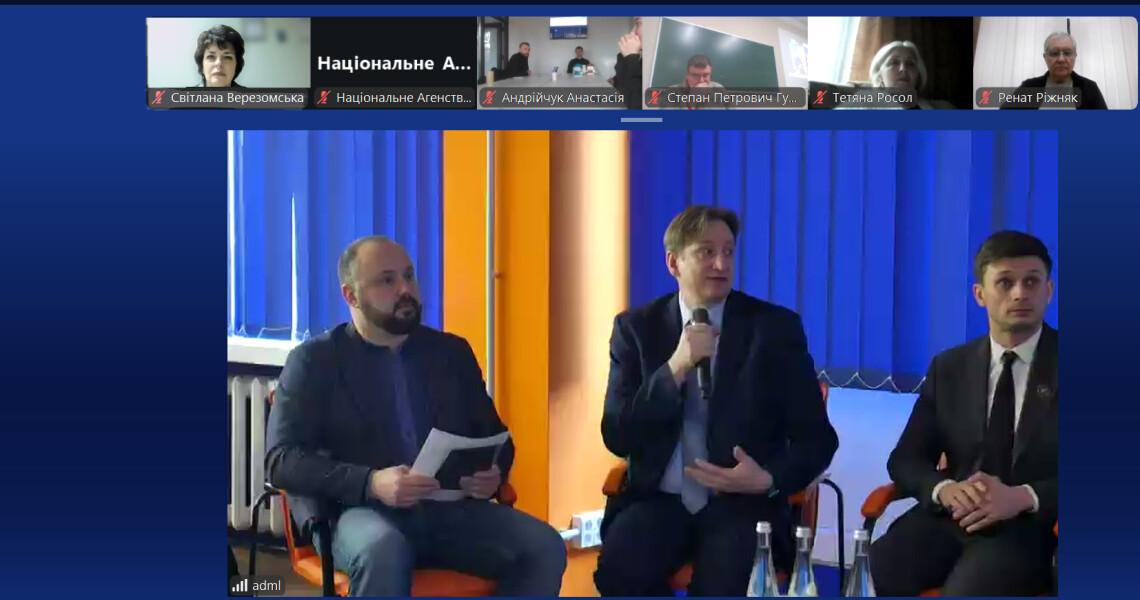
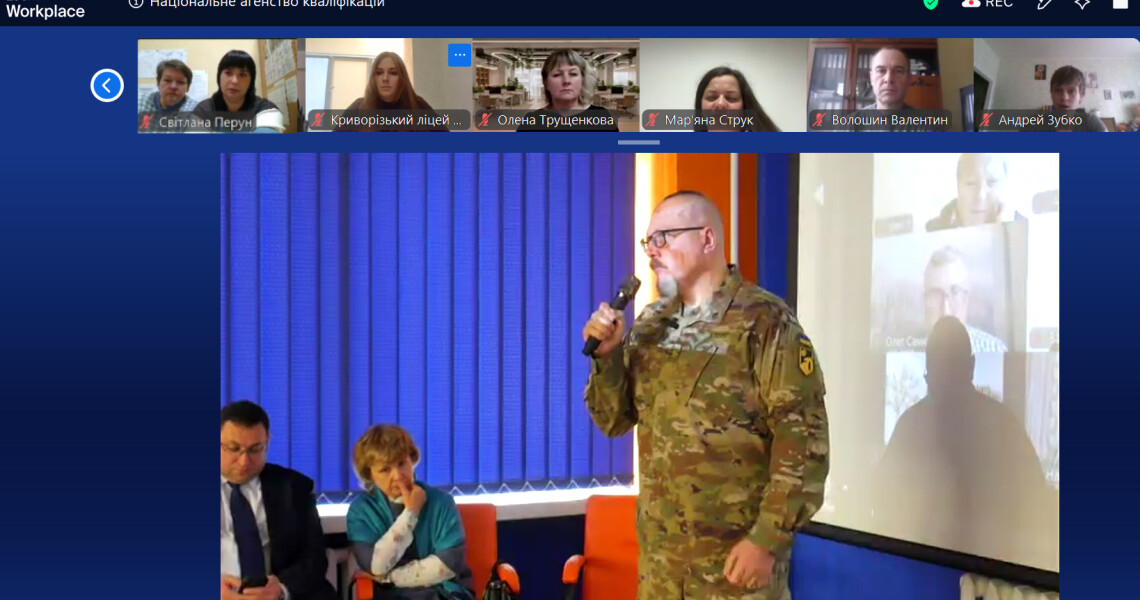
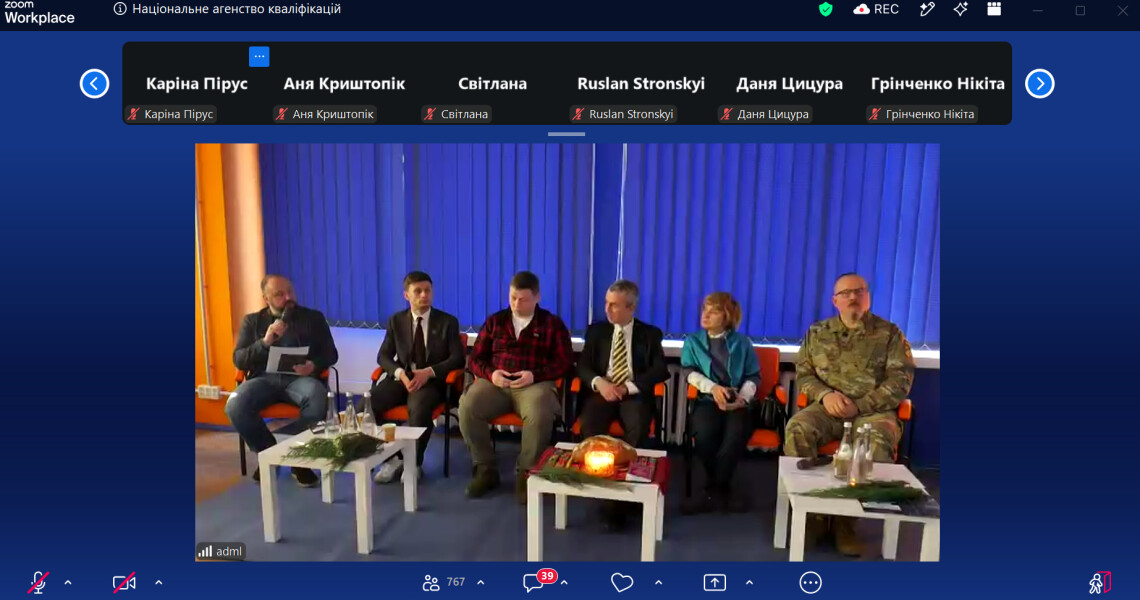
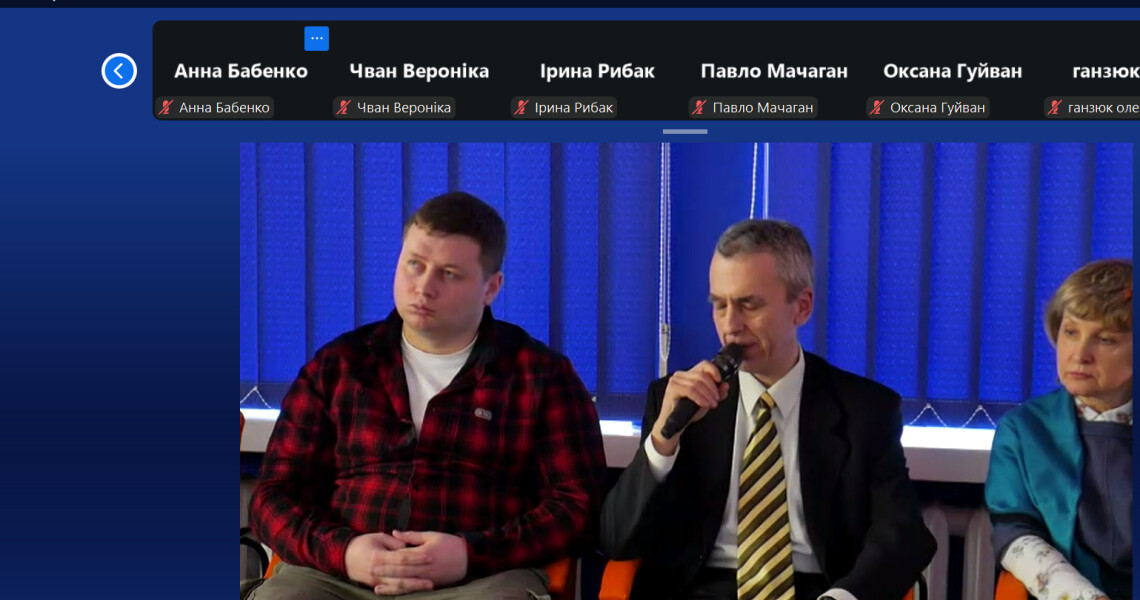
26 листопада 2026 року викладачі кафедри філософії та суспільних наук разом зі здобувачами освіти 1-го курсу груп 6, 9, 13 та 20 ОПП «Стоматологія» Полтавського державного медичного університету долучилися до круглого столу «Голодомор-геноцид 1932–1933 років: історична пам’ять та сучасні геноцидальні практики РФ», організованого ГО «Всеукраїнська правозахисна організація „Меморіал“ імені Василя Стуса».
Захід об’єднав істориків, науковців, освітян, правозахисників, представників державних інституцій, військовослужбовців та студентську молодь. В онлайн-форматі до круглого столу долучилися понад 1000 учасників з усієї України.
З вітальним словом до присутніх звернувся Голова Верховної Ради України Руслан Стефанчук. Серед спікерів заходу були міністр освіти і науки України Андрій Бутенко та Президент України у 2005–2010 роках Віктор Ющенко.
Особливе місце в програмі круглого столу посів виступ Владислава Дутчака (позивний «Доцент»), представника 1-го корпусу НГУ «Азов», учасника оборони Маріуполя, на тему «Сучасні практики застосування тортур голодом до полонених у РФ».
Глибокий емоційний відгук викликали свідчення українських військовослужбовців Романа Борща, Сергія Ахметова та Бориса Кліщова, які пережили російський полон. Їхні особисті історії стали важливими свідченнями сучасних порушень прав людини та привернули увагу до проблеми захисту людської гідності в умовах збройної агресії.
Правовий аспект проблеми висвітлив Іван Дулкай, представник Головного слідчого управління Національної поліції України, у виступі «Документування та розслідування злочинів РФ із ознаками геноциду: практика Національної поліції України».
Питання збереження історичної пам’яті та доступу до архівних джерел розкрила Світлана Старовойт, директорка Галузевого державного архіву Українського інституту національної пам’яті, у доповіді «Доступ до історичної правди: розсекречення фондів та введення нових документів до наукового обігу». До обговорення також долучилася Леся Гасиджак, директорка Національного музею Голодомору-геноциду.
Участь у круглому столі стала для майбутніх медичних працівників важливою можливістю поглибити історичні знання, осмислити зв’язок між трагічними подіями минулого та сучасними викликами, усвідомити значення міжнародного гуманітарного права, захисту прав людини, документування злочинів і збереження свідчень постраждалих.
Такі заходи є невід’ємною складовою національно-патріотичного та правового виховання студентської молоді, сприяють формуванню історичної свідомості, гуманістичного світогляду, громадянської відповідальності й поваги до людського життя.
Зберігати пам’ять – означає протидіяти забуттю. Знати історичну правду – означає усвідомлювати відповідальність за недопущення повторення злочинів проти людяності.
Пам’ятаємо жертв Голодомору. Шануємо мужність українських захисників.
Пресслужба Полтавского державного медицинского университета
PSMU Joins a Round Table on the Holodomor Genocide and russia’s Contemporary Genocidal Practices
On 26 November 2026, faculty members of the Department of Philosophy and Social Sciences, together with first-year students from Groups 6, 9, 13 and 20 of the Dentistry educational programme at Poltava State Medical University (PSMU), participated in a round table entitled “The Holodomor Genocide of 1932–1933: Historical Memory and russia’s Contemporary Genocidal Practices”. The event was organised by the Vasyl Stus All-Ukrainian Human Rights Organisation “Memorial”.
The event brought together historians, researchers, educators, human rights advocates, representatives of government institutions, military personnel and university students. More than 1,000 participants from across Ukraine joined the round table online.
The participants were welcomed by Ruslan Stefanchuk, Chairman of the Verkhovna Rada of Ukraine. The speakers included Andrii Butenko, Minister of Education and Science of Ukraine, and Viktor Yushchenko, President of Ukraine from 2005 to 2010.
A special place in the programme was given to the presentation by Vladyslav Dutchak (call sign “Docent”), a representative of the 1st Corps of the National Guard of Ukraine “Azov” and a participant in the defence of Mariupol, entitled “Contemporary Practices of Using Starvation as a Form of Torture against Prisoners of War in russia”.
The testimonies of Ukrainian servicemen Roman Borshch, Serhii Akhmetov and Borys Klishchov, who had endured russian captivity, evoked a profound emotional response. Their personal accounts provided important evidence of contemporary human rights violations and drew attention to the protection of human dignity in the context of armed aggression.
The legal dimension of the issue was addressed by Ivan Dulkai, a representative of the Main Investigative Department of the National Police of Ukraine, in his presentation entitled “Documenting and Investigating russian Crimes Bearing the Signs of Genocide: The Practice of the National Police of Ukraine”.
The importance of preserving historical memory and ensuring access to archival sources was highlighted by Svitlana Starovoit, Director of the Sectoral State Archive of the Ukrainian Institute of National Remembrance, in her presentation entitled “Access to Historical Truth: Declassification of Archival Collections and the Introduction of New Documents into Academic Circulation”. Lesia Hasydzhak, Director of the National Museum of the Holodomor-Genocide, also contributed to the discussion.
Participation in the round table provided future healthcare professionals with a valuable opportunity to deepen their historical knowledge, reflect on the links between the tragic events of the past and contemporary challenges, and gain a better understanding of the importance of international humanitarian law, human rights protection, crime documentation and the preservation of testimonies from those affected.
Events of this kind are an integral part of the national-patriotic and legal education of university students. They contribute to developing historical awareness, a humanistic worldview, civic responsibility and respect for human life.
Preserving memory means standing against oblivion. Knowing the historical truth means recognising our responsibility to prevent crimes against humanity from happening again.
We remember the victims of the Holodomor. We honour the courage of Ukraine's defenders.