



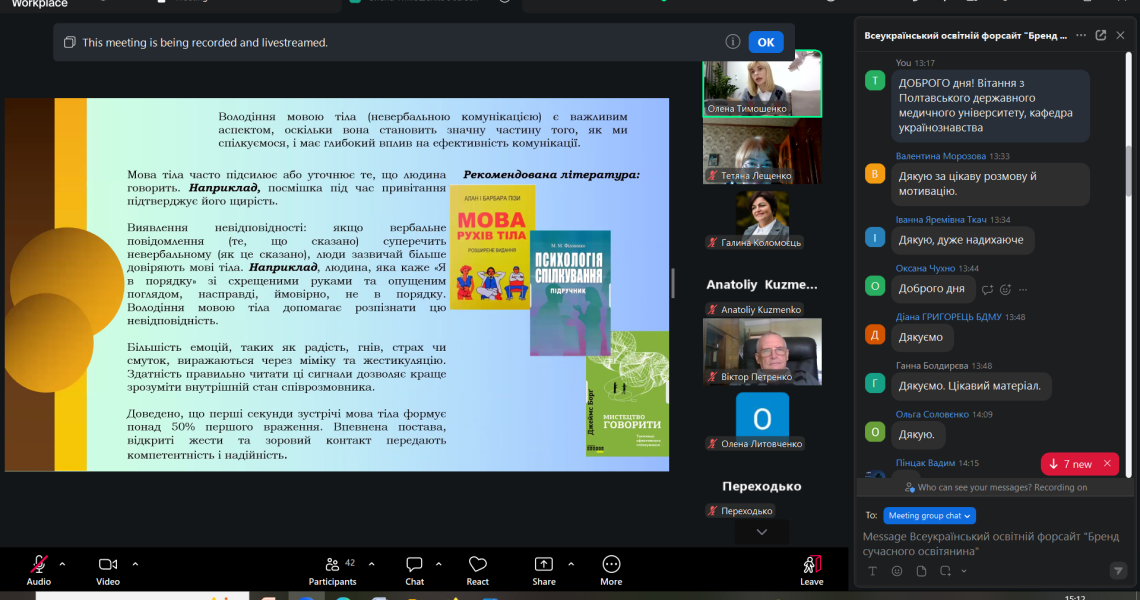
Кафедра українознавства та гуманітарної підготовки ПДМУ (завідувачка кафедри – доцентка Тетяна Лещенко) взяла участь у Всеукраїнському освітньому форсайті «Бренд сучасного освітянина», який відбувся в онлайн-форматі 26 вересня.
Організаторами та ключовими партнерами заходу були ДНУ «Інститут модернізації змісту освіти» Міністерства освіти і науки України, кафедра професійної освіти Українського державного університету імені Михайла Драгоманова, ГО «Агенція сталого розвитку та освітніх ініціатив», освітня платформа «4 People», ГО «Національна та громадянська ідентичність».
Мета форсайту – створення професійного майданчика для формування сучасної моделі українського освітянина, розвитку управлінських, цифрових, комунікаційних і лідерських компетентностей, популяризації інноваційних освітніх практик та інтеграції можливостей штучного інтелекту в освітній процес.
Форсайт відбувся за такими актуальними напрямами розвитку української освіти:
- сучасне управління закладом освіти та освітніми проєктами;
- використання технологій штучного інтелекту в професійній діяльності педагога;
- розвиток професійного бренду освітянина й академічної доброчесності;
- ефективна комунікація, партнерство і взаємодія;
- формування культури довіри;
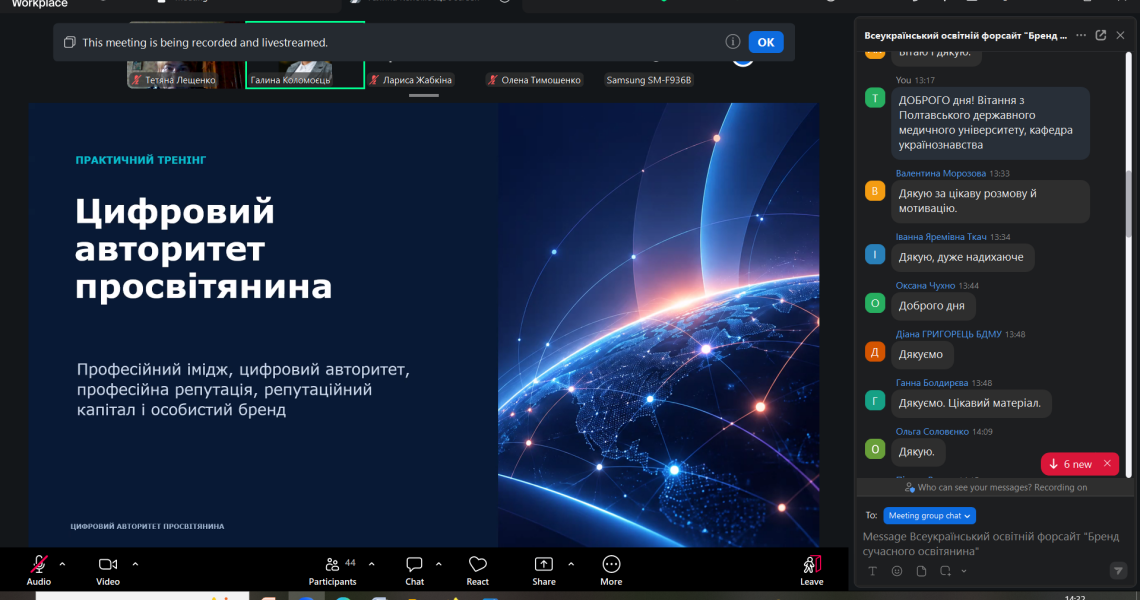
- цифрове лідерство і трансформація освіти;
- інноваційні педагогічні технології та сучасні методики навчання;
- професійний розвиток і безперервне підвищення кваліфікації;
- психологічна стійкість, адаптивність і лідерство;
- обмін успішними практиками та інноваційними кейсами.
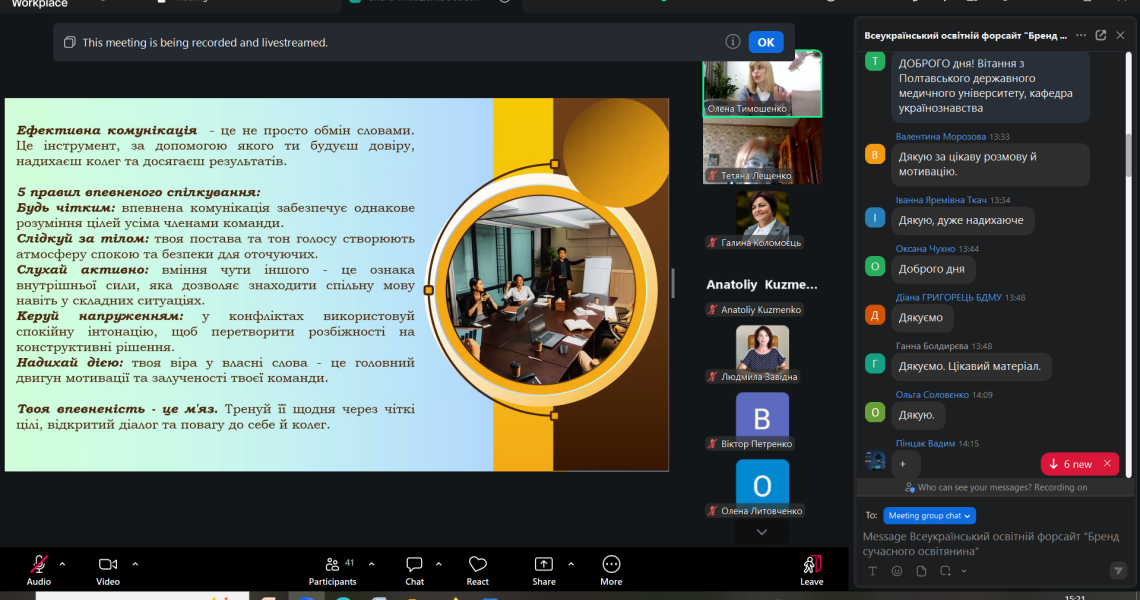
Виступи ключових експертів форсайту були сфокусовані на практичних інструментах, інтеграції штучного інтелекту в роботу викладача, а також ефективних комунікаціях і побудові культури довіри в освітньому процесі.
Ключову координаційну та експертну роль відігравали представники організаторів: Галина Коломоєць – кандидат педагогічних наук, заслужений працівник освіти України, заступниця директора ДНУ «Інститут модернізації змісту освіти» МОН України; Олена Тимошенко – доктор економічних наук, професор, голова правління ГО «Агенція сталого розвитку та освітніх ініціатив»; Тетяна Малечко – кандидат педагогічних наук, начальниця відділу науково-методичного забезпечення підвищення якості освіти ДНУ «ІМЗО».
Експерти кафедри професійної освіти УДУ імені Михайла Драгоманова презентували кейси щодо трансформації професійної ідентичності сучасного викладача в епоху цифровізації.
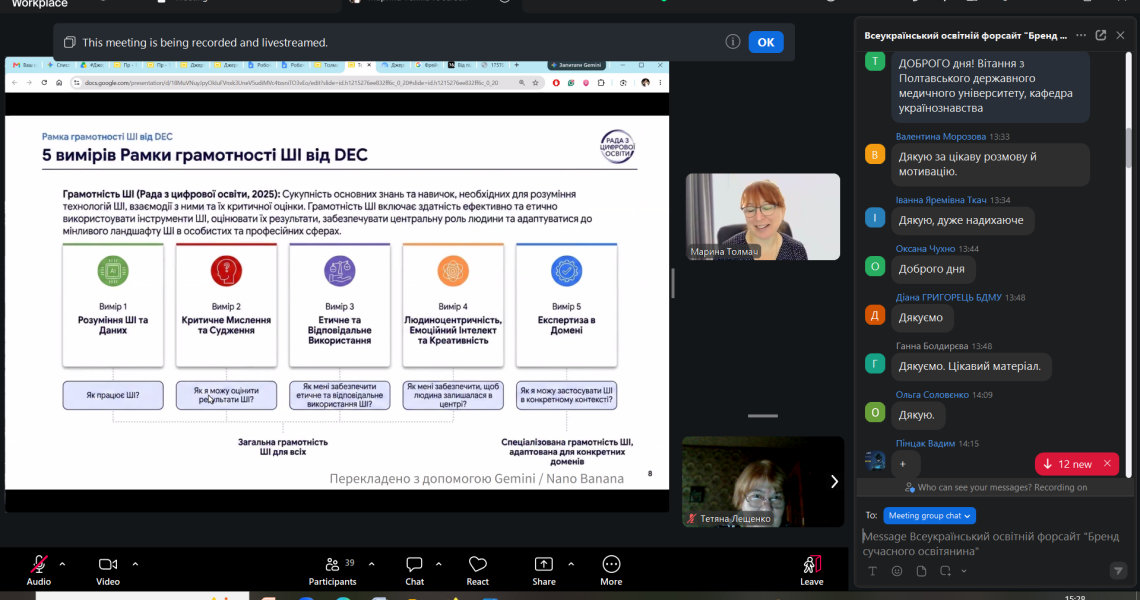
Програма дня містила практичні воркшопи з використання AI-інструментів для генерації інтерактивних вправ і створення освітнього контенту, а також панельні дискусії про педагогіку партнерства.
Форсайт як активне проєктування, сучасна соціальна технологія, яка допомагає спрогнозувати майбутнє і спільно домовитися про діяльність для його досягнення, став помітним кроком на шляху професійного вдосконалення науково-педагогічних працівників. Він окреслив провідні освітні проблеми в довгостроковій перспективі, зосередившись на базовій концепції: майбутнє не зумовлене наперед, воно залежить від наших сьогоднішніх дій, і ми можемо вплинути на нього вже тепер, щоб українська освіта залишалася конкурентоспроможною.
Пресслужба Полтавского державного медицинского университета
Professional Development and New Educational Opportunities: PSMU Department Takes Part in All-Ukrainian Educational Foresight
The Department of Ukrainian Studies and Humanities at Poltava State Medical University (Head of the Department – Associate Professor Tetiana Leshchenko) took part in the All-Ukrainian Educational Foresight “The Brand of a Modern Educator”, held online on 26 September.
The event was organized and supported by the Institute for Modernization of the Content of Education of the Ministry of Education and Science of Ukraine, the Department of Professional Education of Mykhailo Drahomanov Ukrainian State University, the NGO “Agency for Sustainable Development and Educational Initiatives”, the “4 People” educational platform, and the NGO “National and Civic Identity”.
The aim of the foresight was to create a professional platform for developing a modern model of the Ukrainian educator, enhancing managerial, digital, communication, and leadership competencies, promoting innovative educational practices, and integrating artificial intelligence into the educational process.
The foresight focused on the following relevant areas of development of Ukrainian education:
modern management of educational institutions and educational projects;
the use of artificial intelligence technologies in the professional activities of educators;
development of an educator’s professional brand and academic integrity;
effective communication, partnership, and cooperation;
fostering a culture of trust;
digital leadership and educational transformation;
innovative pedagogical technologies and modern teaching methods;
professional development and continuous professional training;
psychological resilience, adaptability, and leadership;
sharing successful practices and innovative cases.
The presentations by the foresight’s key experts focused on practical tools, the integration of artificial intelligence into teaching, as well as effective communication and building a culture of trust in the educational process.
Representatives of the organizing institutions played a key coordinating and expert role: Halyna Kolomoiets, PhD in Pedagogy, Honoured Education Worker of Ukraine, Deputy Director of the Institute for Modernization of the Content of Education of the Ministry of Education and Science of Ukraine; Olena Tymoshenko, Doctor of Economics, Professor, Chair of the Board of the NGO “Agency for Sustainable Development and Educational Initiatives”; and Tetiana Malechko, PhD in Pedagogy, Head of the Department for Scientific and Methodological Support for Improving the Quality of Education at the Institute for Modernization of the Content of Education.
Experts from the Department of Professional Education of Mykhailo Drahomanov Ukrainian State University presented case studies on the transformation of the professional identity of modern educators in the era of digitalization.
The programme included practical workshops on using AI tools to generate interactive exercises and create educational content, as well as panel discussions on partnership-based pedagogy.
As a form of proactive planning and a modern social technology that helps anticipate the future and jointly agree on actions to achieve it, the foresight marked an important step towards the professional development of academic and teaching staff. It highlighted key educational challenges from a long-term perspective, focusing on the fundamental concept that the future is not predetermined: it depends on our actions today, and we can influence it now to ensure that Ukrainian education remains competitive.