


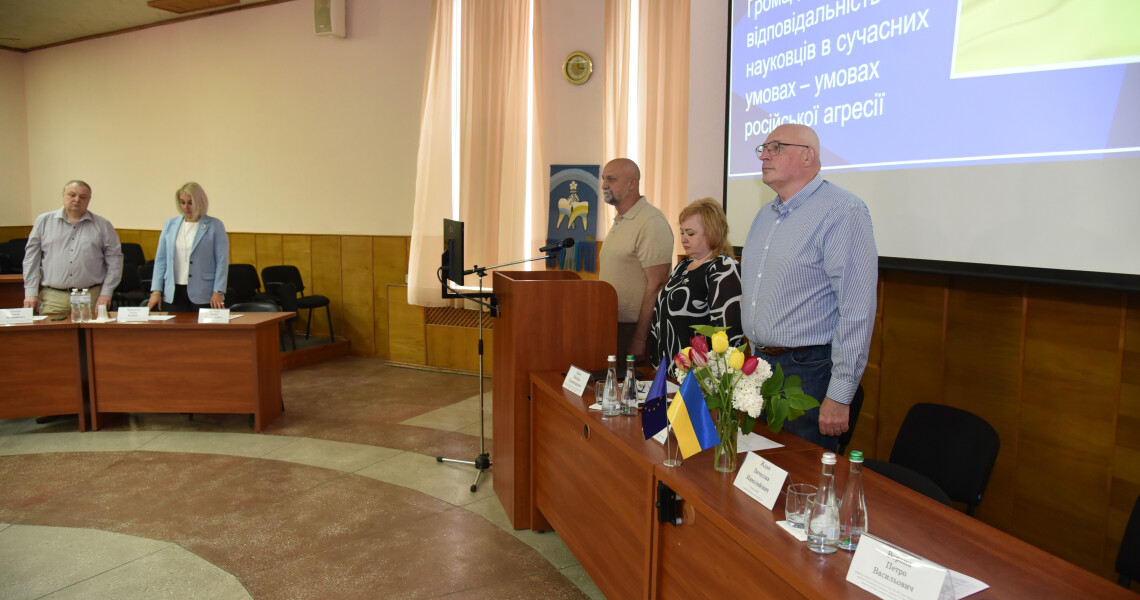
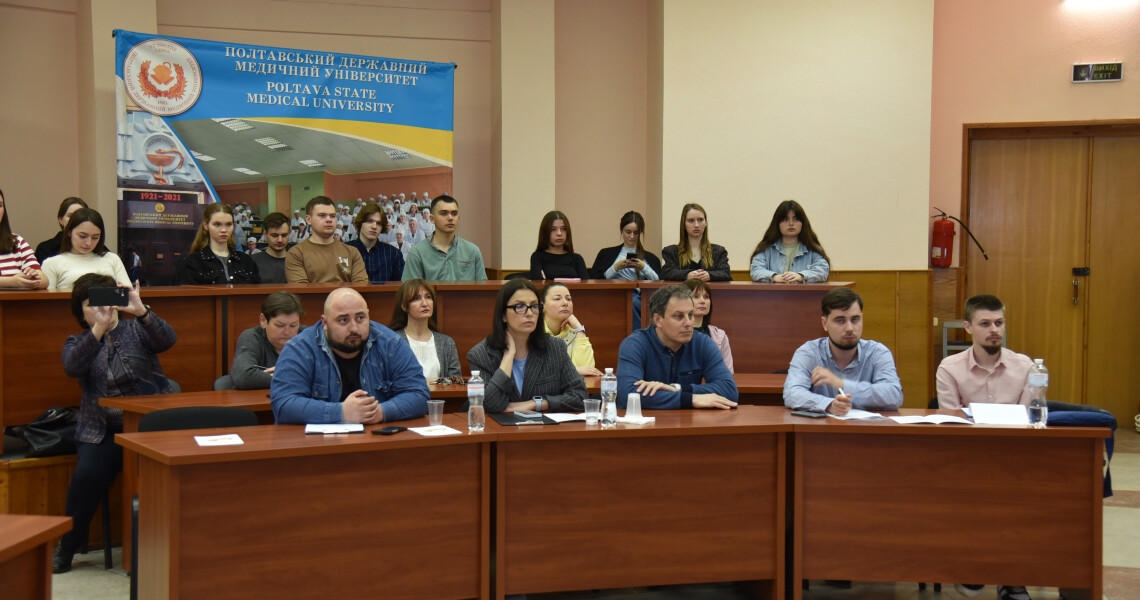
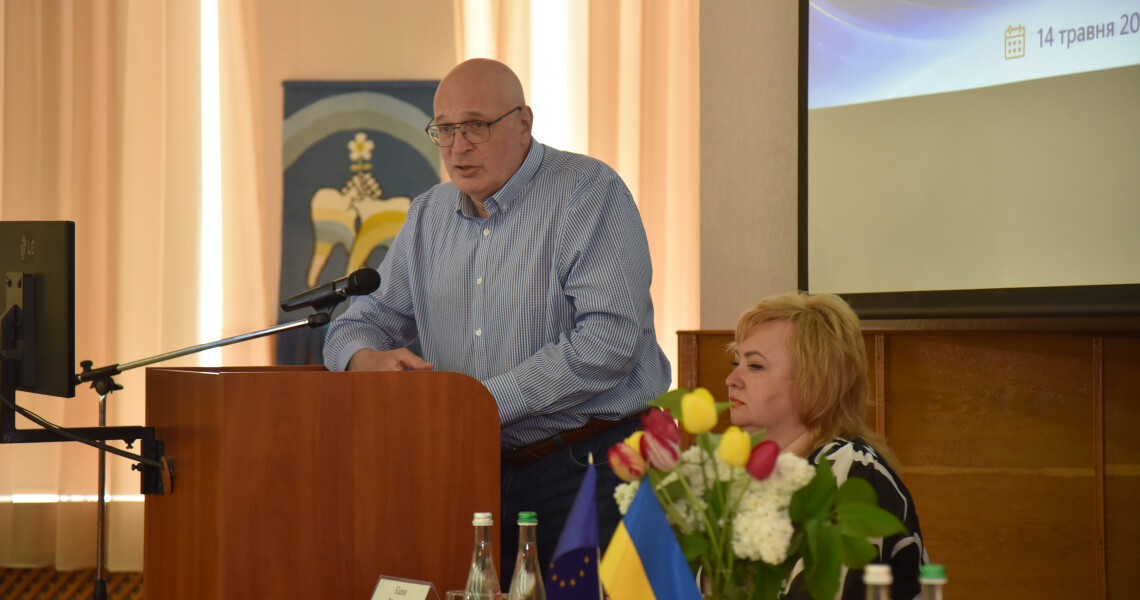
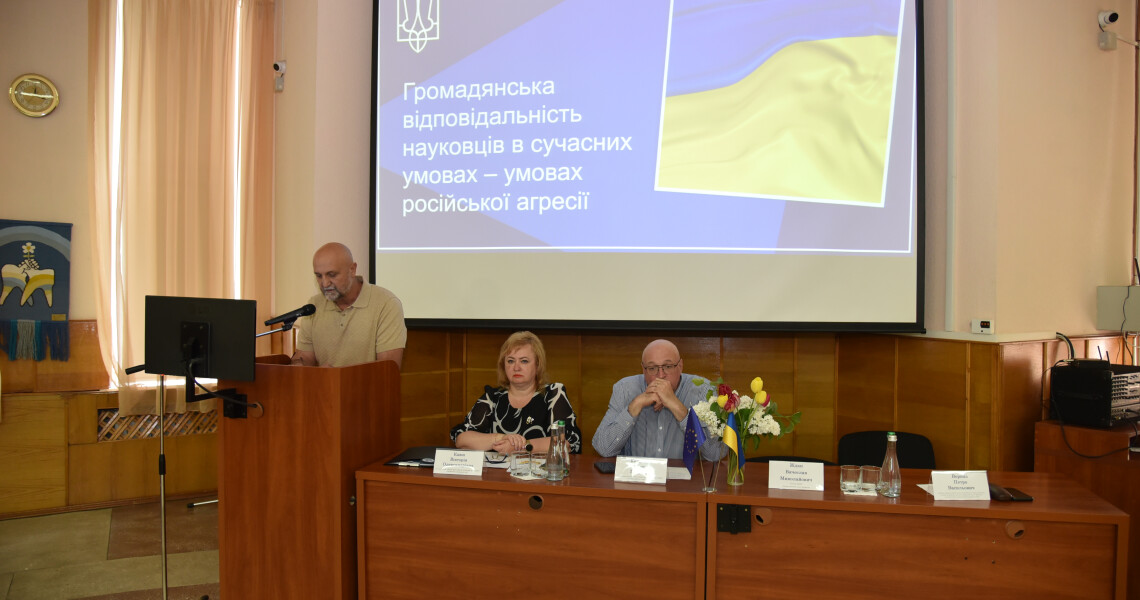
Щорічний Форум науки у Полтавському державному медичному університеті охоплює низку конференцій і наукових заходів, що проводяться під егідою Міністерства охорони здоров’я України та Міністерства освіти і науки України для науковців, викладачів і здобувачів вищої освіти.
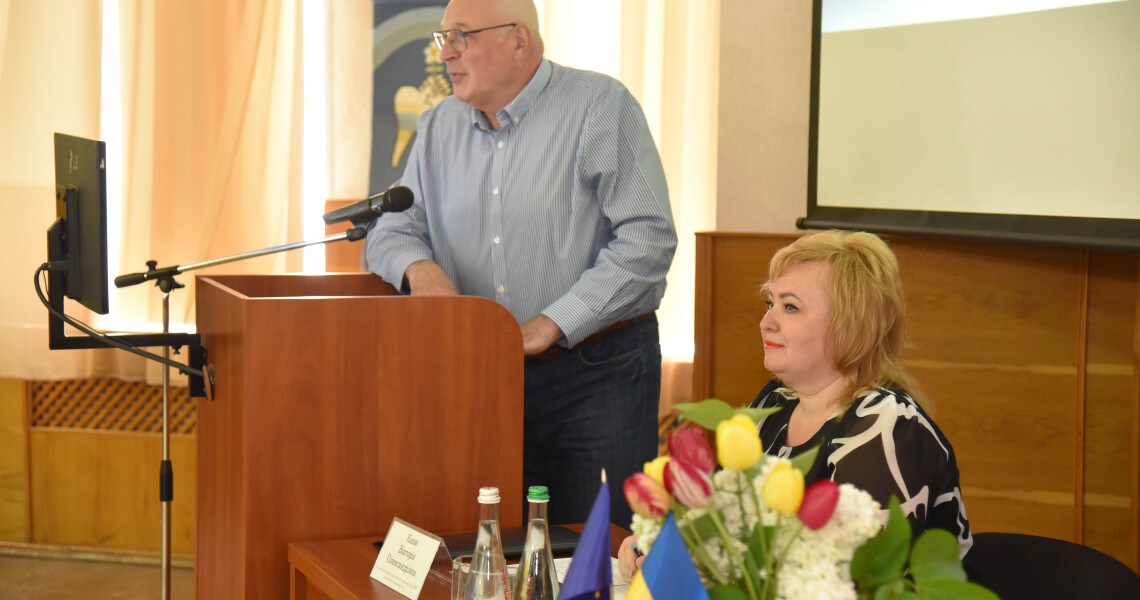
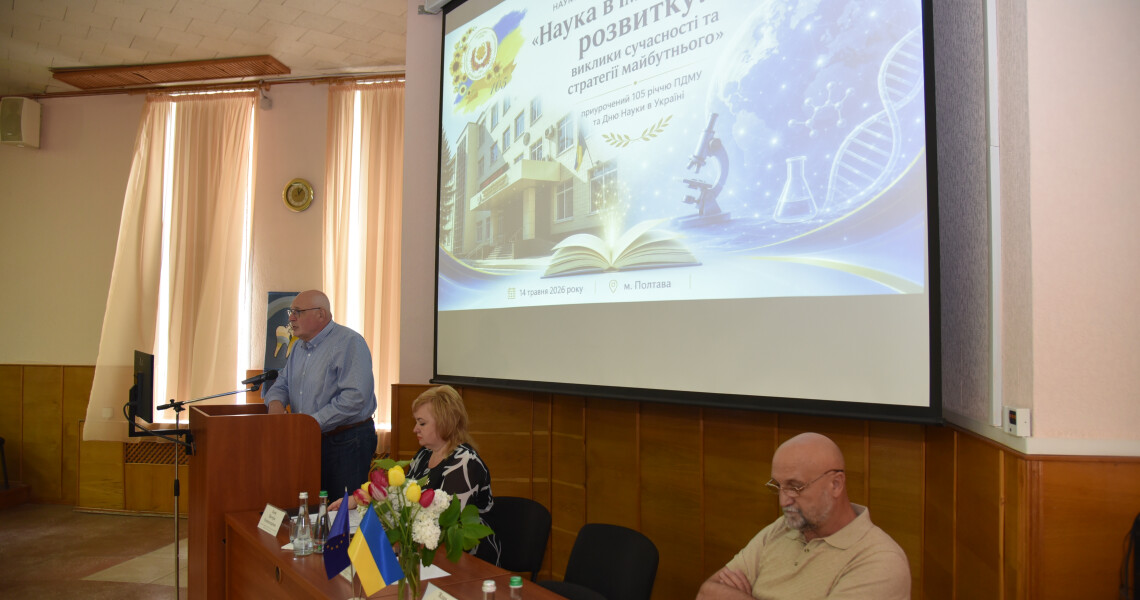
Захід розпочався міждисциплінарним науково-практичним круглим столом «Наука в ім’я миру та розвитку: виклики сучасності та стратегії майбутнього», присвяченим Дню науки в Україні та 105-річчю Полтавського державного медичного університету.
Під час роботи круглого столу науковці обговорили проблеми сучасної онтології, гносеології та методології в медицині, а також ключові виклики розвитку науково-технічного, соціально-економічного та людського потенціалу в умовах війни. Окрему увагу приділили питанням забезпечення конкурентоспроможності України у світі та сталого розвитку суспільства і держави.(https://pdmu.edu.ua/events/nauka-v-im-ya-miru-ta-rozvitku-vikliki-suchasnosti-ta-strategiyi-maybutnogo).
Філософські проблеми сучасної онтології, гносеології та методології у медицині обговорювали фахівці в галузі медицини, філософії, державного управління, історії та психології. Окрему увагу приділили питанням громадянської відповідальності науковців, відновленню історичної справедливості у формуванні сучасної національної ідентичності, а також ментальним проблемам і психологічній стійкості захисників.
Клініко-імунологічні особливості перебігу вірусних гепатитів В і С під час воєнного періоду було представлено у доповідях професорів Ігоря Кайдашева та Тетяни Коваль. Було розглянуто основні результати виконання проєкту «Розробка прогностичних моделей перебігу вірусних гепатитів В і С під час воєнного та післявоєнного періодів в Україні на ґрунті клініко-імунологічних та біоінформаційних досліджень» (реєстраційний номер проєкту – 2025.07/0353), що фінансується Національним фондом досліджень України. Було представлено порівняння тенденцій захворюваності на гострий гепатит В в Україні та Полтавській області, проаналізовано співвідношення хронічних і гострих форм вірусного гепатиту В та результати національного тестування на вірусні гепатити, окреслено можливості подальшого подолання основних бар’єрів у діагностиці хронічних гепатитів В і С.
Під час засідання секції молодих вчених було представлено результати дисертаційних досліджень аспірантів ПДМУ. Розглянули стоматологічні теми, зокрема молекулярно-біологічні підходи до вдосконалення методики екстракції медіально нахилених нижніх третіх молярів та клініко-біохімічні аспекти профілактики карієсу у дітей внутрішньо переміщених осіб в умовах війни. Обговорювали клінічні випадки кардіохірургічної практики, біоетичні виклики донорства мітохондрій. Активно дискутували про прикладні проблеми біомедичної науки, зокрема маніпулювання страхом в умовах війни з погляду психіатрії, принципів використання інструментів штучного інтелекту у роботі сучасного дослідника вищої медичної школи.
Захід став науковим майданчиком для обговорення важливих проблем біомедичної науки в умовах війни, сприяв плануванню наукових напрямів на післявоєнне відновлення. Круглий стіл щороку розширює і число учасників, і коло досліджуваних проблем.
На завершення організатори побажали вченим натхнення у визначенні перспектив розвитку науки, вагомих результатів роботи та плідних зустрічей у колі однодумців.
Пресслужба Полтавського державного медичного університету
Interdisciplinary Round Table on the Challenges of Modern Science and Medicine Was Held within the Framework of the PSMU Science Forum 2026
The annual Science Forum at Poltava State Medical University includes a series of conferences and scientific events organized under the auspices of the Ministry of Health of Ukraine and the Ministry of Education and Science of Ukraine for researchers, academic staff, and higher education students.
The event began with the interdisciplinary scientific and practical round table “Science for Peace and Development: Contemporary Challenges and Future Strategies,” dedicated to Science Day in Ukraine and the 105th anniversary of Poltava State Medical University.
During the round table discussions, scholars addressed issues of modern ontology, epistemology, and methodology in medicine, as well as key challenges related to the development of scientific, technological, socio-economic, and human potential under wartime conditions. Particular attention was paid to ensuring Ukraine’s global competitiveness and the sustainable development of society and the state.
Specialists in medicine, philosophy, public administration, history, and psychology discussed philosophical problems of modern ontology, epistemology, and methodology in medicine. Particular emphasis was placed on the civic responsibility of scientists, the restoration of historical justice in shaping modern national identity, as well as mental health issues and the psychological resilience of defenders.
The clinical and immunological features of hepatitis B and C during the wartime period were presented in reports by Professors Igor Kaidashev and Tetiana Koval. The speakers outlined the main results of the project “Development of Prognostic Models for the Course of Viral Hepatitis B and C during the War and Post-War Periods in Ukraine Based on Clinical, Immunological, and Bioinformatic Research” (project registration number 2025.07/0353), funded by the National Research Foundation of Ukraine. The presentations included a comparison of acute hepatitis B incidence trends in Ukraine and the Poltava region, an analysis of the ratio between chronic and acute forms of hepatitis B, and the results of national viral hepatitis testing. Opportunities for overcoming the main barriers to diagnosing chronic hepatitis B and C were also discussed.
During the Young Scientists Section meeting, postgraduate students of Poltava State Medical University presented the results of their dissertation research. The topics included molecular and biological approaches to improving extraction techniques for mesially impacted mandibular third molars and clinical and biochemical aspects of caries prevention in children of internally displaced persons during wartime. Participants also discussed clinical cases from cardiac surgery practice and bioethical challenges related to mitochondrial donation.
Active discussions focused on applied problems of biomedical science, including the manipulation of fear during wartime from the perspective of psychiatry, as well as the principles of using artificial intelligence tools in the work of contemporary researchers at higher medical education institutions.
The event became an important scientific platform for discussing pressing issues of biomedical science under wartime conditions and contributed to planning scientific priorities for post-war recovery. Each year, the round table continues to expand both the number of participants and the range of research topics addressed.
At the conclusion of the event, the organizers wished the participants inspiration in defining future scientific directions, significant research achievements, and productive meetings among like-minded colleagues.