


Сучасний освітній простір стрімко змінюється, і разом із розвитком новітніх технологій особливої актуальності набувають питання дотримання принципів академічної доброчесності.
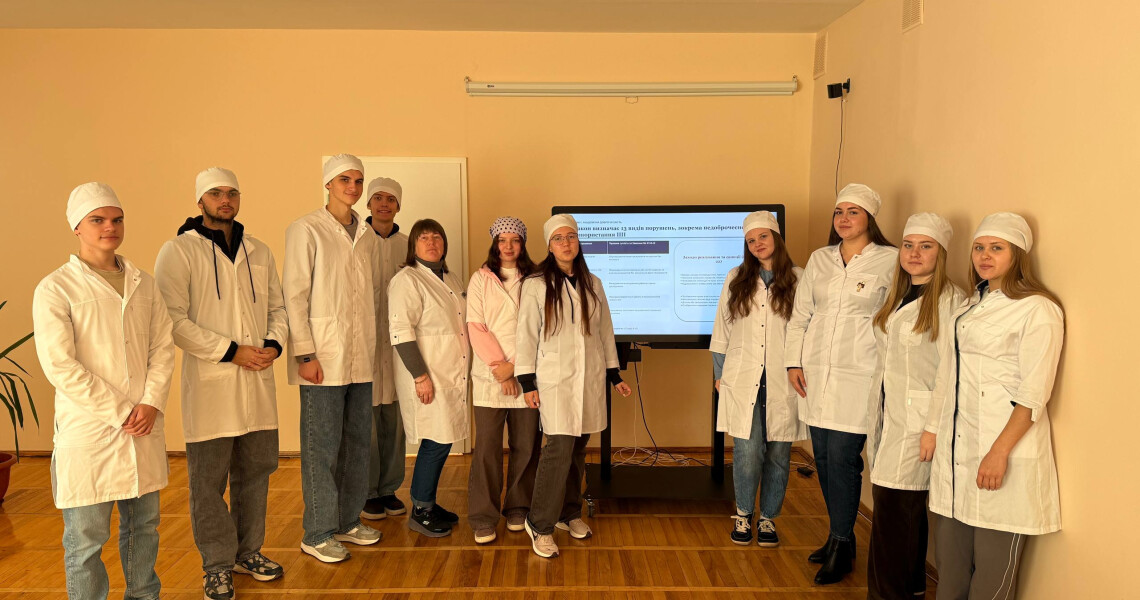
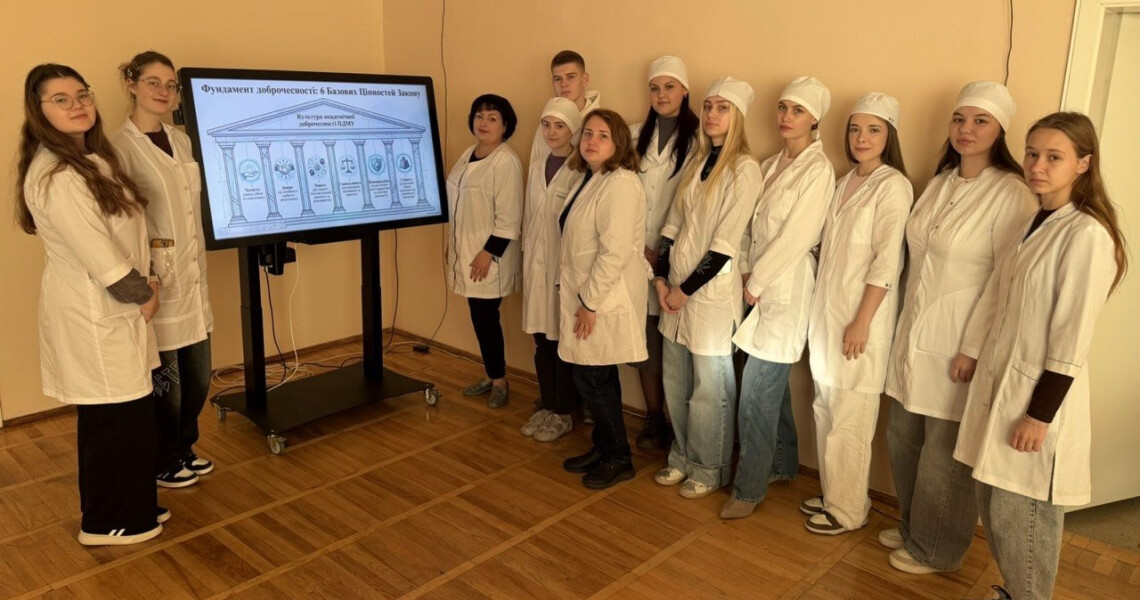
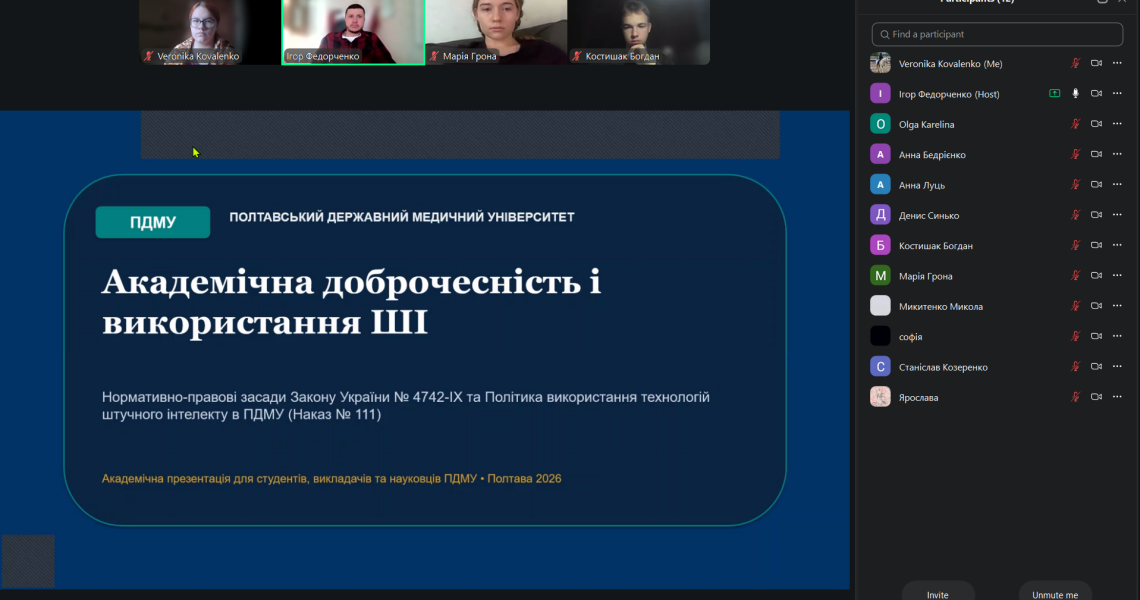
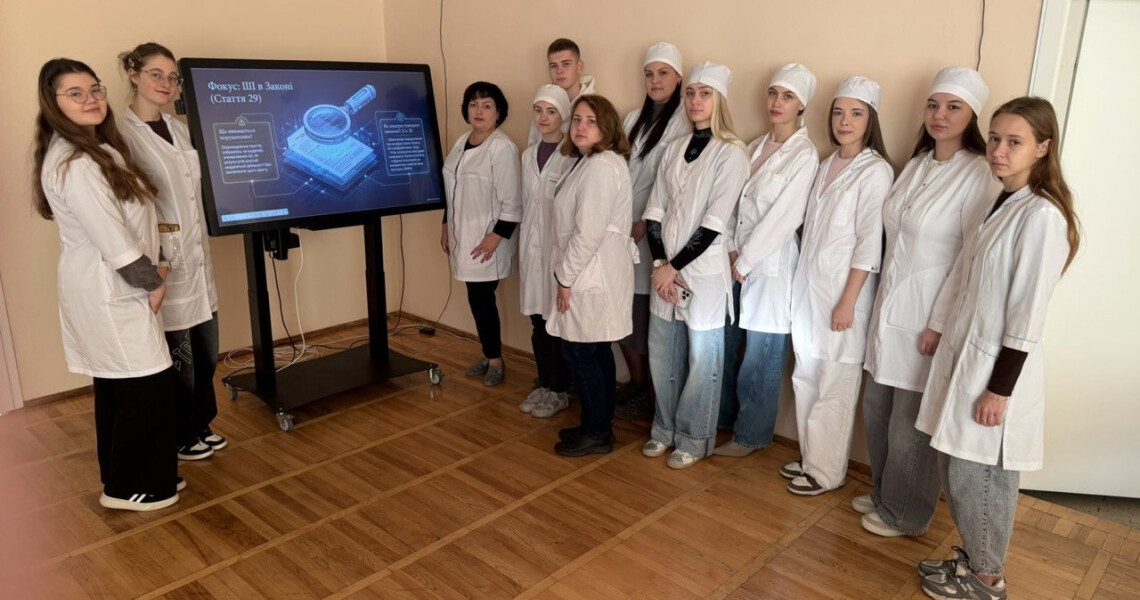
Під керівництвом завідувача кафедри анатомії людини Полтавського державного медичного університету (ПДМУ), професора Володимира Гриня, викладачі кафедри провели тематичні бесіди зі студентами своїх кураторських груп. Зустрічі відбулися у змішаному форматі.
Під час спілкування учасники обговорили фундаментальні засади академічної доброчесності як основи професіоналізму майбутнього лікаря, а також висвітлили етичні аспекти використання штучного інтелекту в навчальному процесі та науковій діяльності. Викладачі наголосили на важливості персональної відповідальності й дотримання авторських прав при роботі з інноваційними цифровими інструментами. Особливу увагу звернули на те, що штучний інтелект є лише допоміжним ресурсом, який не може замінити глибоких фундаментальних знань, критичного мислення та практичних навичок медика.
Дякуємо студентам за активну участь у дискусії та свідоме ставлення до навчання, адже разом ми формуємо якісну та чесну медичну освіту!
Пресслужба Полтавского державного медицинского университета
Academic Integrity and the Ethics of AI Use: Academic Advising Sessions at the Department of Human Anatomy at PSMU
The modern educational landscape is changing rapidly, and with the development of new technologies, adherence to the principles of academic integrity has become increasingly important.
Under the guidance of Professor Volodymyr Hryn, Head of the Department of Human Anatomy at Poltava State Medical University (PSMU), the Department’s academic staff held thematic discussions with students in their assigned academic groups. The meetings were conducted in a hybrid format.
During the discussions, participants explored the fundamental principles of academic integrity as the foundation of professionalism for future physicians and addressed the ethical aspects of using artificial intelligence in education and research. The lecturers emphasized the importance of personal responsibility and respect for copyright when working with innovative digital tools.
Particular attention was drawn to the fact that artificial intelligence is merely an auxiliary resource and cannot replace the in-depth foundational knowledge, critical thinking, and practical skills essential for healthcare professionals.
We thank the students for their active participation in the discussions and their conscientious approach to learning. Together, we are building a high-quality and academically honest medical education system!