


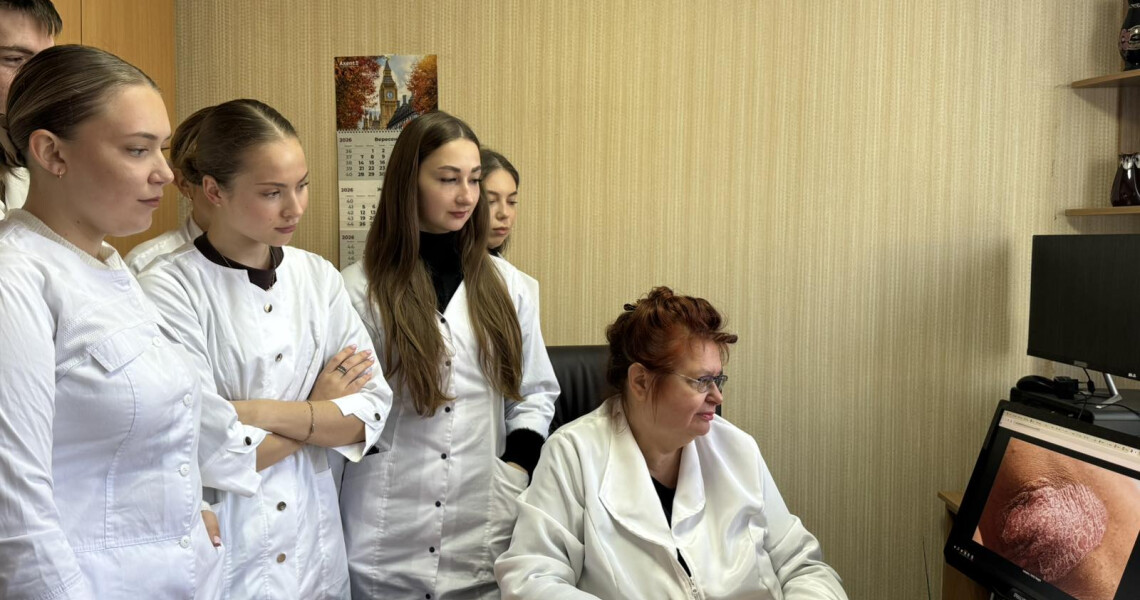
На кафедрі шкірних та венеричних хвороб Полтавського державного медичного університету відбувся інформаційно-просвітницький захід для здобувачів освіти, присвячений Всесвітньому дню боротьби з псоріазом, який щороку відзначають 29 жовтня.
Захід провела завідувачка кафедри, кандидат медичних наук, доцент Катерина Васильєва. Під час просвітницької бесіди вона розповіла про особливості псоріазу, поширені міфи щодо цього захворювання та важливість толерантного ставлення до людей із таким діагнозом.
Псоріаз – це хронічне імунозапальне захворювання, яке найчастіше проявляється ураженням шкіри у вигляді червоних бляшок, вкритих білуватими або сріблястими лусочками. Захворювання не має остаточного способу вилікування, однак сучасні методи терапії дають змогу контролювати його перебіг і поліпшувати якість життя пацієнтів.
Зокрема, Катерина Васильєва нагадала здобувачам освіти, що:
- Псоріаз не є заразним. Він не передається через рукостискання, обійми, спільний посуд, одяг чи відвідування басейну.
- Псоріаз не пов’язаний із недостатньою гігієною. Особливості шкірних проявів не свідчать про охайність чи її відсутність.
- Захворювання може вражати не лише шкіру. У частини пацієнтів розвивається псоріатичний артрит; також псоріаз пов’язаний із підвищеним ризиком серцево-судинних та інших супутніх захворювань.
- Психоемоційний стан має значення. Стрес може провокувати загострення псоріазу, а саме захворювання нерідко супроводжується тривогою та депресією. Тому підтримка близьких і психологічне благополуччя важливі для пацієнтів.
Захід був спрямований не лише на поглиблення знань про псоріаз, а й на формування культури життя без стигми. Адже лікар будь-якої спеціальності має бачити «глибше, ніж шкіра» – сприймати передусім особистість пацієнта, зважати на його переживання та потреби, а не зосереджуватися лише на зовнішніх проявах захворювання.
Пресслужба Полтавского державного медицинского университета
World Psoriasis Day: Educational Event for PSMU Students
The Department of Dermatology and Venereology of Poltava State Medical University (PSMU) hosted an educational awareness event for students dedicated to World Psoriasis Day, observed annually on 29 October.
The event was conducted by Associate Professor Kateryna Vasylieva, PhD in Medical Sciences, Head of the Department of Dermatology and Venereology. During the educational session, she spoke about the characteristics of psoriasis, common myths surrounding the condition and the importance of treating people living with this diagnosis with tolerance and understanding.
Psoriasis is a chronic immune-mediated inflammatory disease that most commonly manifests itself through skin lesions in the form of red plaques covered with whitish or silvery scales. Although there is currently no definitive cure, modern treatment methods make it possible to control the disease and improve patients' quality of life.
In particular, Kateryna Vasylieva reminded students that:
Psoriasis is not contagious. It cannot be transmitted through handshakes, hugs, sharing tableware or clothing, or using swimming pools.
Psoriasis is not associated with poor hygiene. The appearance of skin lesions does not reflect a person's cleanliness or personal hygiene habits.
The disease can affect more than just the skin. Some patients develop psoriatic arthritis. Psoriasis is also associated with an increased risk of cardiovascular and other comorbid conditions.
Emotional and psychological well-being matters. Stress can trigger psoriasis flare-ups, while the disease itself is often accompanied by anxiety and depression. Support from loved ones and psychological well-being are therefore important for patients.
The event aimed not only to deepen students' knowledge of psoriasis but also to foster a culture of life free from stigma. After all, doctors of every speciality should be able to see “beyond the skin” – recognising the patient first and foremost as an individual, taking their feelings and needs into account rather than focusing solely on the visible manifestations of the disease.