


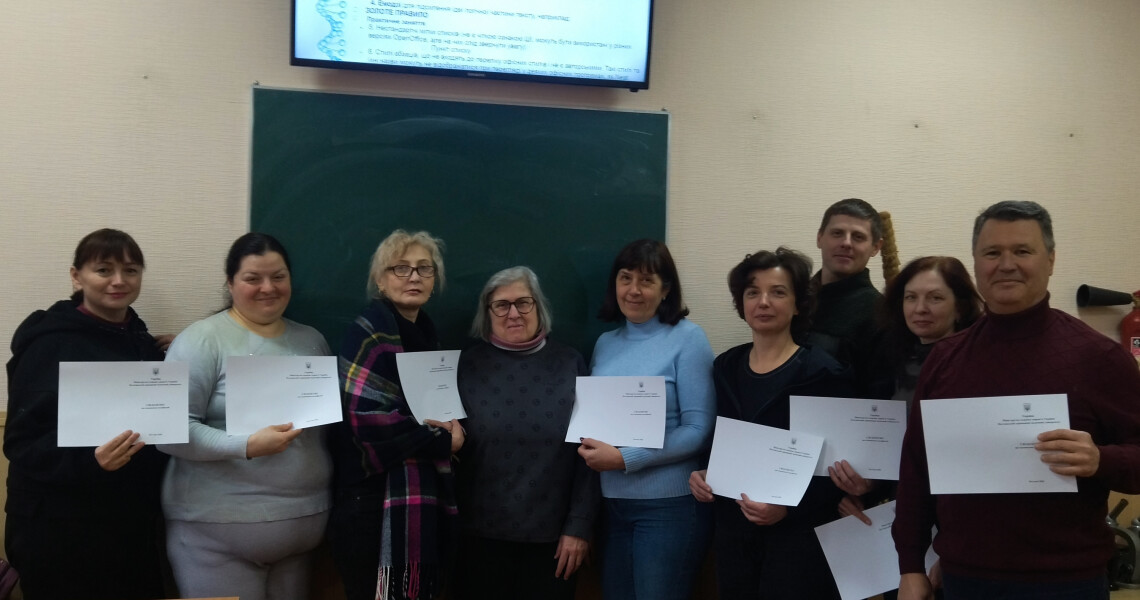
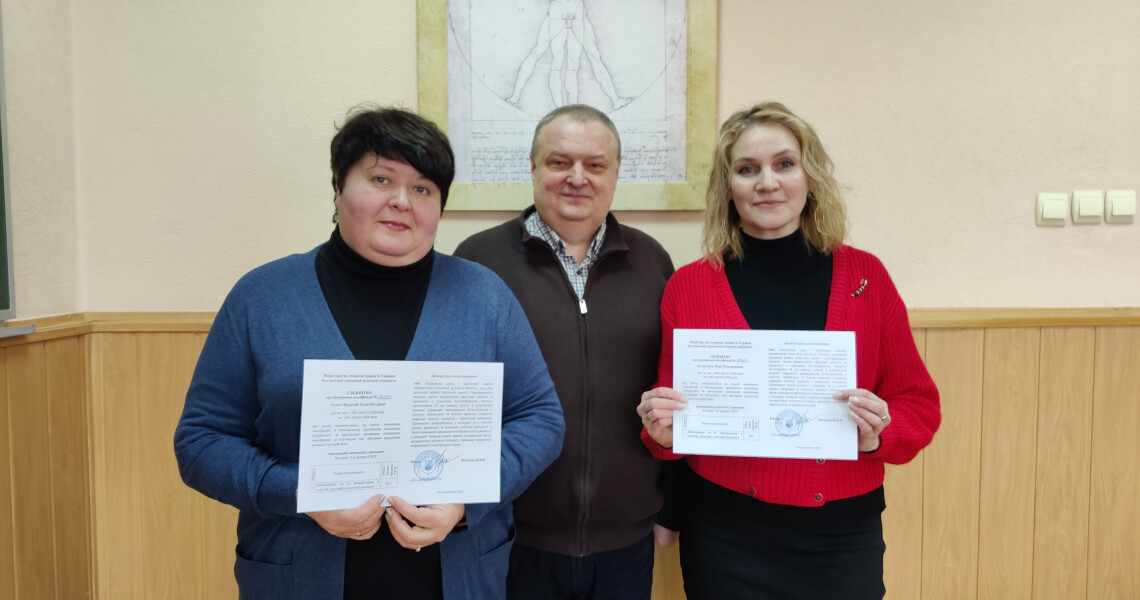
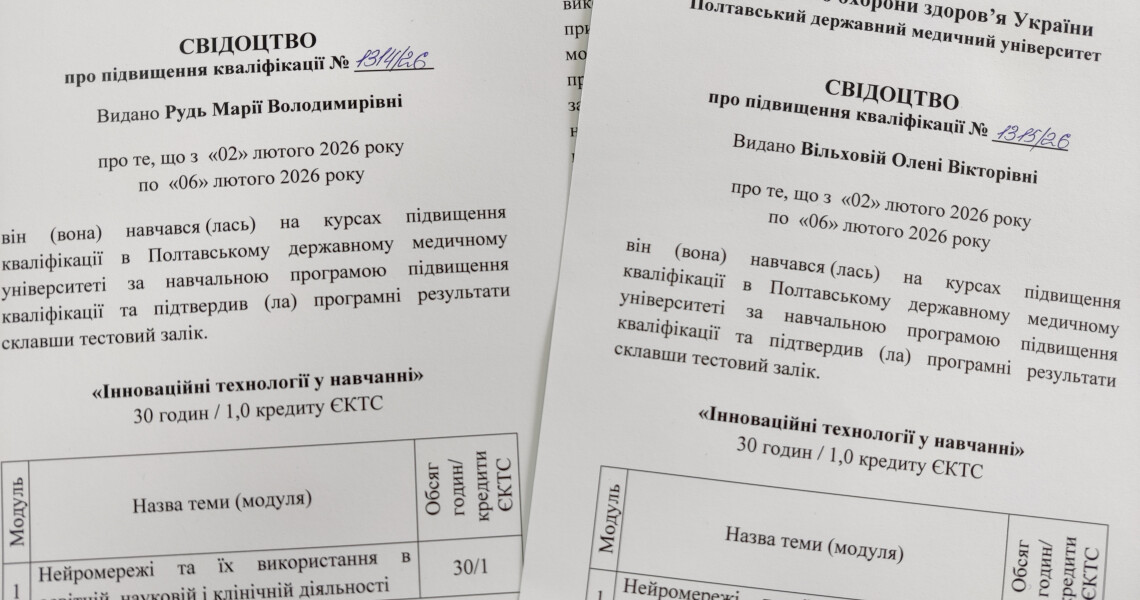
Успішно завершилися курси підвищення кваліфікації науково-педагогічних працівників за навчальною програмою «Інноваційні технології у навчанні», які проходили у два потоки: перший − з 02.02 по 06.02.2026 р., другий − з 09.02 по 13.02.2026 р. Навчання проводила старший викладач кафедри фізики ПДМУ, кандидат біологічних наук Лідія Коровіна.
У межах програми слухачі опанували сучасні підходи до використання технологій штучного інтелекту та нейромереж у професійній діяльності, здобули практичні навички роботи з AI-інструментами, створення інтерактивних навчальних матеріалів і власних цифрових продуктів, а також ознайомилися з принципами етичного застосування штучного інтелекту у сфері вищої освіти та науки.
Після успішного виконання підсумкових завдань учасники отримали свідоцтва про підвищення кваліфікації, що підтверджують набутий рівень сучасних освітніх компетентностей та відкривають нові можливості для подальшого професійного зростання. Реалізація таких програм сприяє підвищенню якості освітнього процесу й сталому розвитку університетського освітнього середовища.
За підсумками анкетування, учасники високо оцінили організацію та проведення курсів у форматі практичних занять і відзначили доцільність подальшого впровадження практико-орієнтованого підходу в програмах підвищення кваліфікації.
Пресслужба Полтавського державного медичного університету
Advanced Technologies in Education: Results of Professional Development Courses for PSMU Academic Staff
The professional development courses for academic and research staff under the training program “Advanced Technologies in Teaching” have been successfully completed at Poltava State Medical University. The courses were delivered in two cohorts: the first from February 2 to February 6, 2026, and the second from February 9 to February 13, 2026. The training was conducted by Lidiia Korovina, Senior Lecturer of the Department of Physics, PhD in Biological Sciences.
Within the program, participants mastered modern approaches to applying artificial intelligence technologies and neural networks in their professional activities. They acquired practical skills in using AI tools, creating interactive educational materials and their own digital products, and became familiar with the principles of ethical application of artificial intelligence in higher education and research.
After successfully completing the final assignments, participants received professional development certificates confirming their newly acquired contemporary educational competencies and opening new opportunities for further professional growth. The implementation of such programs contributes to improving the quality of the educational process and ensuring the sustainable development of the university’s academic environment.
According to the results of participant feedback surveys, attendees highly appreciated the organization and practical format of the courses and emphasized the importance of further implementing a practice-oriented approach in professional development programs.