


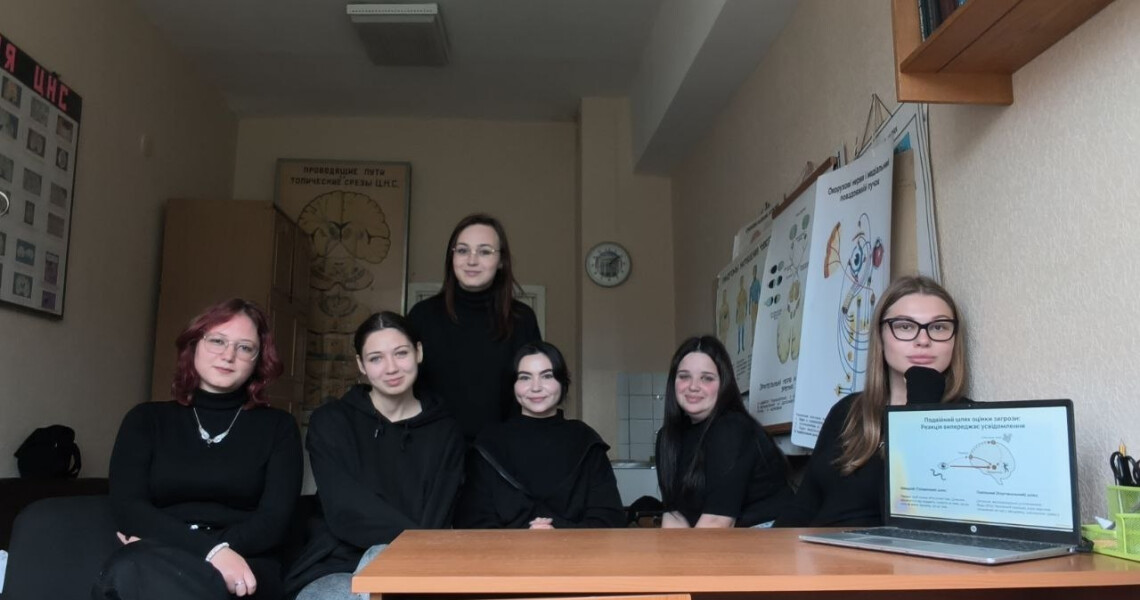
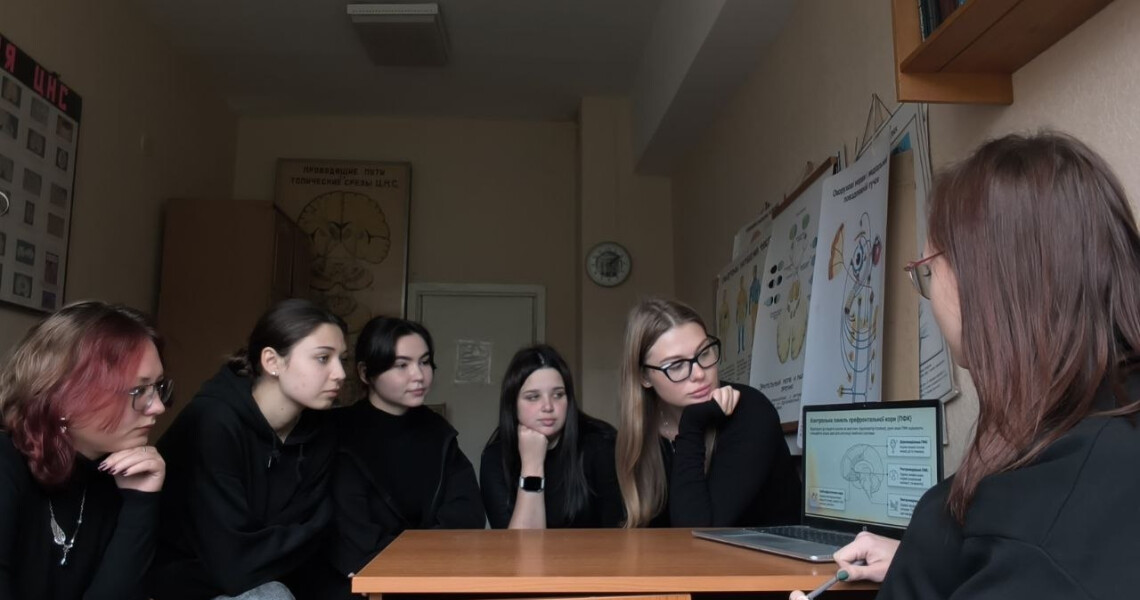
15 жовтня 2026 року на кафедрі нервових хвороб Полтавського державного медичного університету відбувся тематичний семінар «Біологічна мікросхема мозку: архітектура, провідні шляхи та принципи обробки інформації лімбічною системою» для здобувачів освіти 4 курсу групи 401 ОПП «Медична психологія» до Всесвітнього дня психічного здоров'я.
Разом з асистенткою кафедри, лікаркою-неврологинею та психотерапевткою, докторкою філософії Анастасією Шкодіною студенти спробували подивитися на лімбічну систему як на складну біологічну мікросхему. Вона щосекунди вирішує, що варто запам'ятати, чого слід боятися і заради чого варто діяти. Ми простежили, як мигдалина вмикає тривогу ще до того, як ми встигаємо щось усвідомити. Розібрали, як гіпокамп формує спогади і посилює страх, а префронтальна кора, навпаки, вміє його погасити. Поговорили й про те, чому «хотіти» і «отримувати задоволення» в мозку зовсім не одне й те саме. Саме ця різниця пояснює механізм залежностей.
Тему обрали не випадково. Війна змушує систему загрози українців працювати без перерви: сирени, тривожні новини, постійна готовність до небезпеки. Коли «запобіжник» з боку кори слабшає, з'являються безсоння, тривожні розлади, ПТСР. Майбутнім медичним психологам важливо розуміти ці процеси не лише на рівні симптомів, а й на рівні мозку. Тоді пацієнтові можна пояснити, що з ним відбувається, і показати, що його реакції мають зрозумілу природу.
Розмова вийшла жвавою: студенти ставили запитання, наводили приклади з життя й пов'язували нейроанатомію зі своєю майбутньою практикою.
Пресслужба Полтавского державного медицинского университета
The Brain at War: The Neurobiology of Emotions on the Occasion of World Mental Health Day
On October 15, 2026, the Department of Nervous Diseases at Poltava State Medical University (PSMU) held a thematic seminar entitled “The Brain’s Biological Circuit: Architecture, Neural Pathways, and the Principles of Information Processing by the Limbic System.” The event was organized for fourth-year students of Group 401 enrolled in the Medical Psychology educational program to mark World Mental Health Day.
Together with Anastasiia Shkodina, a teaching assistant at the department, neurologist, psychotherapist, and Doctor of Philosophy (PhD), the students explored the limbic system as a complex biological circuit. Every second, it determines what is worth remembering, what we should fear, and what motivates us to act.
The participants examined how the amygdala triggers an alarm response before we are even consciously aware of a threat. They explored how the hippocampus forms memories and reinforces fear, while the prefrontal cortex, by contrast, can help regulate and suppress it. They also discussed why “wanting” and “liking” are not the same thing in the brain—a distinction that helps explain the mechanisms underlying addiction.
The topic was chosen for a reason. The war forces Ukrainians’ threat-response systems to remain active almost continuously: air-raid sirens, alarming news, and constant readiness for danger all contribute to this state. When the cortex’s regulatory “braking mechanism” weakens, problems such as insomnia, anxiety disorders, and post-traumatic stress disorder (PTSD) may develop.
For future medical psychologists, understanding these processes at the level of the brain, rather than merely recognizing symptoms, is essential. This knowledge enables them to explain to patients what is happening to them and help them understand that their reactions have an identifiable biological basis.
The discussion was lively, with students asking questions, sharing real-life examples, and connecting neuroanatomical knowledge with their future professional practice.