


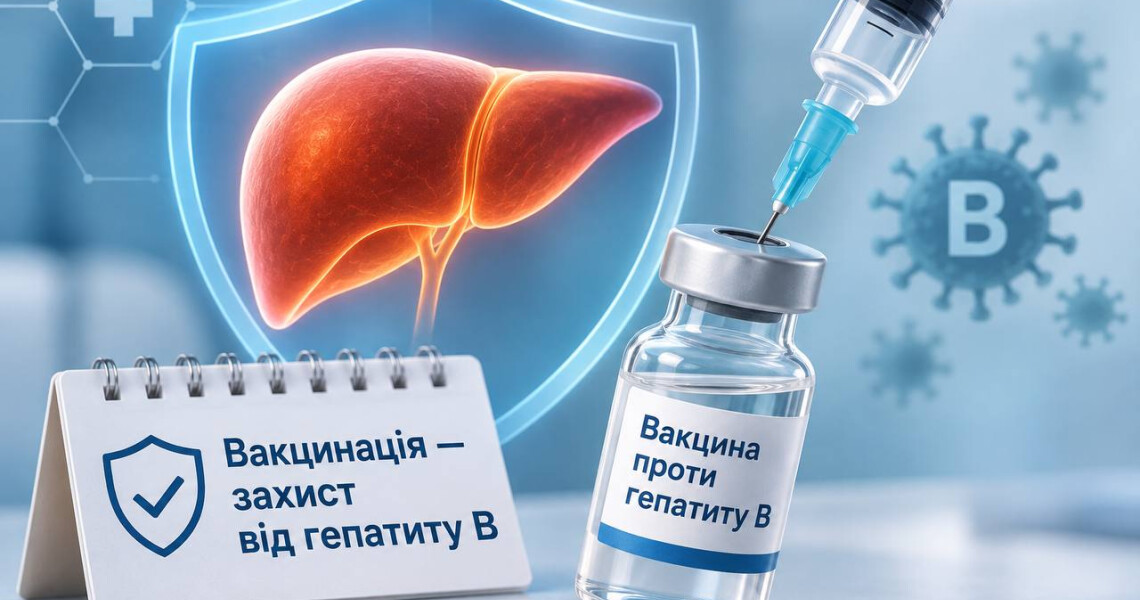
Полтавська область у 2025 році посіла перше місце серед регіонів України за показником зареєстрованої захворюваності на хронічний вірусний гепатит В. Водночас аналіз даних щодо вакцинації за 2021–2025 роки засвідчив зменшення кількості введених дітям доз вакцини та зростання цього показника серед дорослого населення.
Про результати дослідження, тенденції вакцинації та актуальність профілактики розповідають автори матеріалу – науково-педагогічні працівники кафедри інфекційних хвороб з епідеміологією Полтавського державного медичного університету: завідувачка кафедри, професорка Тетяна Коваль та доцент Вадим Боднар
Гепатит В: небезпека, яку часто недооцінюють
Вірусний гепатит В – інфекційне захворювання, яке уражає печінку та може призводити до цирозу й раку печінки. Його особлива небезпека полягає в тому, що інфекція нерідко роками перебігає без виражених симптомів. Через тривалий безсимптомний перебіг людина може роками не знати про інфікування. Діагноз нерідко встановлюють уже після розвитку ураження печінки. Водночас інфікована людина може бути джерелом інфекції для інших.
Основні шляхи передавання вірусу – контакт з інфікованою кров'ю, незахищені статеві контакти, використання нестерильних інструментів, а також передавання від інфікованої матері до дитини під час пологів.
В умовах війни профілактика гепатиту В набуває особливого значення через ризики контакту з кров'ю під час надання медичної допомоги, лікування травм та проведення оперативних втручань. Додатковим викликом є вимушене переміщення населення, яке може ускладнювати своєчасне проходження профілактичних щеплень.
Чому проблема актуальна для Полтавщини?
За даними епідеміологічного моніторингу, у 2025 році Полтавська область посіла перше місце в Україні за показником зареєстрованої захворюваності на хронічний гепатит В – 8,78 випадку на 100 тисяч населення. Це зумовлює необхідність посилення профілактичних заходів у регіоні. Для Полтавщини, яка в умовах повномасштабної війни приймає внутрішньо переміщених осіб та забезпечує медичну допомогу військовослужбовцям і цивільному населенню, особливо важливими залишаються доступність тестування, своєчасне виявлення інфекції та вакцинація.
Що показало дослідження науковців ПДМУ?
Науковці Полтавського державного медичного університету проаналізували офіційні дані Національної служби здоров'я України щодо вакцинації проти гепатиту В за 2021–2025 роки.
Результати дослідження, опубліковані в рамках проєкту «Розробка прогностичних моделей перебігу вірусних гепатитів В і С під час воєнного та післявоєнного періодів в Україні на ґрунті клініко-імунологічних та біоінформаційних досліджень», що фінансується Національним фондом досліджень України в межах конкурсу «Передова наука в Україні 2026–2028» (реєстраційний номер 2025.07/0353), засвідчили, що кількість введених дітям доз вакцини проти гепатиту В зменшилася з 700 тисяч у 2021 році до 565 тисяч у 2025 році, тобто приблизно на 19%. Водночас серед дорослого населення кількість введених доз зросла – з 11 до 34 тисяч. Попри позитивну динаміку, кількість введених доз залишається невеликою, особливо з огляду на те, що багато дорослих не отримали повного курсу вакцинації проти гепатиту В у дитинстві.
Кому необхідна вакцинація проти гепатиту В?
Найефективнішим способом захисту від гепатиту В залишається вакцинація. В Україні щеплення проти цієї інфекції входить до Національного календаря профілактичних щеплень. Із 2026 року планова вакцинація дітей передбачена у віці 2, 4, 6 та 18 місяців. Для новонароджених із груп ризику передбачено окрему схему вакцинації, яка включає щеплення проти гепатиту В у першу добу життя.
Проте вакцинація потрібна не лише дітям. Особливу увагу на свій вакцинальний статус варто звернути дорослим, які не отримали повного курсу щеплень у дитинстві, а також медичним працівникам, військовослужбовцям, рятувальникам, людям із підвищеним ризиком контакту з кров'ю та членам родин осіб із хронічною HBV-інфекцією.
Якщо ви не маєте повного курсу щеплень або не знаєте свого вакцинального статусу, зверніться до сімейного лікаря. Він допоможе визначити необхідність обстеження та підібрати схему вакцинації.
Профілактика сьогодні – збережене здоров'я завтра
Вакцинація залишається найефективнішим способом захисту від гепатиту В. Водночас важливими складниками протидії інфекції є своєчасне тестування, раннє виявлення захворювання та підвищення обізнаності населення.
Перевірте свій вакцинальний статус і проконсультуйтеся із сімейним лікарем щодо необхідності вакцинації. Це допоможе захистити себе та близьких від небезпечної інфекції.
Пресслужба Полтавского державного медицинского университета
PSMU Researchers Examine Hepatitis B Vaccination Trends: Why It Matters for the Poltava Region
In 2025, Poltava Region ranked first among the regions of Ukraine in terms of the reported incidence rate of chronic hepatitis B. At the same time, an analysis of vaccination data for 2021–2025 revealed a decline in the number of vaccine doses administered to children and an increase in this figure among adults.
The findings of the study, vaccination trends and the importance of prevention are presented by the authors of this article – academic staff of the Department of Infectious Diseases and Epidemiology of Poltava State Medical University (PSMU): Head of the Department, Professor Tetiana Koval, and Associate Professor Vadym Bodnar.
Hepatitis B: A Threat That Is Often Underestimated
Viral hepatitis B is an infectious disease that affects the liver and can lead to cirrhosis and liver cancer. Its particular danger lies in the fact that the infection often remains asymptomatic for years. Due to its prolonged asymptomatic course, people may remain unaware of their infection for a long time. The diagnosis is frequently established only after liver damage has developed. Meanwhile, an infected person may transmit the virus to others.
The main routes of transmission include contact with infected blood, unprotected sexual intercourse, the use of non-sterile instruments, and mother-to-child transmission during childbirth.
In wartime conditions, hepatitis B prevention becomes particularly important due to the risks of exposure to blood during medical care, injury treatment and surgical procedures. Another challenge is the forced displacement of the population, which may make it more difficult to receive preventive vaccinations on time.
Why Is This Issue Particularly Relevant to the Poltava Region?
According to epidemiological monitoring data, in 2025 Poltava Region ranked first in Ukraine in terms of the reported incidence rate of chronic hepatitis B, with 8.78 cases per 100,000 population. This highlights the need to strengthen preventive measures in the region.
For the Poltava Region, which has been hosting internally displaced persons amid the full-scale war and providing medical care to military personnel and civilians, ensuring access to testing, timely detection of infection and vaccination remains particularly important.
What Did the PSMU Researchers Find?
Researchers from Poltava State Medical University analysed official data from the National Health Service of Ukraine on hepatitis B vaccination for the period 2021–2025.
The findings, published as part of the project “Development of Predictive Models of the Course of Viral Hepatitis B and C During the Wartime and Post-War Periods in Ukraine Based on Clinical, Immunological and Bioinformatic Research”, funded by the National Research Foundation of Ukraine under the “Advanced Science in Ukraine 2026–2028” competition (registration No. 2025.07/0353), revealed that the number of hepatitis B vaccine doses administered to children decreased from 700,000 in 2021 to 565,000 in 2025, representing a decline of approximately 19%.
At the same time, the number of doses administered to adults increased from 11,000 to 34,000. Despite this positive trend, the overall number of doses remains low, particularly considering that many adults did not complete the full hepatitis B vaccination course during childhood.
Who Needs Hepatitis B Vaccination?
Vaccination remains the most effective way to protect against hepatitis B. In Ukraine, immunisation against this infection is included in the National Immunisation Schedule. Since 2026, routine childhood vaccination has been scheduled at 2, 4, 6 and 18 months of age. Newborns belonging to high-risk groups are subject to a separate vaccination schedule, which includes a hepatitis B vaccine dose within the first 24 hours of life.
However, vaccination is important not only for children. Particular attention should be paid to the vaccination status of adults who did not complete the full vaccination course during childhood, as well as healthcare workers, military personnel, emergency responders, people at increased risk of blood exposure, and family members of individuals with chronic HBV infection.
If you have not completed the full vaccination course or are unsure of your vaccination status, consult your family doctor. They will help determine whether testing is necessary and recommend an appropriate vaccination schedule.
Prevention Today Means Better Health Tomorrow
Vaccination remains the most effective way to protect against hepatitis B. At the same time, timely testing, early detection of the disease and raising public awareness are essential components of efforts to combat the infection.
Check your vaccination status and consult your family doctor about whether you need vaccination. This will help protect both you and your loved ones against this dangerous infection.