


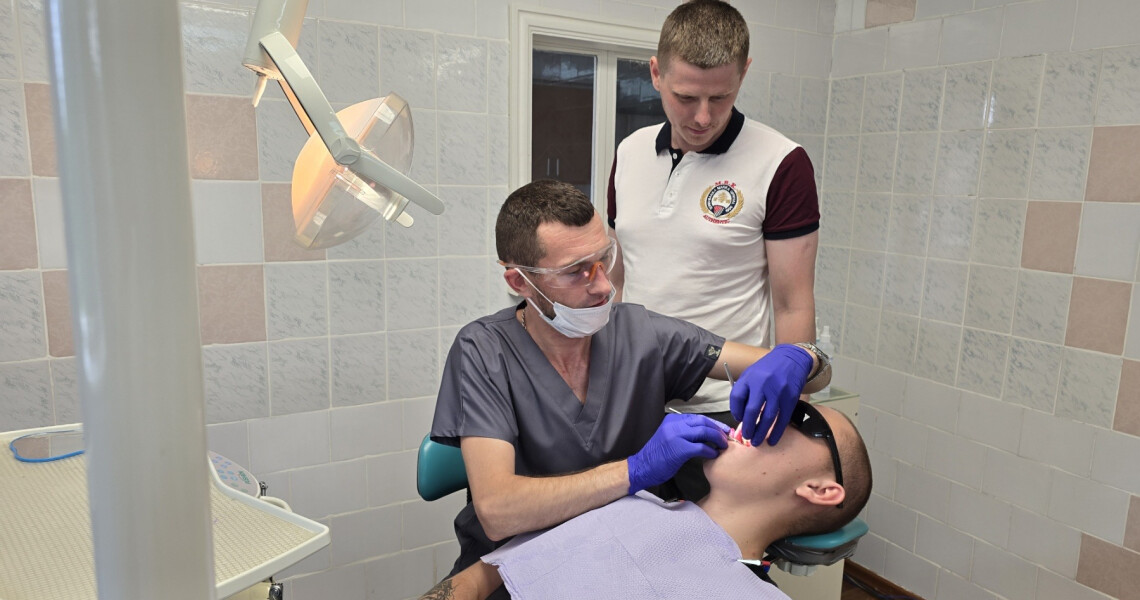
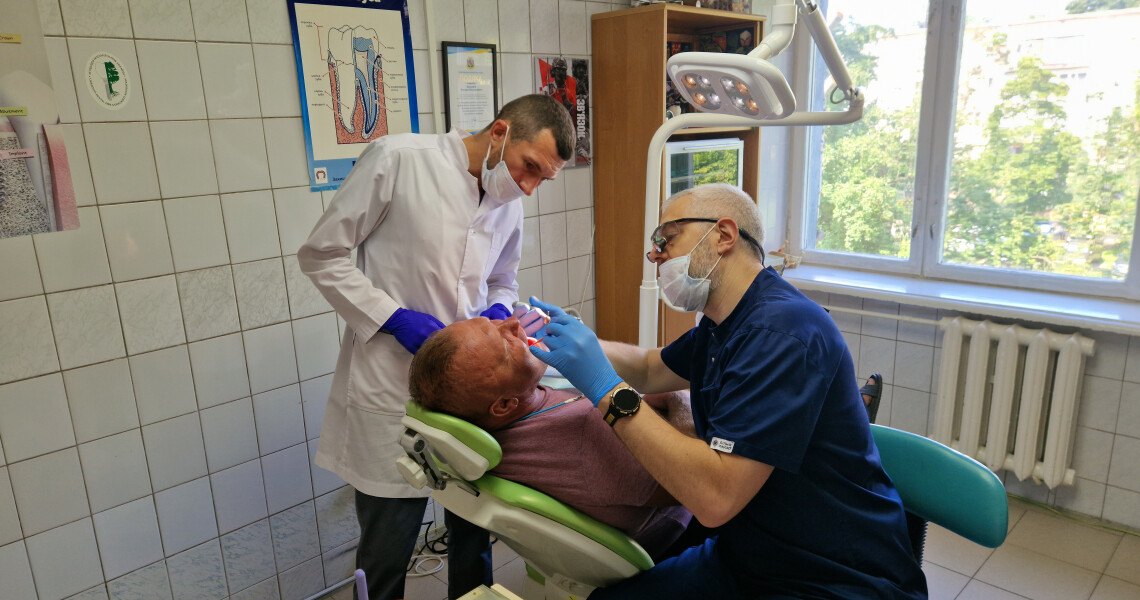
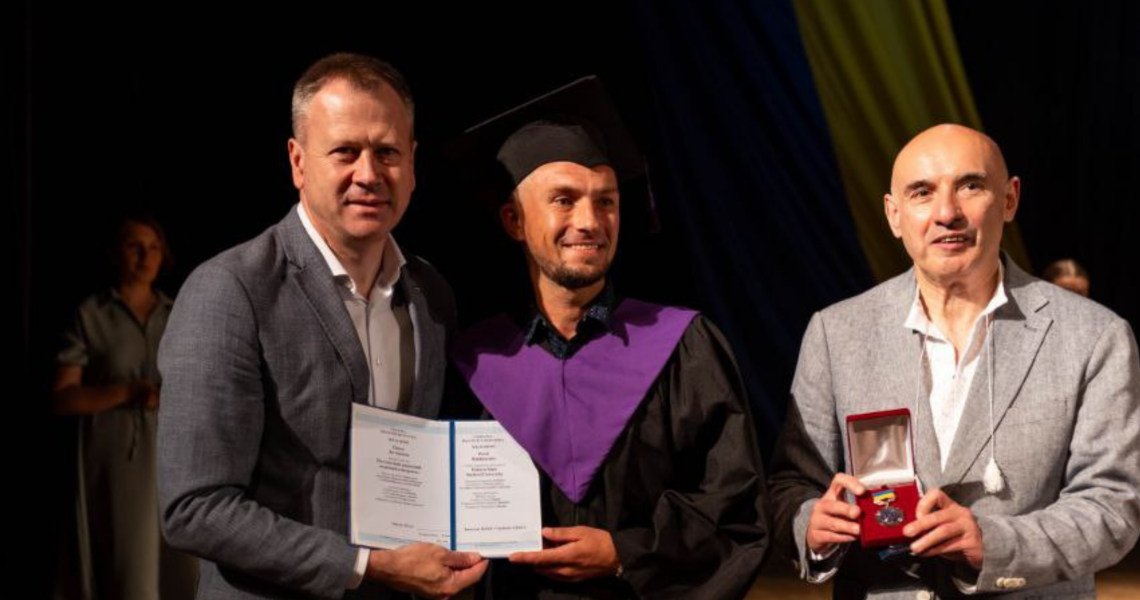
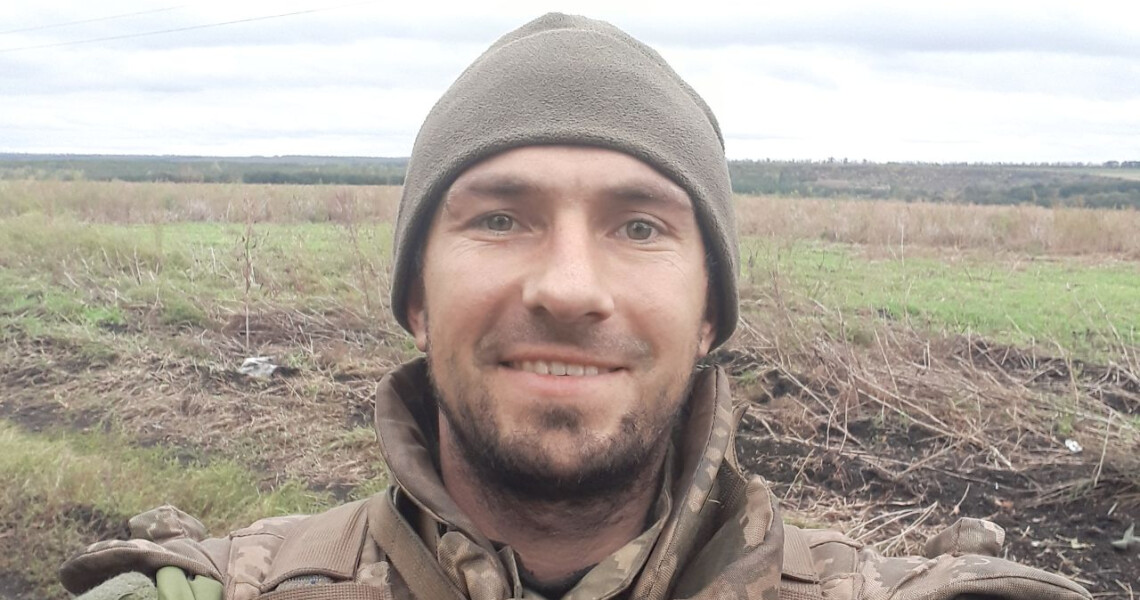
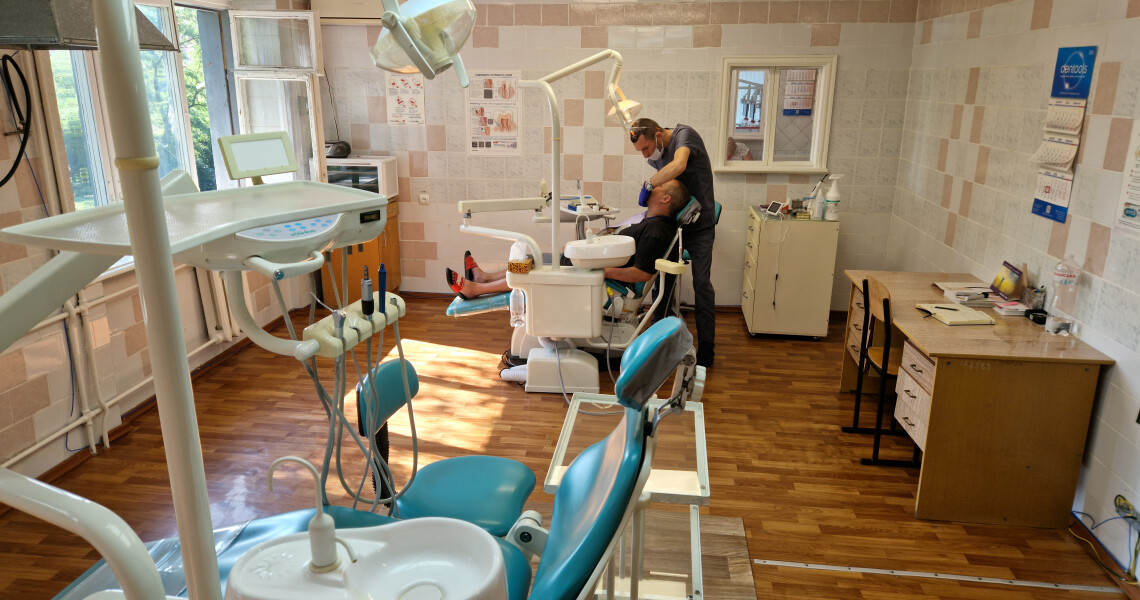
Колись він захищав Україну зі зброєю в руках. Він двічі долав шлях повернення: спочатку з війни до навчання, а потім – до омріяної професії лікаря. Випускник Полтавського державного медичного університету, ветеран російсько-української війни, учасник бойових дій Павло Дегтяренко працює стоматологом, допомагаючи людям відновити здоров'я та якість життя.
Серед його пацієнтів – військовослужбовці, ветерани та люди з інвалідністю внаслідок війни. Павло розуміє їх не лише як лікар. Він знає, що таке перший бій, втрата побратимів, повернення з фронту і довгий шлях назад до мирного життя. Бо сам пройшов цей шлях.
З грудня 2025 року Павло працює у Стоматологічному центрі Університетської клініки ПДМУ, де допомагає тим, хто звертається за стоматологічною допомогою після складного досвіду війни.
Ми поговорили з Павлом про шлях у медицину, навчання в університеті, війну, повернення до професії та про те, чому сьогодні допомога людям стала для нього справою особливого сенсу.
– Павле, сьогодні ви лікуєте ветеранів і військовослужбовців. Але колись самі були по інший бік цієї історії. Якщо повернутися на багато років назад, із чого почався ваш шлях у медицину?
– Якщо чесно, спочатку цього дуже хотіли мої батьки. Старша сестра навчалася в Красноградському медичному коледжі, і в 2007 році я побував на її випускному. Саме тоді вперше відчув особливу атмосферу медицини: білі халати, урочистість, поважне ставлення до людей цієї професії. Пам'ятаю, тоді ще пожартував, що хочу навчатися там, де стільки красивих дівчат у білих халатах, аби не бути обділеним увагою. Але за цим жартом було й щось значно глибше.
Я ще не до кінця розумів, що таке медицина, але бачив, що люди цієї професії викликають повагу, і це мене дуже захопило. На тому випускному я навіть виконував пісню про людей у білих халатах.
Саме тоді зародилася моя мрія. Пам'ятаю, що сказав: колись куплю велику будівлю, відкрию власну клініку, у якій нікому не відмовлятимуть у допомозі й надаватимуть якісне лікування. Мені було 16 чи 17 років, і відтоді я зрозумів, що медицина стане справою мого життя. До речі, у мене й досі збереглося відео з того випускного.
– Чим ви займалися після коледжу?
– Після закінчення у 2010 році Красноградського коледжу (нині – Берестинський фаховий коледж, Харківська область) я працював фельдшером на фельдшерсько-акушерському пункті, який нині функціонує як амбулаторія сімейної медицини. Хоч і недовго, близько двох з половиною місяців, але це був дуже цінний досвід роботи з людьми та знайомства із сільською медициною.
Згодом мене призвали до армії. Спочатку відслужив рік строкової служби, а потім майже рік без десяти днів перебував у зоні проведення антитерористичної операції у 2014 році.
Після повернення знову влаштувався працювати на той самий ФАП, де пропрацював ще рік. Після цього вступив до Полтавського державного медичного університету.
– Ви потрапили на війну ще у 2014 році, коли вам було лише 24 роки. Якими були перші місяці служби в зоні АТО і що найбільше закарбувалося у пам'яті?
– Так, у 24 роки мене мобілізували. Я потрапив до Станично-Луганського прикордонного загону, а згодом проходив службу на 83-й окремій бойовій заставі. Майже рік провів у зоні проведення антитерористичної операції на території Станично-Луганського району. Служив молодшим сержантом на різних посадах.
Спочатку я навіть не до кінця усвідомлював, що таке війна. Хотілося проявити себе, показати, на що здатний. Але все змінилося, коли ми прибули до Харківського розподільчого центру, а потім – до прикордонного підрозділу «Веселе». Саме там почалася серйозна підготовка. Приблизно півтора-два місяці нас навчали спецпризначенці, готуючи до боїв у міській забудові. Нам чесно говорили: повернуться не всі. Саме тоді прийшло справжнє розуміння, куди ми їдемо. Водночас це навчання дало навички, які залишилися зі мною на все життя.
Потім нас відправили на одну з найгарячіших ділянок. Пам'ятаю свій перший бойовий день у вересні 2014 року на позиції, що розташовувалася приблизно за 230 метрів від російського кордону. Як прикордонники, ми першими приймали удар. Цей день я пам'ятаю й досі.
Особливо часто згадую свого наставника, болгарина із Полтави Боєва Дімітрія Бойчева. Він був старший за мене на одинадцять років, ми жили в одному бліндажі. Пам'ятаю, як я запитав його: «Дмитре, так на війні щодня?» А він лише посміхнувся і відповів: «Ні, буває й гірше». Ми пройшли разом дуже багато.
Під час повномасштабної війни наші шляхи знову перетнулися, ми активно спілкувалися, хоч і служили в різних місцях: я служив у 92-й окремій штурмовій бригаді імені кошового отамана Івана Сірка, а Дмитро – у 93-й окремій механізованій бригаді «Холодний яр». На жаль, 27 жовтня 2023 року він загинув на Донеччині. Я досі шкодую, що не встиг побачитися з ним під час його останньої відпустки, вже за тиждень після цього його не стало.
Війна забрала й інших моїх побратимів. Часто згадую полтавця Сергія Задіраку, з яким ми разом служили у 92-й бригаді. Він теж загинув. Такі втрати назавжди залишаються з тобою.
– Навіть після повернення з АТО ви вирішили вступати до ПДМУ. Чому обрали саме цей університет і як остаточно сформувалося це рішення?
– Спочатку я вступив на спеціальність «Лікувальна справа», це було у 2016 році. Уже під час навчання зустрів наставника, який суттєво вплинув на мій вибір і надихнув мене звернути увагу на стоматологію. Після цього я вирішив перевестися, і фактично повторно вступив уже на стоматологічний факультет.
З часом я ще більше переконався у правильності цього рішення. У ПДМУ дуже сильна навчальна база, висококваліфіковані викладачі – професори, доценти, практикуючі лікарі. Велику роль у моєму становленні відіграв перший проректор, професор Валентин Дворник, а також викладання на кафедрі ортопедичної стоматології, де я вперше глибше зрозумів, що таке сучасна стоматологія та ортопедія.
Саме тут я побачив, наскільки високий рівень підготовки фахівців і яка сильна професійна школа в університеті.
Я родом із Харківської області, і спочатку багато хто з моїх знайомих з коледжу обирав великі міста – Харків чи Київ. Але я свідомо обрав Полтаву. І зараз можу сказати, що це було правильне рішення – саме ПДМУ дав мені той рівень знань і середовище, в якому я хотів навчатися.
– На початку повномасштабного вторгнення, вже під час навчання в ПДМУ, ви знову повернулися до війська. Пам'ятаєте, як ухвалювали це рішення?
– У перший день повномасштабної війни я взяв свій бронежилет, зібрав речі й сказав батькові, що йду до війська. Я дивувався, що мені одразу почали телефонувати різні люди – знайомі, не військові, всі питали одне: «Ти там?». Батьки вдома просили не йти, мама плакала, але я не міг вчинити інакше.
Я відчував, що повинен бути там. Я був готовий до всього, навіть до найгіршого. З речами та бронежилетом я пішов до сільради. На той момент я навчався на 4-му курсі ПДМУ. Деканат ПДМУ знав про моє рішення і підтримав мене.
Пам’ятаю, як ішов із дому – сльози, очі моєї собаки… Це важко забути.
Тоді ще не до кінця розумів, що відбувається: чи це сміливість, чи дурість. Але вже 26 лютого я був на фронті. Дуже швидко прийшло усвідомлення, що це зовсім інша війна – масштабна, жорстка. Ми тоді всі були по суті добровольцями і лише поступово вчилися виживанню, розумінню структури, ієрархії та правил бойової роботи.
Під час повномасштабного вторгнення я близько року був командиром відділення, згодом – оператором безпілотних літальних апаратів. Загалом на війні провів близько півтора року. Мій позивний – «Гром». Брав участь у бойових діях на Харківському, Луганському, Донецькому напрямках. Найзапекліші бої були на Донеччині – там тривали та й досі тривають масштабні зіткнення з великими силами противника, і то справжнє пекло.
За мужність і самовіддану службу був відзначений державними та громадськими нагородами. Серед них – грамоти Східного регіонального управління Державної прикордонної служби України (2014), подяка Прем’єр-міністра України (2014), медаль «Незламним героям російсько-української війни» Всеукраїнського об’єднання «Країна» (2022), а також нагрудний знак Полтавської обласної ради «За вірність народу України» ІІ ступеня (2023).
У 2024 році як студент закладу вищої освіти я був звільнений з військової служби та повернувся до навчання в ПДМУ, щоб реалізувати ще одну свою місію – лікувати й допомагати людям уже в білому халаті.
– Під час служби на фронті ви також мали медичну підготовку. Чи використовували ці навички в бойових умовах?
– Не так, щоб я постійно працював як бойовий медик: турнікети накладав, шви знімав.
Там були бойові медики, і я свідомо не хотів брати на себе роль медика на фронті – у мене була інша місія.
– Що було найважчим після повернення? Як вас підтримали в ПДМУ після поновлення на навчання?
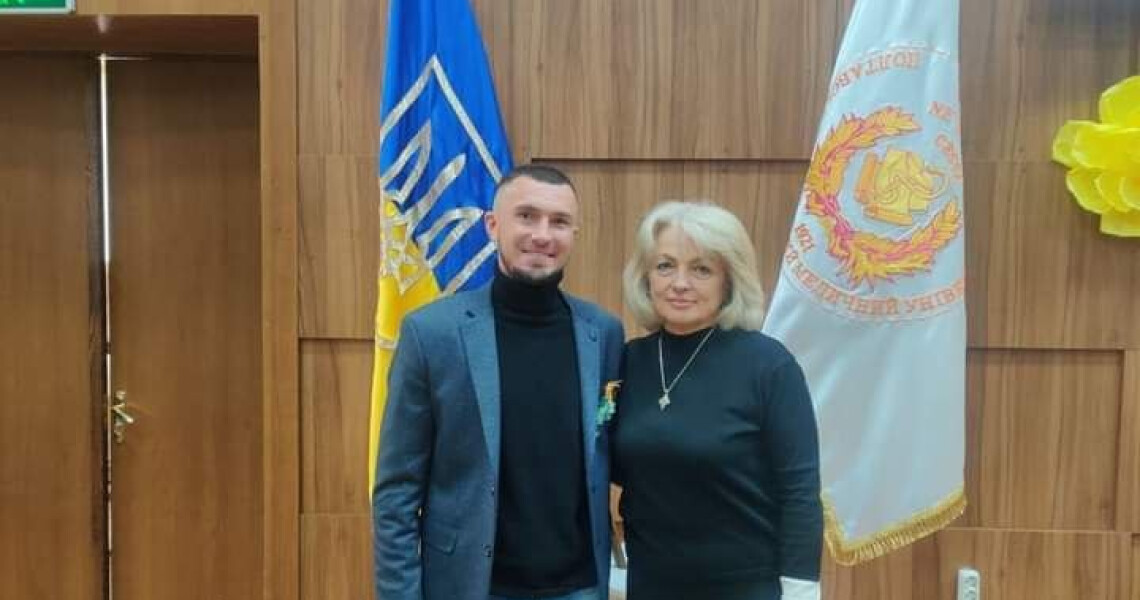
– Період адаптації був складним. У моєму випадку велику роль відіграла декан стоматологічного факультету Алла Іванівна Сидорова, а також інші викладачі – зокрема заступник декана Олександр Євгенович Омельченко. Усі мене підтримали, мене поновили на навчання, і я зміг успішно його завершити.
Перший час був дуже важкий. Я був ніби «зашуганий», усе здавалося страшним, я не розумів, де знаходжуся, боявся залишатися наодинці. Я повністю змінився, по-іншому дивився на оточення.
Але водночас я намагався повернутися до життя. Сьогодні, наприклад, я препарував зуб – пацієнтка була задоволена. Завтра прийде дідусь і скаже: «Доктор, ви молодець». І цим я живу. Я завжди намагався ставитися до всіх однаково, з позитивом.
Приблизно два місяці я не міг повністю прийти до себе, мене фактично «тримали» й підтримували. Далі була інтернатура і робота у Полтавській обласній клiнiчній лікарні ім. М. В. Склiфосовського.
У цей період адаптації мене довго переслідував один і той самий сон, який я пропрацьовував із психіатром. Я взагалі погано спав, особливо коли лежав у Харківському шпиталі, тоді мені казали, що я кричав уві сні, свистів – я буквально воював. Зранку подушки були розкидані, а що відбувалося вночі, я не пам’ятав.
Найбільше мене тоді підтримувало оточення, люди поруч допомагали мені поступово відновитися. ПДМУ відіграв дуже важливу роль у моїй адаптації, і фактично дав мені можливість повернутися до професійного життя.
– Ви щодня працюєте саме з військовими. Вони бояться стоматолога?
– Часто до нас приходять люди, які мали страх перед стоматологом, але з часом у нашій клініці вони змінюють свою думку і починають довіряти лікуванню.
Я як лікар-стоматолог-терапевт працюю в команді. Мій напрям – первинний прийом пацієнта, діагностика, направлення на панорамний знімок, професійна гігієна, лікування карієсу, пульпіту, періодонтиту, усунення гострого болю, реставрації. Якщо випадок складніший – залучаємо хірурга або ортопеда для подальшого лікування: коронки, мости та інше.
У середньому за день я приймаю 4–5 пацієнтів, інколи 7–8 – залежно від складності випадків. До нас приїжджають пацієнти і з інших міст, з Києва, іноді навіть із-за кордону. Часто звучить фраза: «Ми прийшли сюди за якістю». І це, мабуть, найкраща оцінка нашої роботи.
– З якими проблемами найчастіше приходять ваші пацієнти?
– Найчастіше вони приходять із простим проханням: «Зробіть хоч щось». Часто це вже запущені ситуації, але ми нікому не відмовляємо. Під час прийому не лише лікуємо, а й багато спілкуємося, підтримуємо.
Військові дуже часто бояться стоматолога. Іноді навіть дивуєшся: чим сильніший фізично боєць, тим більше він може боятися лікування зубів. Можливо, через специфіку роботи стоматолога – гострі інструменти, незвичні відчуття та необхідність довіритися лікарю.
Можливостей лікувати зуби на війні немає. Якщо починає боліти зуб, його найчастіше просто видаляють. Саме тому до нас приходить багато пацієнтів із запущеними випадками. Крім того, у польових умовах зростає ризик інфікування, немає можливості повноцінно дотримуватися гігієни порожнини рота, впливають постійний стрес і те, що багато військових починають більше палити.
Хочу також принагідно сказати про наш Стоматологічний центр і подякувати його директору, доценту кафедри хірургічної стоматології ПДМУ Павлу Яценку за підтримку та можливість працювати у сильній професійній команді. Окремі слова вдячності хочу висловити професору кафедри пропедевтики ортопедичної стоматології ПДМУ Руслану Козаку, який дав мені велику базу знань, адже лікар має постійно навчатися й розвиватися. Також дякую ректору ПДМУ, професору Вячеславу Ждану за підтримку та увагу до розвитку Стоматологічного центруПДМУ.
– Що б ви хотіли сказати сьогодні студентам ПДМУ?
– Мені б хотілося, щоб наші лікарі, випускники та молодь залишалися відкритими до людей. Часто кажуть, що «добро має бути з кулаками», але я вважаю, що головне – це залишатися людяним і готовим безкорисливо допомогти.
Хотілося б, щоб ми частіше звертали увагу на простих людей, могли підтримати, запитати, допомогти навіть у дрібницях. Але робити це щиро, не заради піару чи лайків, як це часто буває в соцмережах, а тихо, по-людськи, для себе.
Сьогодні я не викладаю студентам, але мені подобається навчати й ділитися досвідом, тому, можливо, все ще попереду. Поки що я звичайний лікар-стоматолог.
– Ви багато пережили. Про що сьогодні найбільше мрієте?
– Щоб закінчилась ця страшна війна. Війна – це те, чого не має бути, і я щиро хочу, щоб вона завершилася і більше ніколи не повторювалася. Вона виснажує всіх, і тих, хто на фронті, і тих, хто в тилу.
Я хочу жити і працювати тут, бути корисним людям, допомагати ставати на правильний шлях тим, хто після війни втратив надію. Поки б’ється моє серце, я буду робити те, для чого, як мені здається, я прийшов у цю професію.
Павло проводить чергового пацієнта й лише на мить зачиняє двері кабінету – попереду наступний прийом. Він добре знає: шлях до одужання починається не лише з якісного лікування, а й із довіри. Колись він захищав Україну зі зброєю в руках. Сьогодні – робить це як лікар, допомагаючи людям повертати здоров'я, усмішки й віру в майбутнє.
https://pdmu.edu.ua/likuvalna-robota/universitetska-likarnya
Пресслужба Полтавського державного медичного університету
"Rediscovering Himself": The Story of Pavlo Dehtiarenko – PSMU Graduate, Veteran and Medical Professional
Once, he defended Ukraine with a weapon in his hands. He had to make the journey back twice: first from war to education, and then to his dream profession as a physician. Today, Pavlo Dehtiarenko, a graduate of Poltava State Medical University (PSMU), a veteran of the russian-Ukrainian War, and a combat veteran, works as a dentist, helping people restore their health and quality of life.
Among his patients are active-duty military personnel, veterans, and people who have acquired disabilities as a result of the war. Pavlo understands them not only as a medical professional but also as someone who has shared their experience. He knows what it means to face the first battle, lose comrades, return from the front line, and undertake the long journey back to civilian life—because he has walked that path himself.
Since December 2025, Pavlo has been working at the Dental Center of the PSMU University Clinic, providing dental care to people seeking treatment after enduring the hardships of war.
We spoke with Pavlo about his journey into medicine, his years at the university, the war, returning to his profession, and why helping others has become a mission of profound personal meaning.
– Pavlo, today you treat veterans and military personnel. But once you were on the other side of this story yourself. Looking back many years, how did your journey into medicine begin?
– To be honest, at first it was my parents who wanted it most. My older sister studied at KrasnohradMedical College, and in 2007 I attended her graduation ceremony. That was the first time I experienced the unique atmosphere of medicine: white coats, the sense of occasion, and the respect people showed to members of the medical profession.
I remember joking that I wanted to study wherever there were so many beautiful girls in white coats, so I wouldn't be deprived of attention. But behind that joke was something much deeper.
At that time, I didn't fully understand what medicine really meant, but I could see the respect it inspired, and that fascinated me. During that graduation ceremony, I even performed a song dedicated to people in white coats.
That was when my dream was born. I remember saying that one day I would buy a large building and open my own clinic—a place where no one would ever be turned away and everyone would receive high-quality medical care. I was only sixteen or seventeen years old, but from that moment I realized that medicine would become my life's work. Incidentally, I still have a video from that graduation ceremony.
– What did you do after graduating from college?
– After graduating from Krasnohrad Medical College in 2010 (now Berestyn Professional College in Kharkiv Region), I worked as a paramedic at a rural medical station, which now functions as a family medicine outpatient clinic.
Although I worked there for only about two and a half months, it was an invaluable experience that allowed me to work closely with people and become familiar with rural healthcare.
Soon afterward, I was drafted into the military. I first completed one year of compulsory military service and then spent nearly another year in the Anti-Terrorist Operation (ATO) zone in 2014.
After returning, I went back to work at the same rural medical station for another year before enrolling at Poltava State Medical University.
– You went to war in 2014 when you were only 24 years old. What were those first months of service like, and what memories have stayed with you the most?
– Yes, I was mobilized at the age of twenty-four. I was assigned to the Stanytsia Luhanska Border Guard Detachment and later served at the 83rd Separate Combat Outpost. I spent almost a year in the Anti-Terrorist Operation zone in the Stanytsia Luhanska district, serving as a junior sergeant in various positions.
At first, I didn't fully understand what war really meant. I wanted to prove myself and show what I was capable of. Everything changed when we arrived at the distribution center in Kharkiv and later at the Vesele border guard unit.
That was where our serious training began. For about one and a half to two months, special forces instructors trained us for urban combat. They spoke honestly: not everyone would come back. That was when I truly realized where we were heading. At the same time, that training gave me skills that have remained with me for life.
Later we were deployed to one of the hottest sectors of the front. I vividly remember my first day in combat in September 2014, at a position located approximately 230 meters from the russian border. As border guards, we were among the first to come under attack. I still remember that day.
I often think about my mentor, Dmytrii Boichev, a Bulgarian from Poltava. He was eleven years older than I was, and we shared the same bunker. I remember asking him, "Dmytro, is every day in the war like this?" He simply smiled and replied, "No. Sometimes it's even worse."
We went through so much together.
During the full-scale invasion, our paths crossed again. We stayed in close contact, although we served in different units: I served in the 92nd Separate Assault Brigade named after Ivan Sirko, while Dmytro served in the 93rd Separate Mechanized Brigade "Kholodnyi Yar."
Tragically, on October 27, 2023, he was killed in Donetsk Region. I still regret not having the chance to see him during his last leave. Only a week later, he was gone.
The war also claimed the lives of other comrades. I often remember Serhii Zadyraka from Poltava, with whom I served in the 92nd Brigade. He, too, was killed. Such losses remain with you forever.
– Even after returning from the ATO, you decided to enroll at PSMU. Why did you choose this university?
– Initially, I enrolled in General Medicine in 2016. While studying, I met a mentor who had a tremendous influence on my career choice and inspired me to consider dentistry. Eventually, I transferred and effectively enrolled again, this time in the Faculty of Dentistry.
Over time, I became even more convinced that it was the right decision.
PSMU has an exceptionally strong educational foundation and highly qualified faculty members—professors, associate professors, and practicing physicians. A major influence on my professional development was Professor Valentyn Dvornyk, First Vice-Rector, as well as the Department of Prosthetic Dentistry, where I first gained a deeper understanding of modern dentistry and prosthodontics.
It was there that I realized just how high the University's standards of education are and how strong its professional school truly is.
I come from Kharkiv Region, and many of my friends from college chose to study in large cities such as Kharkiv or Kyiv. I deliberately chose Poltava instead.
Today, I can confidently say that it was the right decision. PSMU gave me exactly the level of education and the academic environment I had hoped for.
– At the beginning of the full-scale invasion, while you were still studying at PSMU, you returned to military service. Do you remember how you made that decision?
– On the very first day of the full-scale invasion, I took my body armor, packed my belongings, and told my father that I was going to join the military. I was surprised that people immediately started calling me—friends, acquaintances, even civilians. Everyone asked the same question: "Are you there already?"
My parents begged me not to go. My mother cried, but I couldn't do otherwise.
I felt that I had to be there. I was prepared for anything, even the worst. Carrying my belongings and wearing my body armor, I went to the village council office. At that time, I was a fourth-year student at PSMU. The Dean's Office was aware of my decision and supported me.
I still remember leaving home—the tears, the look in my dog's eyes... Those are things you never forget.
At first, I didn't fully understand what was happening. I couldn't tell whether it was courage or recklessness. But by February 26, I was already at the front.
Very quickly I realized that this was an entirely different kind of war—larger in scale and far more brutal. At that time, we were essentially all volunteers, gradually learning how to survive, understand the military structure, hierarchy, and the realities of combat operations.
During the full-scale invasion, I served as a squad commander for about a year and later became an unmanned aerial vehicle (UAV) operator. Altogether, I spent approximately a year and a half at the front.
My call sign was "Hrom" ("Thunder").
I took part in combat operations in the Kharkiv, Luhansk, and Donetsk sectors. The fiercest fighting took place in Donetsk Region, where large-scale battles with overwhelming enemy forces were—and still are—being fought. It was truly hell.
For courage and dedicated service, I received a number of state and public awards, including:
Certificates of Commendation from the Eastern Regional Directorate of the State Border Guard Service of Ukraine (2014);
A Letter of Appreciation from the Prime Minister of Ukraine (2014);
The "To the Unbreakable Heroes of the russian-Ukrainian War" Medal awarded by the All-Ukrainian Association Kraina (2022);
The "For Loyalty to the People of Ukraine", Second Class, Badge of Honor from the Poltava Regional Council (2023).
In 2024, as a university student, I was discharged from military service and returned to PSMU to complete another mission—to heal and help people, this time wearing a white medical coat.
– During your military service, you also had medical training. Did you use those skills in combat?
– Not in the sense of constantly serving as a combat medic—applying tourniquets or removing sutures.
There were dedicated combat medics responsible for those duties, and I deliberately chose not to take on that role because I had a different mission to fulfill.
– What was the most difficult part of returning to civilian life? How did PSMU support you after you resumed your studies?
– The adjustment period was difficult.
In my case, Professor Alla Sydorova, Dean of the Faculty of Dentistry played a tremendous role, as did many other faculty members, particularly Associate Dean Oleksandr Omelchenko. Everyone supported me. I was reinstated as a student and was able to complete my studies successfully.
At first, it was extremely hard.
I felt constantly frightened. Everything around me seemed unfamiliar and threatening. I didn't understand where I was, and I was afraid of being alone. The war had changed me completely, and I viewed the world around me very differently.
At the same time, I made every effort to return to life.
Today, for example, I prepared a patient's tooth, and she left satisfied. Tomorrow an elderly gentleman may come in and say, "Doctor, you've done a wonderful job." That is what keeps me going.
I've always tried to treat everyone equally—with kindness and optimism.
For about two months, I couldn't fully regain my sense of normalcy. I was, in a sense, being held together by the people around me, who continuously supported me. After that came my internship and work at the M. V. Sklifosovskyi Poltava Regional Clinical Hospital.
During that period of adjustment, I was haunted by the same recurring dream, which I worked through with a psychiatrist.
In general, I slept very poorly, especially while I was being treated at the military hospital in Kharkiv. I was told that I screamed and whistled in my sleep—I was literally fighting battles while asleep. Every morning, my pillows would be scattered across the room, yet I had no memory of what had happened during the night.
What helped me most was the support of those around me. The people close to me gradually helped me recover.
PSMU played an incredibly important role in my rehabilitation. In many ways, it gave me the opportunity to return to my professional life.
– Today you work with military personnel every day. Are they afraid of going to the dentist?
– Very often, people come to us who have been afraid of dentists for years. Over time, however, many of them change their minds after receiving treatment at our clinic and begin to trust us.
As a general dentist, I work as part of a multidisciplinary team. My responsibilities include the initial consultation, diagnosis, referrals for panoramic X-rays, professional oral hygiene, treatment of dental caries, pulpitis, and periodontitis, emergency pain relief, and restorative procedures.
If a case is more complex, we involve our oral surgeons or prosthodontists for further treatment, such as crowns, bridges, and other prosthetic work.
On average, I see four or five patients a day, sometimes seven or eight, depending on the complexity of the cases.
Our patients come not only from Poltava but also from other cities, including Kyiv, and occasionally even from abroad.
One phrase we hear quite often is:
"We came here because of the quality of care."
For me, that is probably the greatest recognition of our work.
– What problems do your patients most often come to you with?
– Most of them come with one simple request: "Please do something."
Very often, their dental problems have already become severe, but we never refuse to help anyone.
During treatment, we do more than provide dental care—we talk with our patients and support them emotionally.
Military personnel are often surprisingly afraid of dentists. Sometimes it's striking: the stronger and tougher the soldier appears physically, the more anxious they may be about dental treatment.
Perhaps this is because dentistry involves sharp instruments, unfamiliar sensations, and, above all, the need to place complete trust in another person.
There are virtually no opportunities to receive proper dental treatment during military service. If a tooth starts hurting at the front, extraction is often the only available option.
That is why so many patients come to us with advanced dental conditions.
In field conditions, the risk of infection is higher, maintaining proper oral hygiene is difficult, constant stress takes its toll, and many service members begin smoking more than usual.
I would also like to take this opportunity to say a few words about our Dental Center and express my sincere gratitude to its Director, Associate Professor Pavlo Yatsenko of the Department of Oral and Maxillofacial Surgery at PSMU, for his support and for giving me the opportunity to work as part of such a strong professional team.
I would also like to thank Professor Ruslan Kozak of the Department of Propedeutics of Prosthetic Dentistry for providing me with an excellent professional foundation. A doctor must continue learning and developing throughout their career.
Finally, I would like to express my gratitude to the Rector of PSMU, Professor Viacheslav Zhdan, for his support and his commitment to the continued development of the University's Dental Center.
– What would you like to say to today's PSMU students?
– I would like our future doctors, our graduates, and young people in general to remain open-hearted and compassionate toward others.
People often say that "kindness must have fists," but I believe the most important thing is to remain humane and always be willing to help others selflessly.
I wish we paid more attention to ordinary people—to support them, ask how they are doing, and help them even in small ways.
But we should do it sincerely—not for publicity, not for social media likes, as so often happens today, but quietly, genuinely, and from the heart.
At present, I do not teach students, but I truly enjoy sharing knowledge and experience, so perhaps that opportunity still lies ahead.
For now, I am simply an ordinary dentist.
– You have been through so much. What do you dream about most today?
– I dream of this terrible war coming to an end.
War is something that should never exist, and I sincerely hope it ends soon and never happens again.
It exhausts everyone—those fighting on the front lines as well as those waiting at home.
I want to live and work here in Ukraine. I want to continue being useful to people and helping those who have lost hope because of the war find their way again.
As long as my heart continues to beat, I will keep doing what I believe I was meant to do when I chose this profession.
Pavlo sees one patient out and closes the door to his office for only a brief moment before welcoming the next one.
He knows well that the road to recovery begins not only with high-quality treatment but also with trust.
Once, he defended Ukraine with a weapon in his hands.
Currently, he continues to defend it as a doctor—helping people regain their health, their smiles, and their faith in the future.