


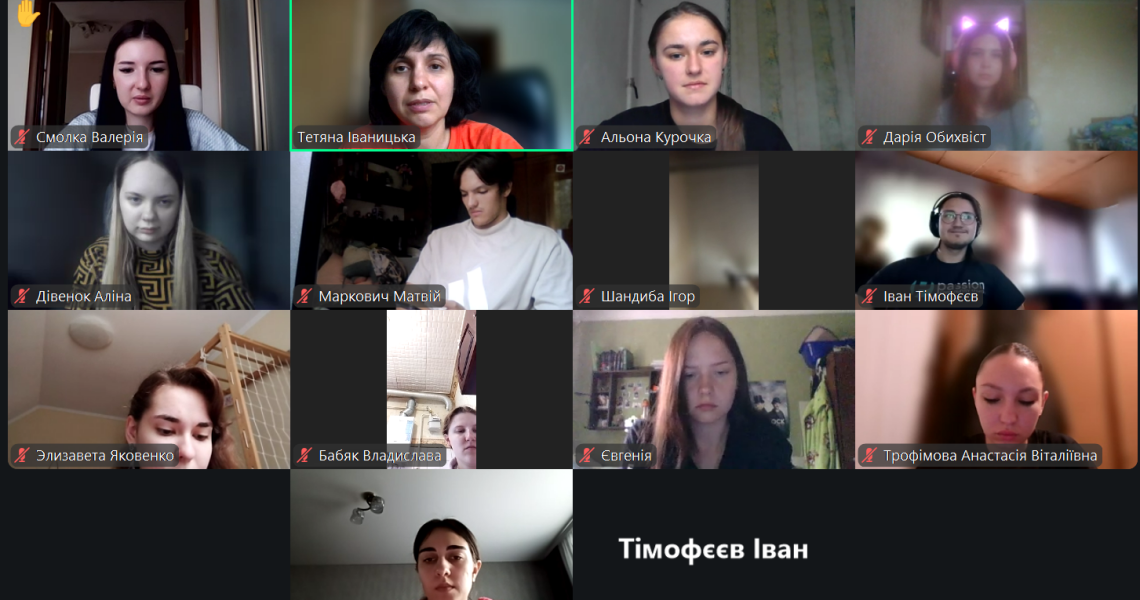

Тютюнопаління та використання його сучасних альтернатив залишаються однією з актуальних медико-соціальних проблем. Саме тому на кафедрі пропедевтики внутрішньої медицини Полтавського державного медичного університету відбувся цикл виховних лекцій для здобувачів першого (бакалаврського) та другого (магістерського) рівнів вищої освіти, присвячений впливу різних видів куріння на здоров’я людини.
До обговорення долучилися викладачі кафедри та студенти медичного факультету № 1. Зокрема, Ірина Герега, Євген Химич, Вероніка Олешко та Тетяна Лещук підготували доповіді, у яких висвітлили особливості впливу різних способів споживання тютюну та нікотиновмісної продукції на організм людини.
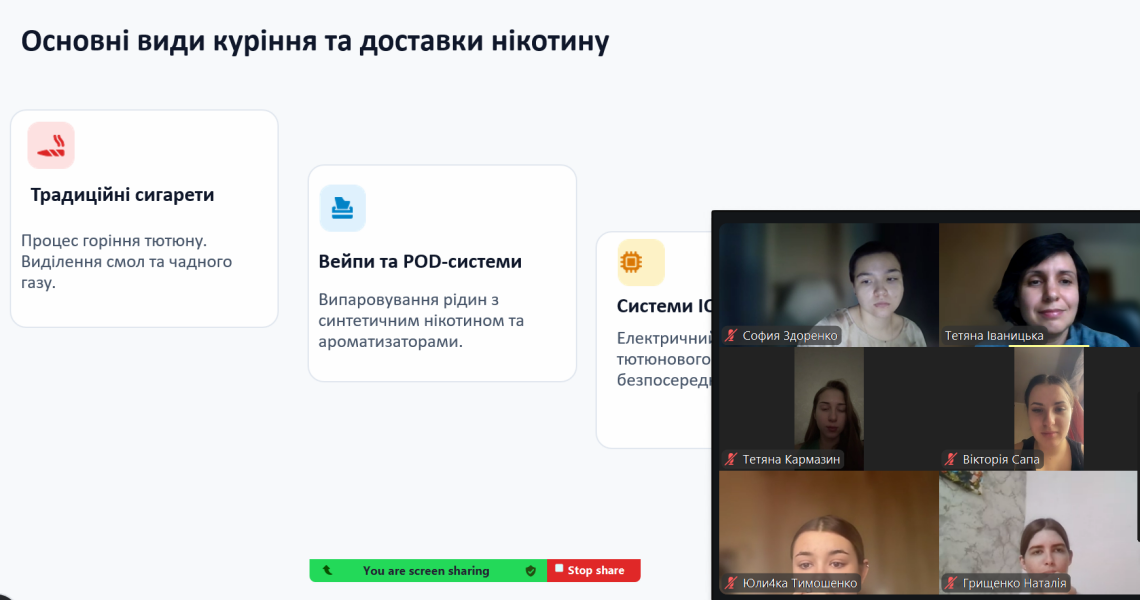
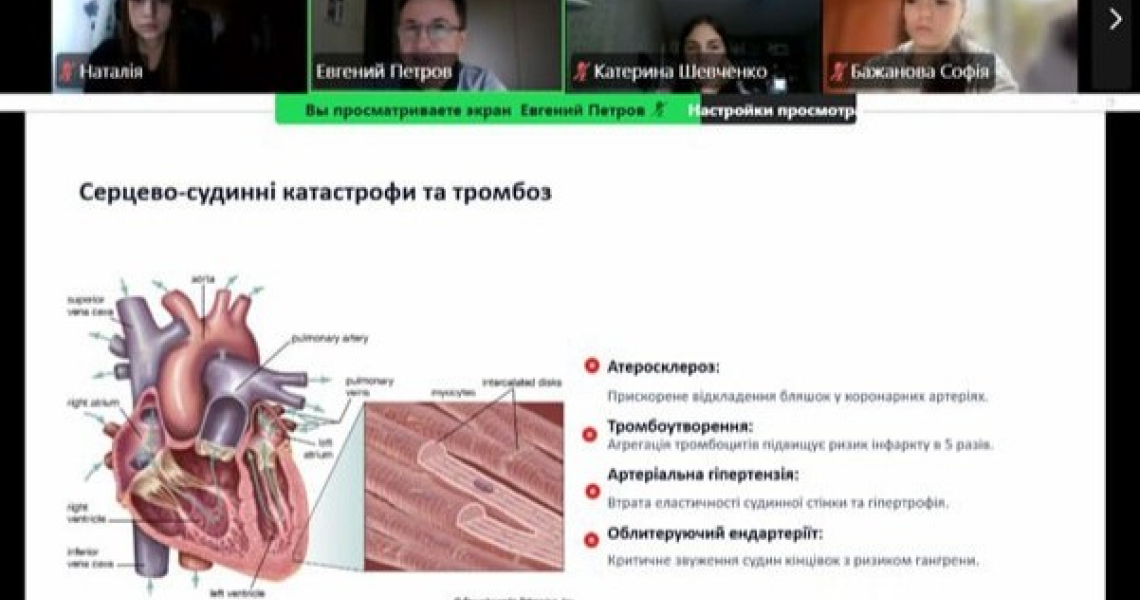
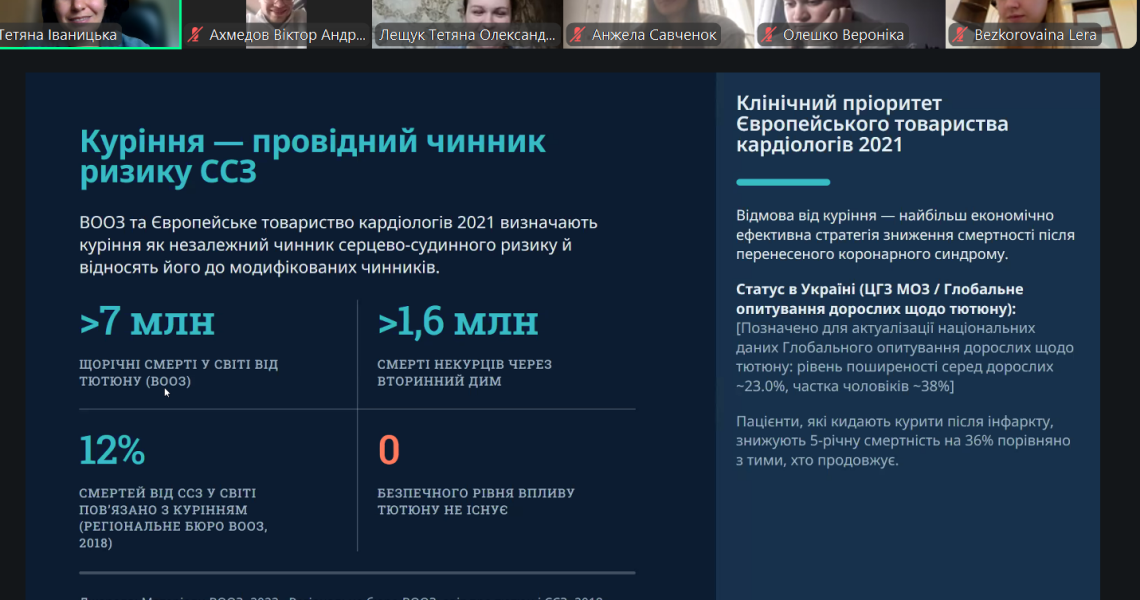
Під час лекцій здобувачі освіти ознайомилися з механізмами впливу куріння на органи та системи організму, обговорили поширені міфи й ризики, пов’язані з використанням різних видів тютюнової та нікотиновмісної продукції. Зокрема, розглянули вплив традиційних тютюнових виробів на дихальну, серцево-судинну та нервову системи, а також їхній зв’язок із розвитком онкологічних захворювань.
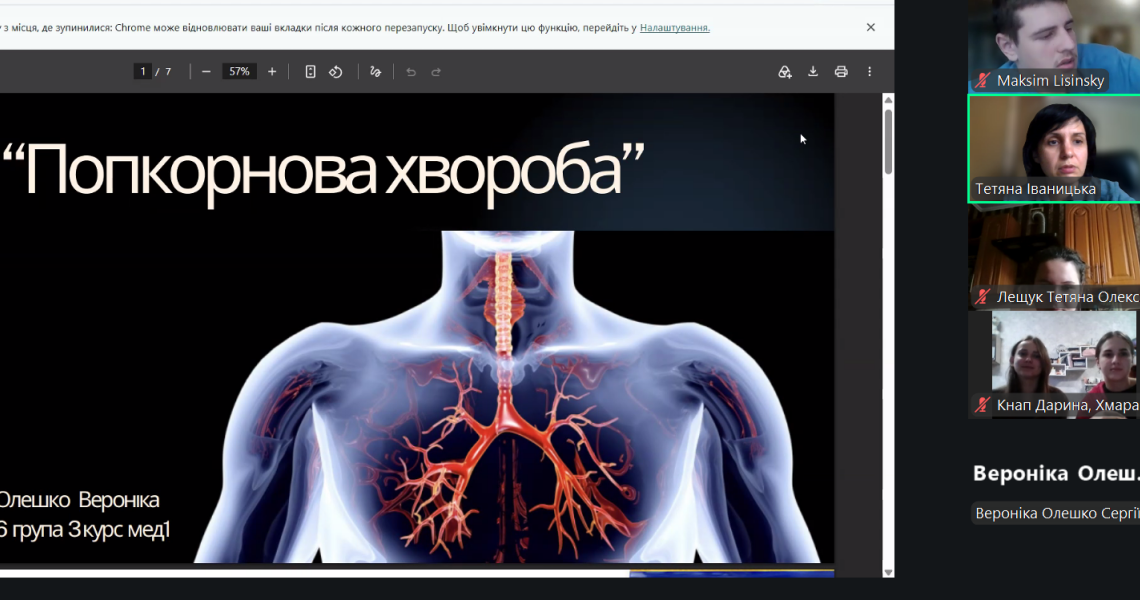
Був розвінчаний міф про «нешкідливість» електронних сигарет та вейпів, особливості впливу аерозолів на легеневу тканину та розвиток так званого синдрому EVALI та «попкорнової хвороби». Обговорили системи нагрівання тютюну, їх хімічний склад виділюваних речовин та їхній пролонгований руйнівний вплив на організм. Провели порівняння об'ємів вдихуваного диму та токсичних сполук під час куріння кальяну та традиційних сигарет.
Важливою складовою лекцій стало обговорення ролі майбутніх лікарів і медичних сестер у формуванні відповідального ставлення до здоров’я серед пацієнтів. Здобувачі освіти розглянули методи профілактики тютюнової залежності, принципи консультування щодо відмови від куріння та значення особистого прикладу медичного працівника.
Проведення таких заходів сприяє формуванню у майбутніх фахівців охорони здоров’я усвідомленого ставлення до власного здоров’я, поглибленню знань про профілактику захворювань і розвитку навичок санітарно-просвітницької роботи з пацієнтами. Цикл виховних лекцій на кафедрі триває.
Пресслужба Полтавского державного медицинского университета
The Risks of Smoking: PSMU Holds a Series of Thematic Lectures
Tobacco smoking and the use of its modern alternatives remain among the pressing medical and social issues. In view of this, the Department of Propaedeutics of Internal Medicine of Poltava State Medical University (PSMU) held a series of educational lectures for students pursuing the first (Bachelor’s) and second (Master’s) levels of higher education, focusing on the effects of different forms of smoking on human health.
The lectures brought together the department’s academic staff and students of Medical Faculty No. 1. In particular, Iryna Hereha, Yevhen Khymych, Veronika Oleshko and Tetiana Leshchuk prepared presentations highlighting the specific effects of various methods of consuming tobacco and nicotine-containing products on the human body
During the lectures, students learned about the mechanisms through which smoking affects the body's organs and systems and discussed common myths and health risks associated with different types of tobacco and nicotine-containing products. Particular attention was paid to the effects of conventional tobacco products on the respiratory, cardiovascular and nervous systems, as well as their association with the development of cancer.
The lecturers debunked the myth that electronic cigarettes and vapes are “harmless”, examining the effects of aerosols on lung tissue and their potential role in the development of EVALI (e-cigarette or vaping product use-associated lung injury) and so-called “popcorn lung”. Heated tobacco products were also discussed, including the chemical composition of the substances they release and their prolonged harmful effects on the body. The volume of inhaled smoke and exposure to toxic compounds associated with hookah smoking were compared with those resulting from conventional cigarette smoking.
An important part of the lectures focused on the role of future doctors and nurses in promoting responsible attitudes towards health among patients. Students explored methods of preventing tobacco dependence, the principles of counselling patients on smoking cessation, and the importance of healthcare professionals serving as positive role models.
Initiatives of this kind help future healthcare professionals develop a responsible attitude towards their own health, deepen their knowledge of disease prevention and strengthen their skills in health education and patient counselling. The series of educational lectures at the department is ongoing.