


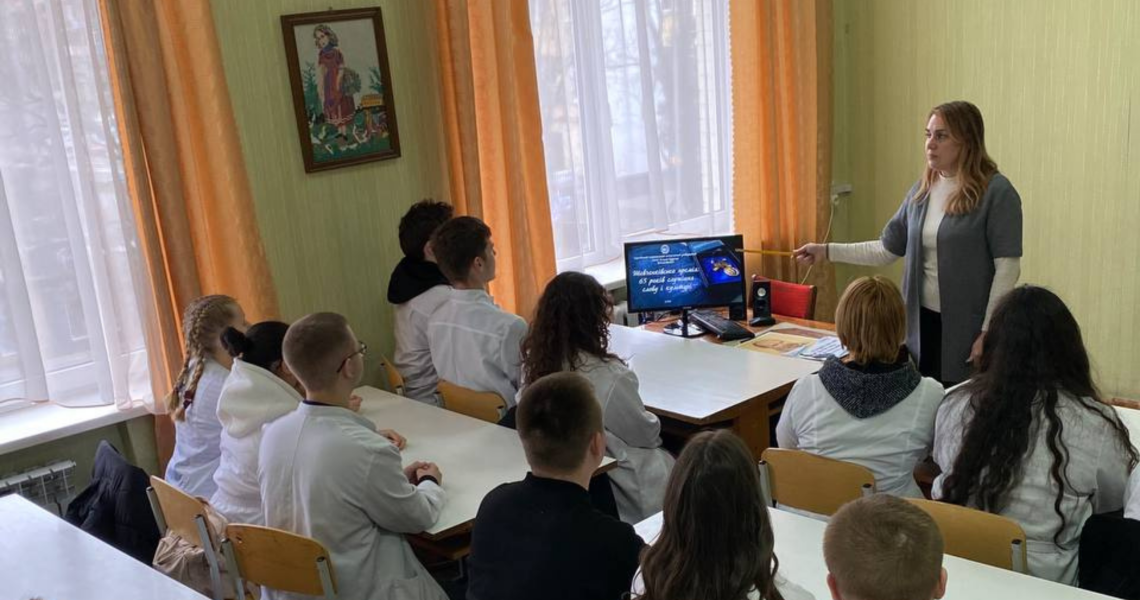
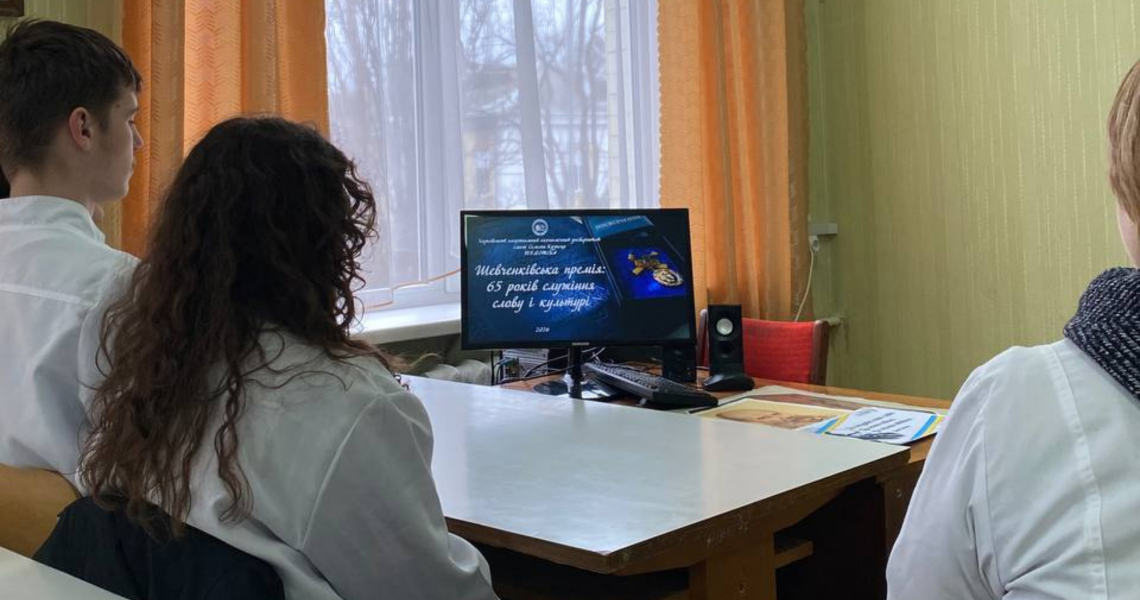
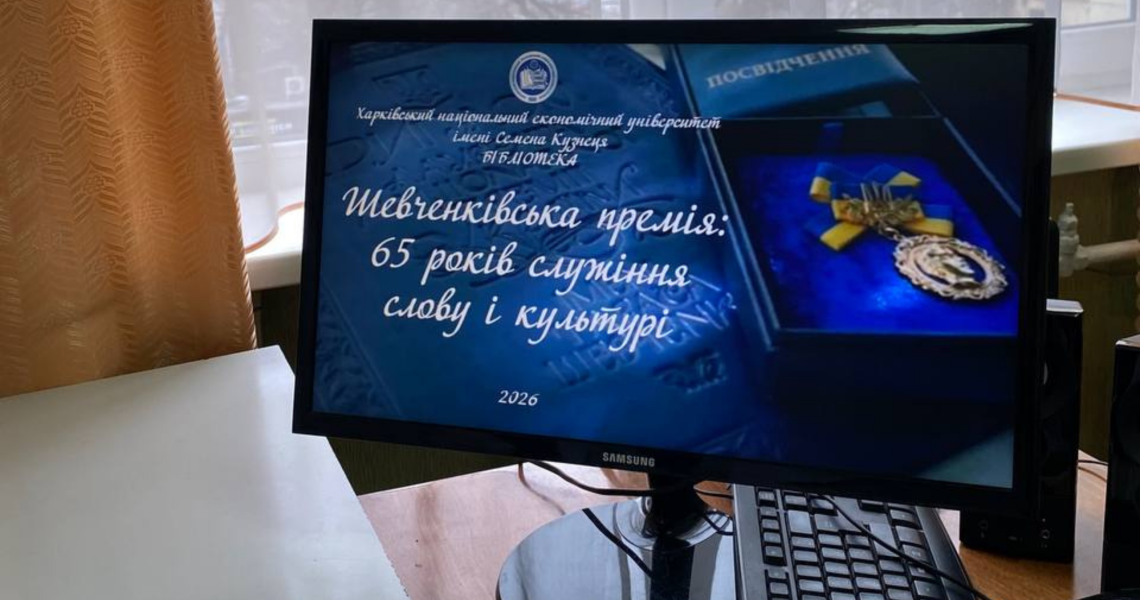
На кафедрі українознавства та гуманітарної підготовки ПДМУ у межах вивчення ВК «Українознавство» проведено інтерактивну лекцію на тему «Слово, що формує націю. Культура і гуманізм у професійному становленні лікаря: до 65-річчя Шевченківської премії».
Лекція стала частиною виконання загальноуніверситетського плану заходів з нагоди 65-річчя заснування Національної премії України імені Тараса Шевченка.
Саме тому викладачі ініціювали розмову зі здобувачами освіти про те, як національна ідентичність і гуманістичні цінності впливають на формування особистості майбутнього медика.
Під час лекції обговорили роль лауреатів Шевченківської премії у збереженні українського культурного коду та їхній вплив на сучасне суспільство.
Учасники заходу акцентували на тому, що лікар – це не лише фахівець із високими професійними навичками, а передусім людина, яка несе світло гуманізму й культури у своїй медичній діяльності.
Також розглянули, як знання рідної мови, літератури й культури допомагають у комунікації з пацієнтом і вибудовуванні довірчих стосунків.
Захід об’єднав студентів, які мали змогу долучитися до дискусії про значення культури в часи випробувань для нашої нації.
Дякуємо всім учасникам за активну позицію та щирий інтерес до рідного слова!
Пресслужба Полтавського державного медичного університету
The Word that Shapes a Nation: An Interactive Lecture Marking the 65th Anniversary of the Shevchenko Prize
At the Department of Ukrainian Studies and Humanities of PSMU, within the framework of studying the elective course “Ukrainian Studies,” an interactive lecture titled “The Word that Shapes a Nation. Culture and Humanism in the Professional Development of a Physician: Marking the 65th Anniversary of the Shevchenko Prize” was held.
The lecture became part of the university-wide program of events dedicated to the 65th anniversary of the establishment of the National Taras Shevchenko Prize of Ukraine.
Therefore, the lecturers initiated a discussion with students on how national identity and humanistic values influence the formation of the personality of a future medical professional.
During the lecture, participants discussed the role of Shevchenko Prize laureates in preserving the Ukrainian cultural code and their influence on contemporary society.
The participants emphasized that a physician is not only a specialist with high professional skills, but above all a person who brings the light of humanism and culture into their medical practice.
They also examined how knowledge of the native language, literature, and culture contributes to effective communication with patients and the building of trusting relationships.
The event brought together students who had the opportunity to engage in a discussion about the importance of culture in times of trials for our nation.
We thank all participants for their active engagement and sincere interest in the native word!