


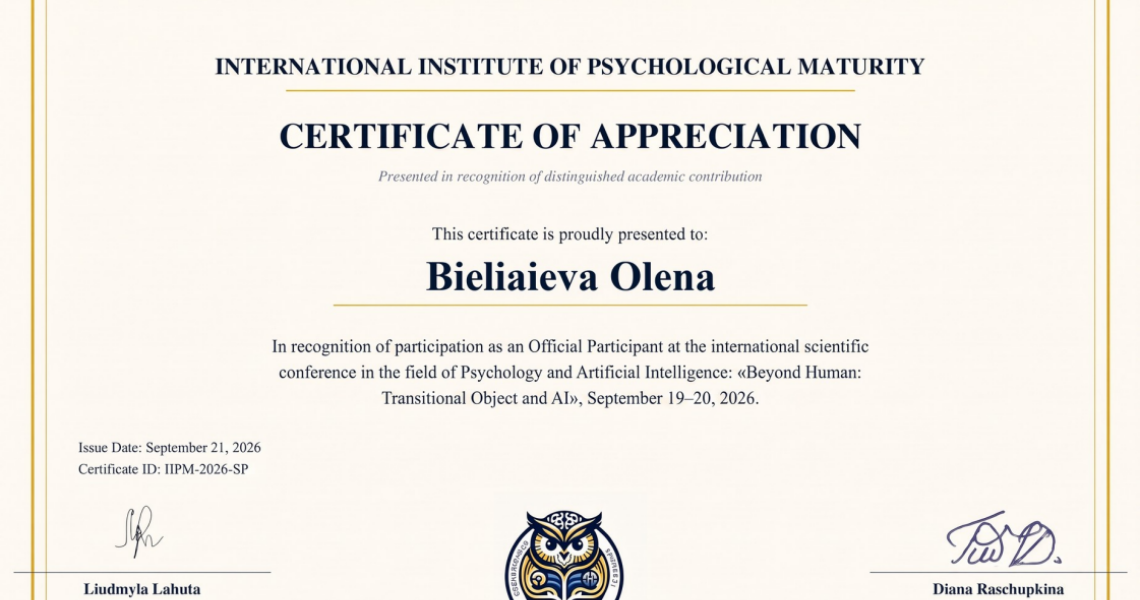
Завідувач кафедри іноземних мов з латинською мовою та медичною термінологією ПДМУ Олена Бєляєва взяла участь у міжнародній науковій конференції «Поза межами людського: перехідний об’єкт і штучний інтелект» (Beyond Human: Transitional Object and AI), присвяченій сучасним аспектам взаємодії людини та штучного інтелекту.
Конференція стала майданчиком для міждисциплінарного обговорення трансформацій, пов’язаних із розвитком технологій ШІ та дедалі ширшим використанням цих технологій у різних сферах людської діяльності.
У центрі уваги учасників були питання взаємодії людини та ШІ, ролі ШІ в сучасному суспільстві, а також нових можливостей і викликів, пов’язаних зі стрімким розвитком цифрових технологій.
Особливе значення такі наукові форуми мають для сфери вищої освіти, яка сьогодні переживає активну трансформацію під впливом штучного інтелекту. Обговорення сучасних підходів до взаємодії людини і ШІ дає змогу краще осмислити потенціал нових технологій, а водночас – питання відповідального, критичного та етичного їх використання в освітній і професійній діяльності.
Пресслужба Полтавского державного медицинского университета
Participation in the International Conference “Beyond Human: Transitional Object and AI”
Olena Bieliaieva, Head of the Department of Foreign Languages with Latin and Medical Terminology at Poltava State Medical University, took part in the international scientific conference “Beyond Human: Transitional Object and AI,” dedicated to contemporary aspects of human–artificial intelligence interaction.
The conference provided a platform for interdisciplinary discussion of the transformations associated with the development of AI technologies and their increasingly widespread use in various areas of human activity.
The participants focused on human–AI interaction, the role of AI in contemporary society, as well as new opportunities and challenges arising from the rapid development of digital technologies.
Such academic forums are particularly important for higher education, which is currently undergoing significant transformation under the influence of artificial intelligence. Discussions of contemporary approaches to human–AI interaction help deepen understanding of the potential of emerging technologies while also addressing the importance of their responsible, critical, and ethical use in educational and professional settings.