


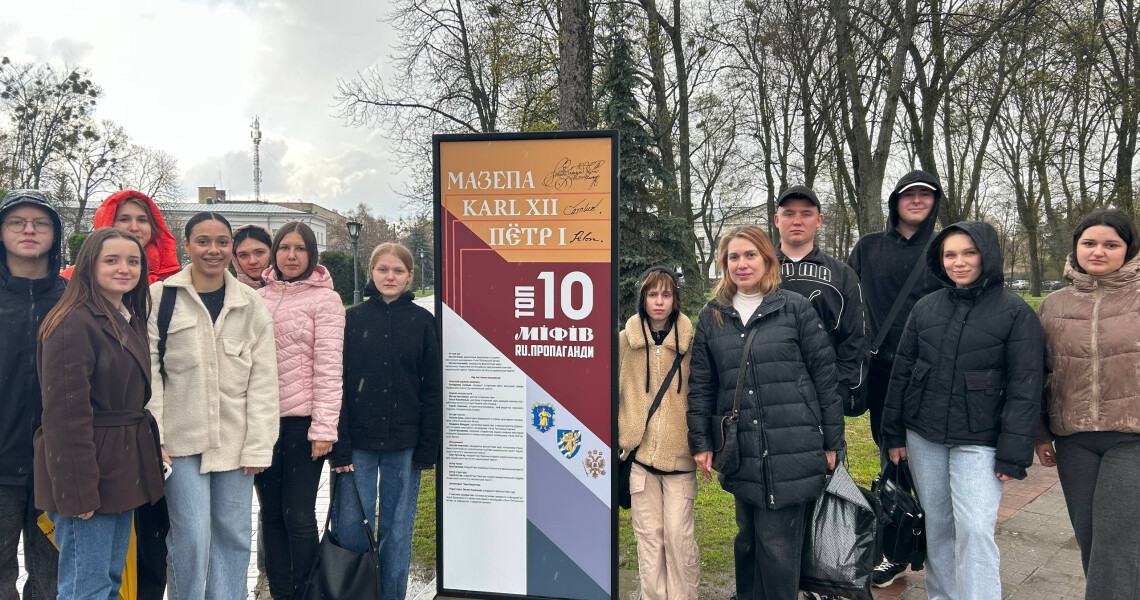
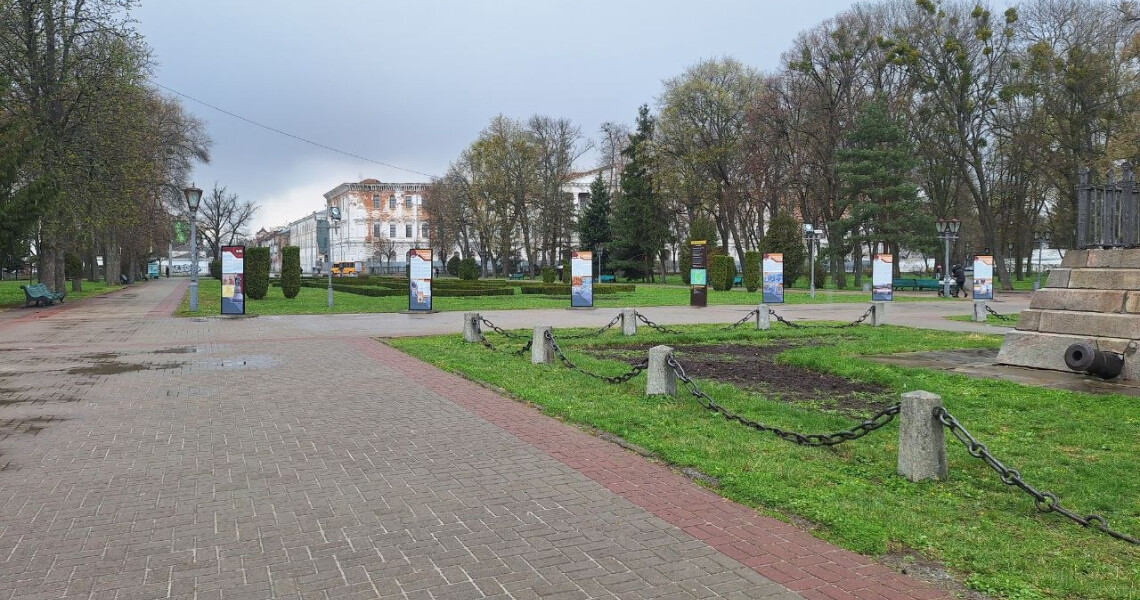
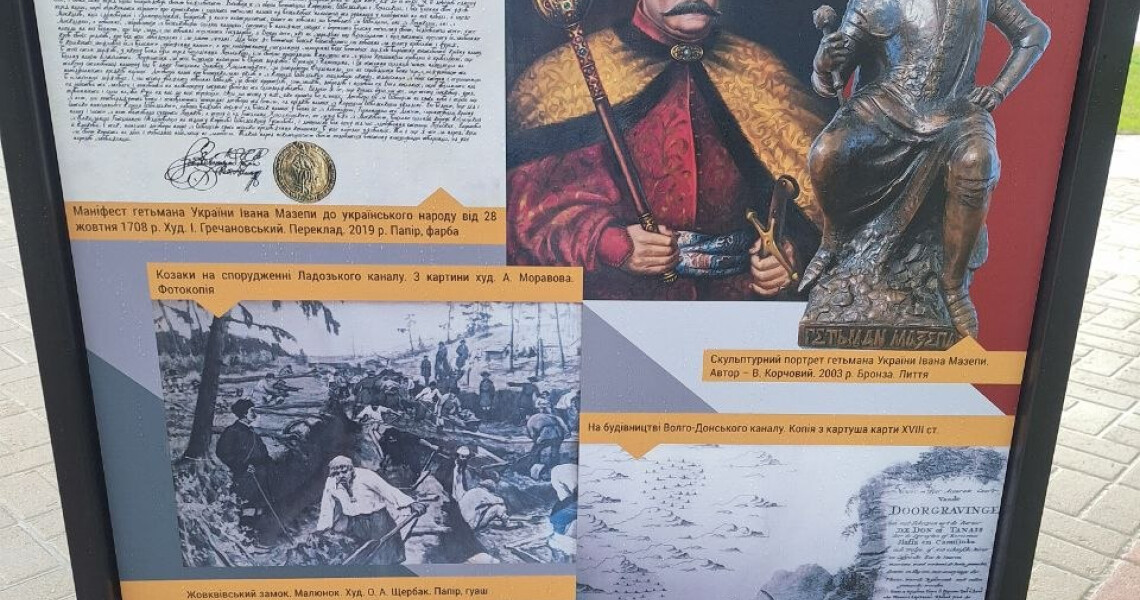
Викладачі кафедри українознавства та гуманітарної підготовки ПДМУ разом зі здобувачами вищої медичної освіти ОПП «Медицина», які вивчають вибіркову дисципліну «Українознавство», відвідали та ознайомилися в центрі Полтави з вуличною постійно діючою виставкою «Мазепа. Karl XII. Петро І. Топ-10 міфів російської пропаганди», приуроченою до 387-ї річниці від дня народження Івана Мазепи – гетьмана Війська Запорозького, полководця, мецената, провідника антимосковського воєнно-політичного виступу.
Провідна мета відвідування виставки – сформувати в майбутніх українських лікарів основи національно-державницького світогляду та сприяти розвитку почуття українського патріотизму в умовах сучасних викликів і воєнних реалій.
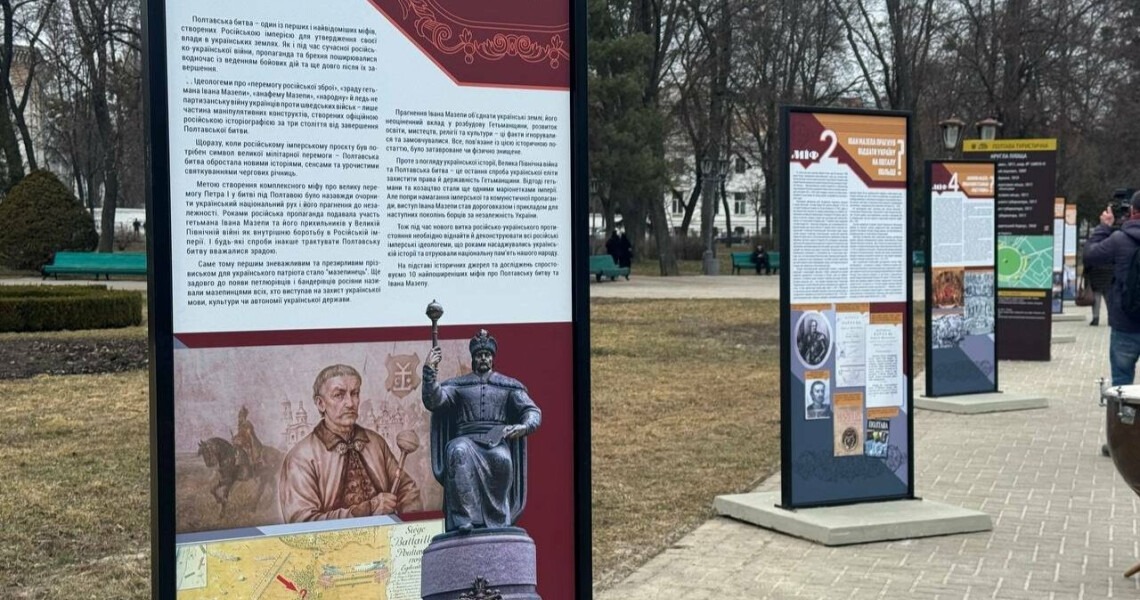
Виставка є спільним проєктом Державного історико-культурного заповідника «Поле Полтавської битви», Українського інституту національної пам’яті (УІНП) і Полтавської міської ради. На двометрових стелах розміщено спростування найвідоміших російських міфів, пов’язаних із постаттю гетьмана Івана Мазепи, його антимосковським виступом і Полтавською битвою.
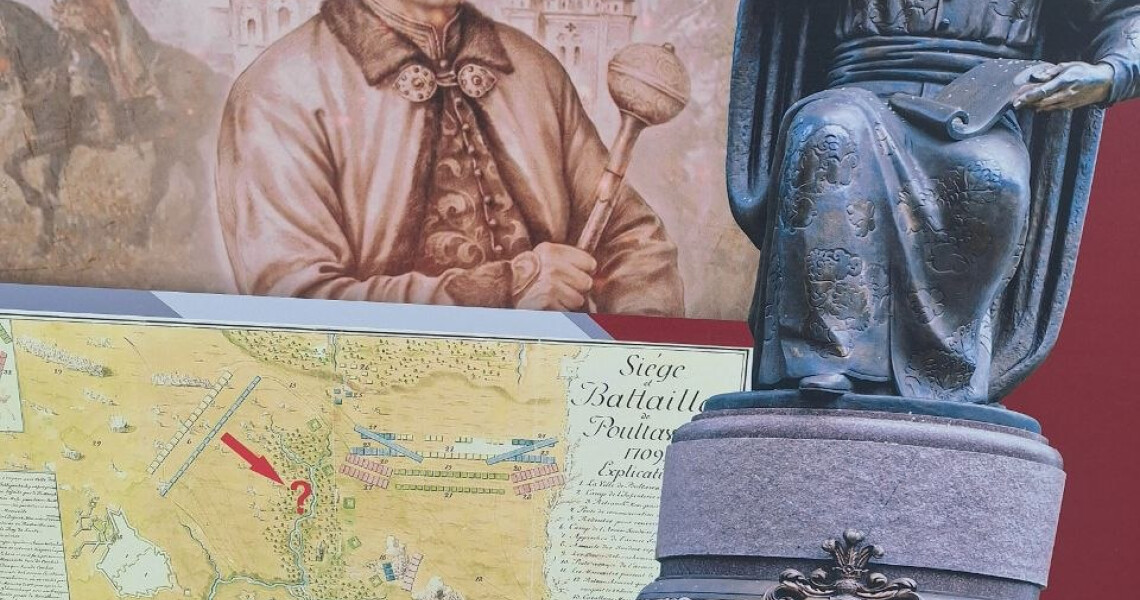
Автори виставки на основі історичних джерел і досліджень спростовують десять найпоширеніших імперських міфів про Мазепу як «зрадника, що мав намір віддати Україну на поталу Речі Посполитої»; про те, що гетьмана у його виборі «не підтримало українське козацтво»; а також про так звану «героїчну» оборону Полтави навесні-влітку 1709 року, «славу російської зброї», «народну війну українського населення проти шведських військ».
Оглядаючи виставку, здобувачі освіти ПДМУ переконалися, що щоразу, коли російським імперським наративам був потрібен символ великої мілітарної перемоги, Полтавська битва обростала новими міфами, сенсами та інтерпретаціями.
Метою створення комплексного міфу про перемогу московського царя Петра І у битві під Полтавою було очорнення українського руху та його прагнення до незалежності. Російська пропаганда трактує участь гетьмана Івана Мазепи та його прихильників у Великій Північній війні як внутрішній конфлікт у межах Російської імперії. Будь-які альтернативні інтерпретації Полтавської битви тривалий час сприймалися як «зрада».
Водночас, попри намагання імперської та радянської пропаганди, постать Івана Мазепи залишається важливою в контексті українського державотворення та історичної пам’яті, а його ім’я використовується в назвах сучасних підрозділів ЗСУ, зокрема окремої механізованої бригади імені гетьмана Івана Мазепи та окремої мотопіхотної бригади імені кошового отамана Костя Гордієнка.
Відвідування виставки сприяло глибшому усвідомленню здобувачами освіти ПДМУ значення історичної пам’яті, критичного осмислення історичних наративів та важливості формування національно свідомої громадянської позиції в умовах сучасних інформаційних викликів.
Пресслужба Полтавського державного медичного університету
PSMU Students Visit the Historical and Educational Exhibition “Mazepa. Karl XII. Peter I. Top 10 myths of russian propaganda” in Poltava
Students of Poltava State Medical University (PSMU), together with lecturers from the Department of Ukrainian Studies and Humanities, visited the open-air permanent exhibition “Mazepa. Karl XII. Peter I. Top 10 myths of russian propaganda” located in the center of Poltava. The visit was part of the elective course “Ukrainian Studies” within the educational program “Medicine.”
The exhibition is dedicated to the 387th anniversary of the birth of Ivan Mazepa—Hetman of the Zaporizhian Host, military leader, patron, and a key figure in the anti-moscow political and military movement.
The main goal of the visit was to help future Ukrainian doctors develop a national and state-oriented worldview, as well as to foster a sense of patriotism in the context of current challenges and wartime realities.
The exhibition is a joint project of the State Historical and Cultural Reserve “Field of the Battle of Poltava,” the Ukrainian Institute of National Memory, and the Poltava City Council. Two-meter stands display refutations of the most widespread russian propaganda myths related to Hetman Ivan Mazepa, his anti-Moscow stance, and the Battle of Poltava.
Based on historical sources and research, the authors of the exhibition debunk ten of the most common imperial myths—such as portraying Mazepa as a “traitor who intended to hand Ukraine over to the Polish–Lithuanian Commonwealth,” claims that he lacked support from Ukrainian Cossacks, and narratives about the so-called “heroic” defense of Poltava in 1709, the “glory of russian arms,” and a supposed “people’s war” of Ukrainians against Swedish forces.
While exploring the exhibition, PSMU students recognized that whenever russian imperial narratives required a symbol of a great military victory, the Battle of Poltava became surrounded by new myths, meanings, and interpretations.
The overarching purpose of constructing the myth of Tsar Peter I’s victory at Poltava was to discredit the Ukrainian national movement and its aspirations for independence. Russian propaganda has long framed the participation of Ivan Mazepa and his supporters in the Great Northern War as an internal conflict within the russian empire, while alternative interpretations were often labeled as “betrayal.”
At the same time, despite efforts by imperial and soviet propaganda, the figure of Ivan Mazepa remains significant in the context of Ukrainian statehood and historical memory. His name is carried by modern units of the Armed Forces of Ukraine, including the Separate Mechanized Brigade named after Hetman Ivan Mazepa and the Separate Motorized Infantry Brigade named after Kosh Ataman Kost Hordiienko.
Visiting the exhibition helped PSMU students gain a deeper understanding of the importance of historical memory, critical analysis of historical narratives, and the need to develop a nationally conscious civic position in the face of modern information challenges.